
There are two questions hiding inside most height advice, and running them together is why so much of it does not work.
The first is proportion. Where your own length sits: longer in the body or longer in the leg.
The second is height. How much total length there is.
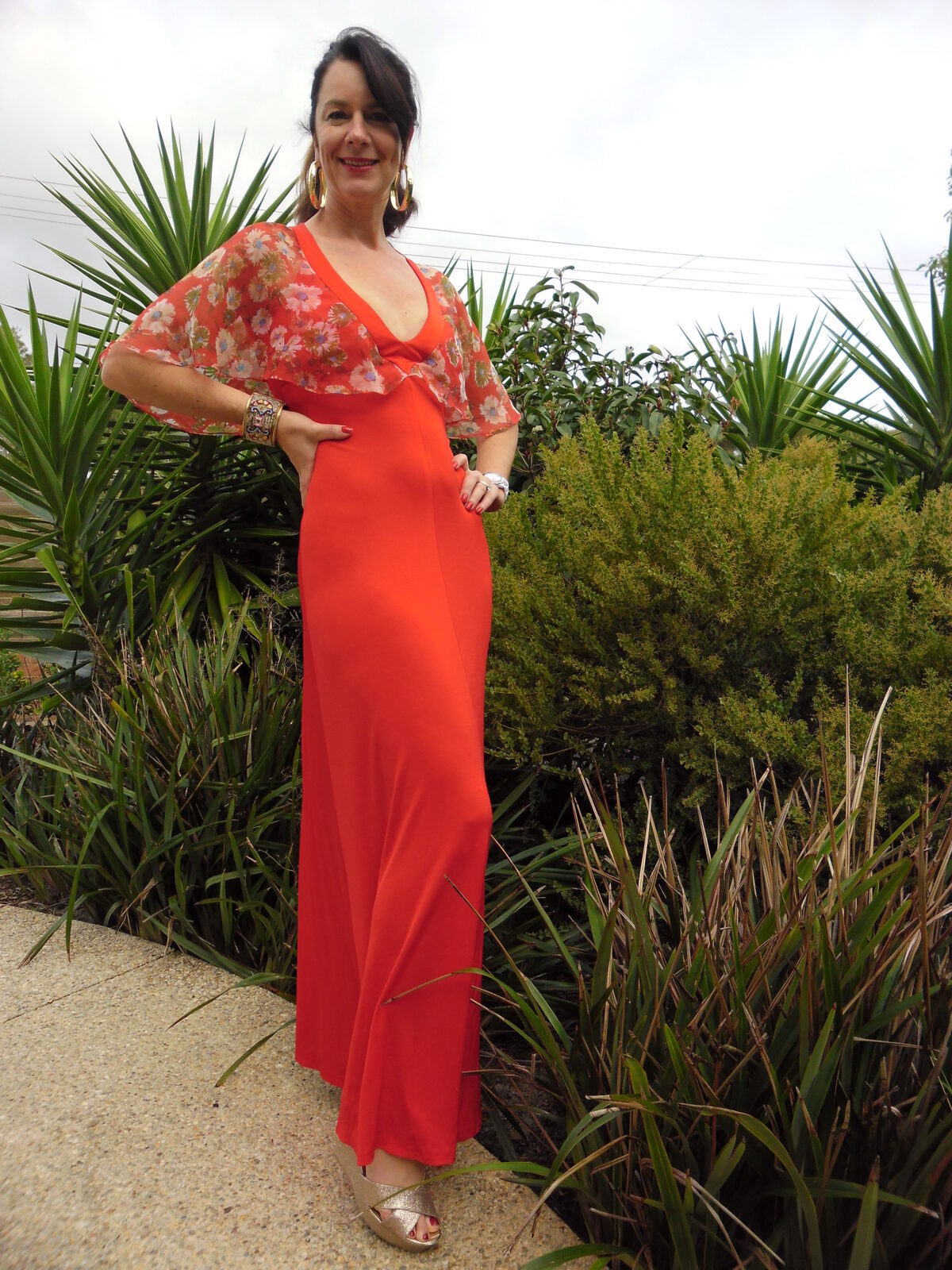
They are not the same thing at all. A woman of 155 centimetres with long legs and a short torso needs close to the opposite of a woman of 155 centimetres built the other way round, and no amount of generic petite advice will tell either of them that.
The proportion half is already written down. It is in dressing for your body shape, under vertical proportion, and it takes about two minutes on a hard chair to work out which you are. Do that first.
This post is about the other half, which is what genuinely changes when there is more or less of you.
What changes with height is scale
Almost everything else is a myth, and this is the part nobody explains.
Scale means the size of a garment’s details, not the size of the garment. Collar width. Lapel width. The size of a print motif. The depth of a cuff. How chunky a heel is. How big a bag is. How wide a hem is.
A petite woman is rarely swamped by a coat because it is long. She is swamped because the collar, the lapels, the buttons and the pockets were all drawn for a taller frame, and the length is the thing she blames afterwards.
The same is true in reverse. A delicate little collar and a small print on a tall woman can read as borrowed from somebody else, however well the garment fits.
So when something is not working and the size is right, check the details before you blame the length. It is usually a lapel.
The scale checklist
Worth running through once, after which you will see it everywhere.
Prints. A motif roughly the size of your hand or smaller suits a smaller frame. The full argument about scale is in how to wear prints.
Collars, lapels and cuffs. Narrow and shallow for petite, generous for tall.
Bags. A bag that reaches from your waist to your hip is a different bag on different bodies. It wants to be in proportion to your torso, not to what is in it.
Heels and soles. A chunky platform adds height and takes away delicacy. A fine heel does the opposite.
Jewellery. A large pendant that sits at the sternum on a tall woman sits near the waist on a shorter one, which is a different necklace entirely.
And hem width. A wide-leg trouser with an enormous sweep needs length to carry it. The same trouser cut narrower works at any height.
Horizontal lines, and how many you can afford
This is the real mechanic behind most height advice, and once you see it the rules stop needing memorising.
Every horizontal break divides you. A waistband, a hem, a belt, a cuff, a contrasting shoe, a jacket’s bottom edge.

Shorter frames can afford fewer of them. Not none, fewer. Two or three strong breaks in an outfit read as considered. Six read as segmented.
Taller frames often need more of them, because an unbroken line on a long frame can read as a column with nothing happening.
Which is why that dress works. The stripes are the breaks, and they are doing the dividing instead of the outfit’s seams, so nothing else has to. Note the flats, too: a shoe that continues the line rather than interrupting it is doing as much work as the dress is, which is why the whole thing reads as long rather than as chopped into twelve.
And the single most useful trick for either: one unbroken colour from shoulder to shoe does more for apparent length than any individual garment choice. That principle is set out properly in how to look slimmer in clothes, and it is the same mechanism working on a different problem.
If you are petite: alterations are the whole answer
I am going to be blunt about this because it is the thing that actually changes people’s wardrobes.

Standard sizing does not scale down. When a garment is graded smaller, the hem comes up and very little else does. The sleeve is still cut for a longer arm, the rise still sits where a taller woman’s waist is, and the shoulder seam is still a centimetre too far out.
Which is why things fit and still look wrong. Nothing is the wrong size. Everything is in the wrong place.
Three alterations fix most of it. The hem, the sleeve, and the shoulder if the garment deserves it. A good alterations place does the first two for very little, and the difference is enormous.
Budget for it when you buy. A forty dollar dress plus twenty dollars of hemming beats a hundred dollar dress that hangs there, every time.
And the waist is the one to watch. A dress whose waist seam sits below your actual waist will never look right and cannot easily be moved, so check that in the changing room before anything else.
The petite myths worth ignoring
Most of these have been repeated for forty years and none of them survives contact with a tailor.
That you cannot wear a maxi. You can. The hem has to skim the floor in the shoes you are wearing, which is true at any height. The rest of the maxi argument, including why it is a shoe-specific garment, is in the maxi.
That you cannot wear wide legs. You can, hemmed to the right length, with the sweep in proportion.
That you cannot wear a long coat. You can. Check the lapel and the pocket placement rather than the length.
That you must wear heels. You need not. An unbroken column does more.
And that you should avoid everything oversized. One oversized thing against a fitted everything-else is a deliberate look and it reads as such. Oversized from head to toe is what disappears you.
If you are tall: the problem is length, not height
Tall women get almost no useful advice, because everyone assumes height is only an advantage and stops there.
The actual problem is that clothes run out. Sleeves end above the wrist bone. Trouser rises sit low. Dresses that should hit the knee hit mid-thigh. Jacket hems land high.
Sleeves and rise are the hard ones. A hem can be let down or simply lived with. A short sleeve and a low rise both read unmistakably as a garment that does not fit, and neither can be added to afterwards.
So buy for the longest measurement and take the rest in. That is the opposite instruction to the petite one, and it is why generic advice serves neither.
You can use horizontal breaks freely, and frequently should. A belt, a contrasting shoe, a cropped jacket, a tucked top. You have the room.
And you can carry scale that nobody else can. Big collars, wide lapels, large prints, substantial jewellery. Use it.
Heels, honestly
For both, and the advice is the same.
A heel adds height and changes nothing else. It will not fix proportion and it will not fix scale.

A shoe close to your own skin tone lengthens the leg more reliably than height does, and it works in a flat.
A chunky heel adds visual weight at the bottom of the outfit, which a taller frame carries easily and a shorter one has to balance.
And an ankle strap cuts the leg wherever it lands, which is worth knowing rather than avoiding.
Four things to check before you buy
In the changing room, in this order, and it takes under a minute.
Where the sleeve ends. It wants to finish at the wrist bone. Above it reads as too small whatever the label says, below it reads as borrowed. This is the first thing people notice and the last thing they check.
Where the waist seam sits. Hold the garment against you and find your own narrowest point. If the seam is more than about two centimetres off it, put it back, because this is the alteration that is rarely worth paying for.
Where the rise sits. On trousers, do up the button and look at where the waistband lands. A rise cut for someone taller sits low and nothing afterwards will lift it.
And the hem, in the shoes. Not in the changing-room socks and not in the shoes you wore to the shops. In the shoes this garment will actually be worn with, or at least at that heel height.
What to do with the things you already own
Before buying anything, there is a free afternoon’s work in most wardrobes.
Make three piles. Alter, demote, let go.
Alter is smaller than you think. The hem, the sleeve, and occasionally the shoulder, on garments good enough to deserve it. Five pieces is a realistic list and about a hundred dollars of work.
Demote is the honest pile. Things that fit nobody’s proportions but are perfectly serviceable for the garden, the gym or the school run.
And let go of anything whose waist seam is in the wrong place. That is the one fault that cannot be economically fixed, and keeping it is how a wardrobe fills with clothes that are nearly right.
Shopping, in Australia
Practical notes, because the ranges here are thinner than overseas.
Try petite and tall ranges when a brand has them, because they move the sleeve, the rise and the waist seam as well as the hem, which is the part standard sizing gets wrong.
But do not restrict yourself to them. The selection is small and you will end up dressing from a corner of the shop.
Find an alterations place and use it properly. This is the single highest-return thing in this entire post. It opens the whole shop to you.
And try the children’s and teen sections for knitwear if you are very petite, which is unglamorous advice and occasionally excellent.
The short version
- Proportion and height are different questions. Answer the proportion one first.
- What changes with height is scale: collars, lapels, prints, bags, heels, jewellery.
- If it fits and still looks wrong, check the details before the length.
- Fewer horizontal breaks on a shorter frame, more on a taller one.
- Petite: alterations are the answer, and sizing down moves the hem and nothing else.
- Tall: buy for the longest measurement and take the rest in.
- Maxis, wide legs and long coats are all available to everybody, hemmed properly.
- A shoe near your skin tone lengthens the leg better than a heel does.
Here is what all of this comes down to, and it is not a shopping list. Height is the one thing a shop assistant genuinely cannot help you with and a tailor genuinely can, and almost nobody uses a tailor because they do not know which garments are worth the trip. That is the useful bit of knowing your own measurements: not a rule about maxis, but the ability to stand in a changing room and say this one, yes, and that one, never. Working that out together is most of a styling session in Melbourne, $299 for two hours, and you leave with a short list for the alterations place rather than a long list for the shops.
Now go and look at where the waist seam of your favourite dress actually sits.
And now you’re Looking Good Girls.
“Your hands made me and formed me.” Psalm 119:73.