
You are not a guest.
That single fact changes everything about this outfit, and it is why the ordinary wedding advice does not quite fit.
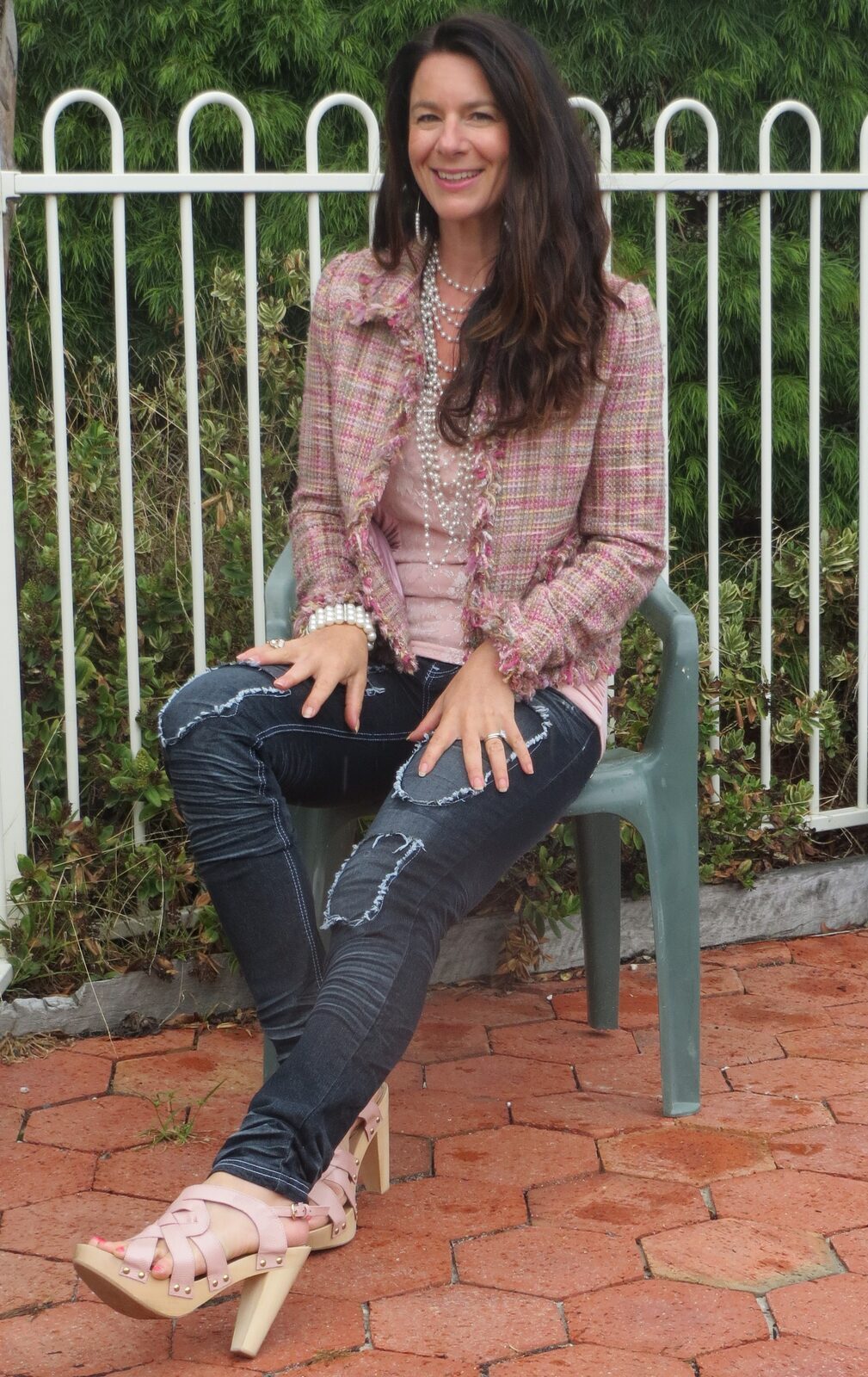
You will be in more photographs than anybody except the couple. You will be in the getting-ready photographs, the ceremony, the family line-ups, the speeches and the dancing, and those pictures will be looked at for fifty years.
You will also be working. Greeting, introducing, steering, fixing. Mothers of the bride do not sit down much.
So the brief is different: dressy enough for the photographs, comfortable enough for the shift.
Two conversations, before you look at a single dress
Both are short and both save weeks.
The first is with your daughter. Ask her directly what she has in mind, and ask early, before you have fallen for something. Some brides have a colour palette and strong feelings. Some have none at all and will be relieved not to be asked again.
Ask three things: is there a colour she would rather you avoided, how formal is she imagining, and does she want to see it before you buy. That last question matters more than people expect, and the answer is usually yes.
The second is with the other mother. One phone call.
You are coordinating, not matching. The aim is simply that you are not in the same colour, and not at wildly different levels of formality, because the two of you will stand next to each other in a great many photographs.
Tradition says the bride’s mother chooses first and the groom’s mother works around her. In practice nobody minds who rings whom, and the call is almost always warmer than people fear.
The colours that are genuinely off limits
Shorter list than the internet suggests.
White, ivory, cream and champagne. The real rule reaches past the word white, because a fabric that reads as oyster or soft gold on the shop floor can come back plain white once a camera flash hits it. The test takes ten seconds: get somebody to take your picture in it, flash on, in a dim room, and look at what the screen says rather than what the mirror said. There is a fuller version of this in the wedding guest guide, and it applies to you with more force, because you are in far more of the photographs.
The bridesmaid colour. Not because it is rude, but because standing beside four women in dusty rose while wearing dusty rose looks like a near miss rather than a decision.
Black, maybe. It is now common and perfectly accepted at most Australian weddings, but it is the one colour worth a direct question. Some families still read it as mournful and you would rather know in March than on the day.
Everything else is yours.
The colours that work, and why
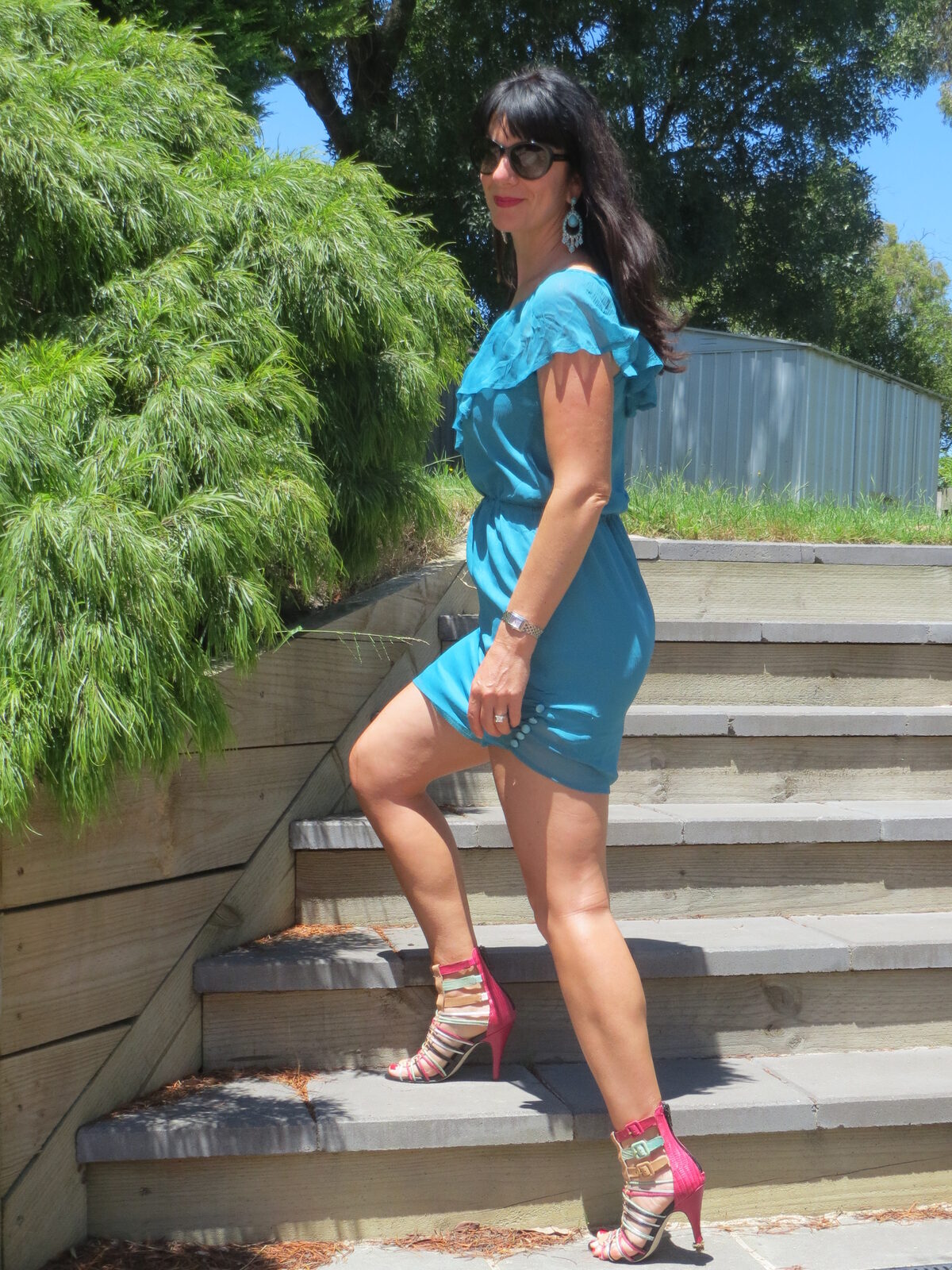
Jewel tones photograph beautifully. Emerald, sapphire, teal, amethyst, garnet. They hold their depth under every kind of light, indoor and out, which is more than can be said for pastels.
Deep neutrals with something at the neck. Navy, charcoal, plum, bronze.
One clear colour beats a busy print, because a print competes with the flowers, the bridesmaids and the venue, and in a group photograph it is the thing the eye lands on.
And choose the colour that suits you, not the one that suits the theme. You will be next to your daughter in the closest photographs of the day, and the shade that makes you look well is worth more than the shade that matches the napkins. If you have never worked yours out, the colours for your skin tone is the place to start.
Sleeves, which is the question I am asked most
By a wide margin, and the answer is simple.
Most women want them, and most women should have them. Not for modesty, but because you will have your arms up and around people all day, and because a long day is more comfortable when you are not thinking about your upper arms.
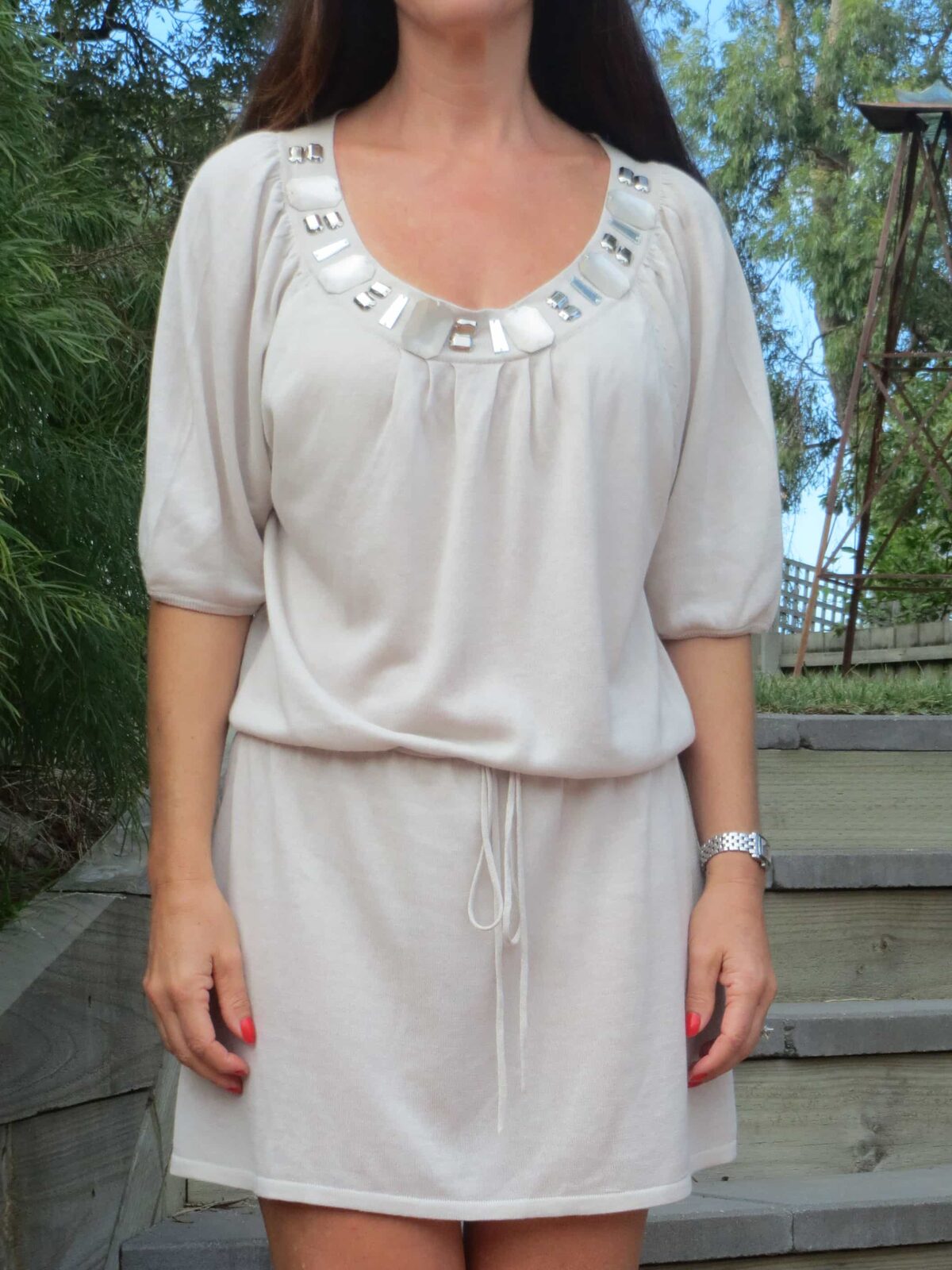
That shift is the shape, near enough: sleeves to the elbow, knee length, something quiet at the neck. The colour of it is the one thing on this page I would not wear to a wedding, since champagne photographs as white. Right shape, wrong shade, and the distance between those two is most of this post.
Three-quarter sleeves are the most useful length. They flatter almost everyone, they photograph well, and they are cool enough for a summer wedding in a way full sleeves are not.
If the dress you love is sleeveless, do not reject it. A jacket, a fitted bolero or a beautifully cut wrap solves it, and gives you the option to take it off at the reception, which is the whole trick.
A cap sleeve is the least forgiving of all the options, because it cuts the arm at its widest point. That is not a rule, it is just arithmetic.
Length, and what actually photographs well
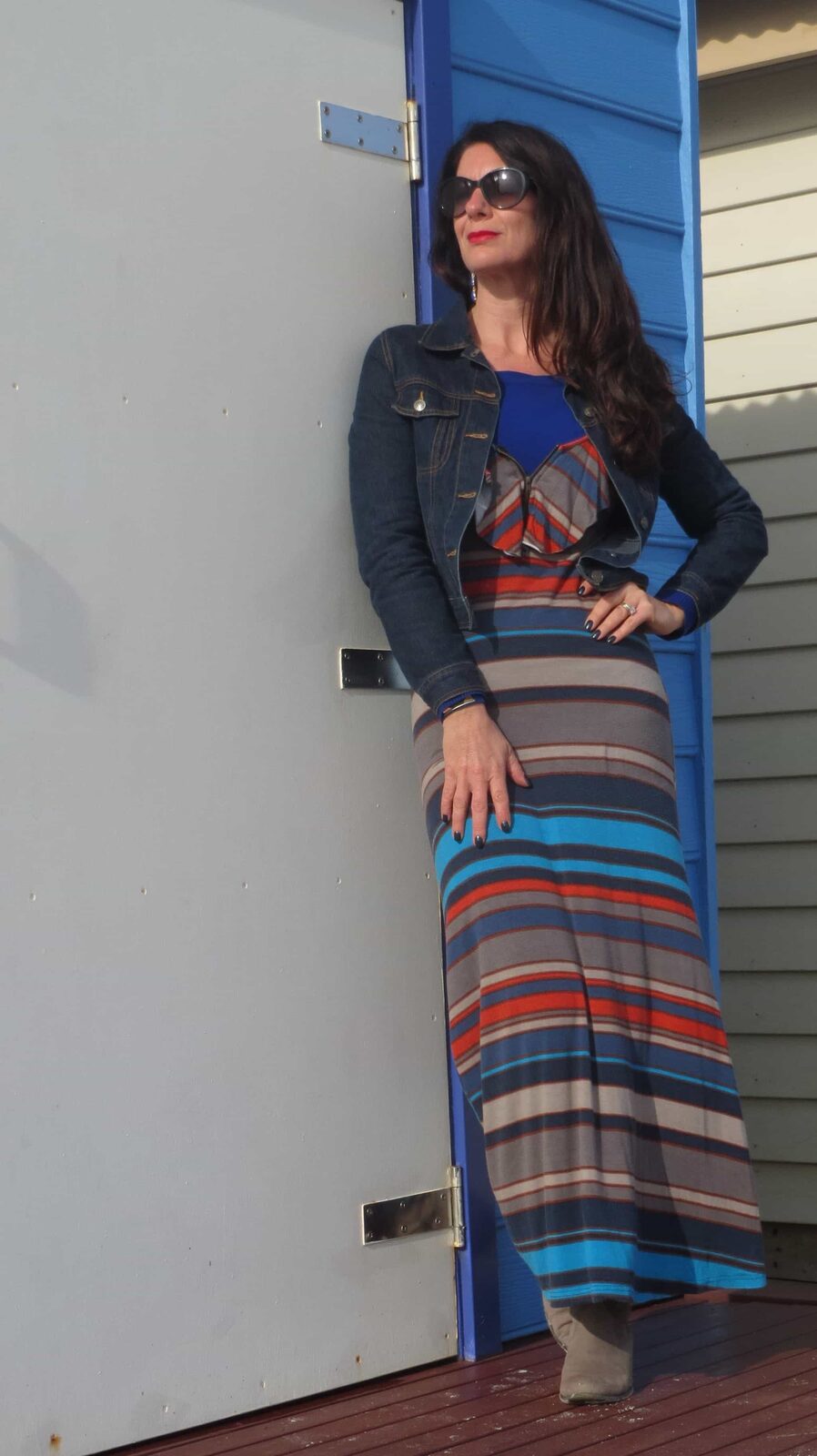
Midi is the mother-of-the-bride length, and has been for a decade. Below the knee, above the ankle. It is formal without being a gown, it sits well when you are seated, and it handles grass and church steps.
Full length works at a formal evening wedding and can look wonderful, but it is a commitment: you cannot dance in it easily and it collects everything the lawn has to offer.
Knee length is fine at a relaxed or daytime wedding.
Above the knee is the one to think twice about, purely because of the photographs, where you will be sitting, kneeling for a child, and standing on a step.
The day is longer than anybody plans for
This is where outfits fail, and it is nearly always the same way.
You may start at eight in the morning with the bride and the hairdresser, and finish after midnight. That is sixteen hours in one outfit.
You will be photographed standing for a long time. Family line-ups take much longer than anyone expects and they are almost always outside.
You will be hot, then cold. Ceremony in the sun, reception in air conditioning, and a car park at eleven at night.
And you will probably dance. Not for long, but you will, and the outfit needs to allow it.
So test it the way the day will test it. Put the whole thing on, shoes included, and sit for twenty minutes. Then raise both arms above your head. Then walk up and down stairs. Almost every problem shows up in those three moves.
The jacket is doing more work than the dress
A jacket makes an ordinary dress into an occasion outfit, and it is the most useful thing you will buy for this day.
It also gives you two looks, one for the ceremony and photographs and one for the reception, without changing.
A structured jacket reads as more formal, a soft wrap or a fine knit as warmer and gentler. Both are correct.
Whatever you choose, it must work sitting down, because you will be in it through the ceremony and possibly the meal.
And bring something warmer than you think you need, particularly for an evening reception. A beautiful wrap left in the car is no use to anybody.
Hats, fascinators and the British problem
Most mother-of-the-bride imagery online is British, and Britain has a hat culture Australia does not.
A hat belongs at a formal daytime wedding and almost nowhere else here.
A fascinator or a good hair piece is far more common at Australian weddings and much easier to wear for twelve hours.
Nothing at all is completely correct. If the bride has not raised headwear, you do not need any.
And if you do wear something, check it against the photographs. A wide brim throws a shadow across your whole face in bright sun, which is how a mother disappears from her daughter’s ceremony pictures.
Shoes, given how the day goes
Two pairs. This is the one occasion where I insist on it. A good pair for the ceremony and the photographs, and a lower or softer pair in a bag for the evening.
Both should be worn in before the day, indoors, for longer than feels necessary.
A block heel or a wedge on grass, since a great many Australian weddings put you on a lawn for the ceremony and again for the photographs.
And dark or tonal rather than pale, because pale shoes show every mark from a day that involves gardens, dance floors and other people’s feet.
When to start, and where to buy
Four to six months out. Earlier if you want something made.
Occasion wear sells through by size, not by style, so the thing you love in March may not exist in your size in July.
Leave three weeks for alterations, and expect to need them. Occasion dresses are cut for a standard body and the difference between a good outfit and a wonderful one is almost always a hem and a shoulder.
Hiring is worth considering if the budget is stretched or if you genuinely will not wear it again, though a well-chosen midi and jacket will serve you at every wedding, christening and sixtieth for the next decade.
And take somebody honest with you, not somebody kind. Those are different jobs and you need the first one.
If it is a small wedding, a second wedding, or a blended family
Not every wedding is a big formal one, and the advice bends.
At a registry office or a backyard, everything above still applies at one step down. A good midi dress or elegant separates, without full occasion wear. Being the most dressed-up person at a relaxed wedding is uncomfortable for everybody.
At a second marriage, the same. These are often deliberately smaller and warmer, and taking the formality cue from the couple matters more than any convention.
Where there are step-parents, the coordinating phone call is more important, not less. Two mothers of the bride is now perfectly ordinary and it is solved the same way: talk first, avoid the same colour, and match each other’s formality.
And if you are the mother of the groom
Briefly, because the advice is nearly identical with one difference.
Wait to hear what the bride’s mother is wearing, then choose. That is the whole of the convention, and it costs you nothing but a fortnight.
Everything else is the same. Not white, not the bridesmaid colour, sleeves if you want them, midi, a jacket, two pairs of shoes.
The short version
- You are not a guest. Dress for the photographs and for a sixteen-hour shift.
- Ask your daughter first: colour, formality, and whether she wants to see it.
- Ring the other mother. Coordinate, do not match.
- No white, ivory, cream or champagne. Not the bridesmaid colour. Ask about black.
- One clear colour that suits you beats a print.
- Three-quarter sleeves, or a jacket over a sleeveless dress.
- Midi length, and test it sitting, reaching and on stairs.
- Start four to six months out and leave three weeks for alterations.
Mother-of-the-bride shopping has a reputation for being demoralising and it is thoroughly deserved. Occasion wear gets pushed into one corner of the shop, the lighting in those corners is unkind to everybody, and by the fourth changeroom most women are ready to buy something they merely tolerate and go home. What fixes it is knowing the shape and the colour before you start, and having a second opinion that is not your daughter’s, because she has enough to carry this year. That is a $299 styling session, working from your own wardrobe and your own colouring, with a Melbourne personal stylist. The finding of the thing is the $399 half day of personal shopping, and it is a far better afternoon with two of you. Book either one for the autumn rather than the fortnight before, and none of this is a chore.
Now go and ring the other mother. It is a nicer phone call than you think.
And now you’re Looking Good Girls.
“I delight greatly in the Lord; my soul rejoices in my God. For he has clothed me with garments of salvation.” Isaiah 61:10.