
Black does not make anybody look drab.
Old black does. Worn-out black, mismatched black, flat black, and black in the wrong light all do, and all four are fixable.
This matters because black is the colour most of us own most of. If it is not working, it is not one outfit that is letting you down, it is half the wardrobe.
Most drab black is simply old black
Start here, because it is the commonest cause and nobody ever says it.
Black fades long before a garment wears out. It goes dusty, then slightly grey, then a tired charcoal, and because it happens over two years nobody notices it happening.
You cannot see it on its own. A faded black top looks perfectly black until you put it next to a new one.
So do this. Take the black thing you suspect, hold it against something you know is properly black, and look at both by a window. The gap is usually obvious and often shocking.
That garment is not drab on you. It is drab, full stop, and no styling will rescue it. Demote it to the gym or let it go.
Keeping black black
Worth doing properly, because it is the difference between a black shirt lasting four years and four months.
Wash inside out, cold, short cycle. Heat and agitation are what lift the dye.
Use less detergent than the packet says. Undissolved detergent leaves a film that reads as grey.
Never the dryer. It is the single worst thing for black.
And dry in the shade. This is the Australian part and it matters more here than anywhere. A black shirt on a line in full summer sun fades measurably in one afternoon.
Wash black with black, and separately from towels, which is really about lint rather than colour but shows up tenfold on black.
Two blacks in one outfit
The thing people sense and cannot name.
Blacks have undertones. Some are blue-black, some brown-black, some have a green cast. Different fibres take dye differently, so a black cotton, a black wool and a black polyester will almost never be the same black.
Indoors you will never see it. Under a shop light or a bathroom bulb, black is black.
By a window you will see it instantly, and so will everybody who looks at you in daylight.
The fix is not to match them perfectly, which is nearly impossible. It is to either check them in daylight before you leave, or to make the difference obviously deliberate by changing the texture as well, so the eye reads two fabrics rather than two failed attempts at the same colour.
Surface is the only variable you have
With a coloured outfit you can vary the colour. With black you cannot, so everything rests on the surface.
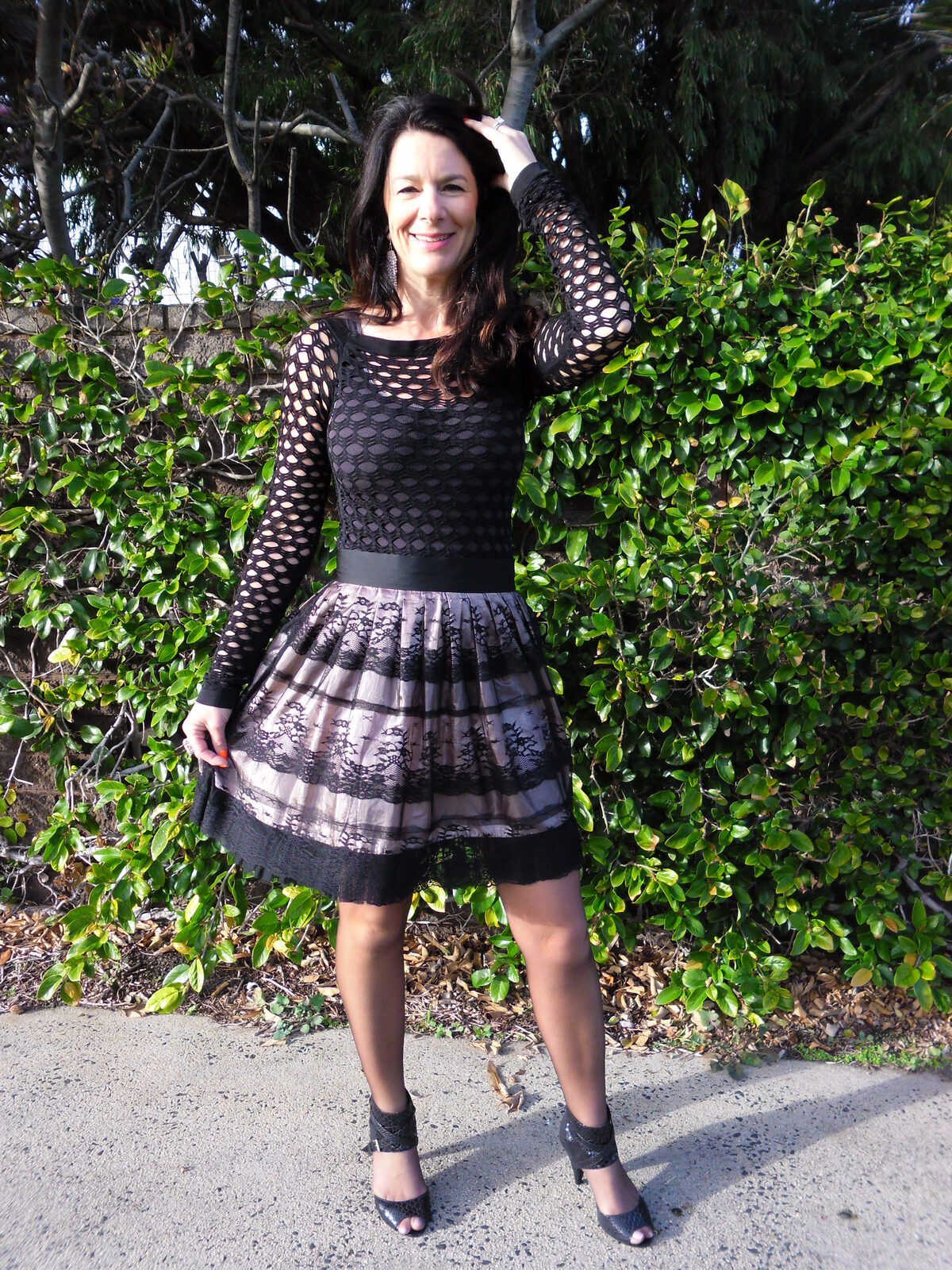
Think of it as a ladder. Matte at the bottom: wool, cotton, crepe, suede. Then subtle sheen: fine knit, jersey, washed silk. Then real shine: satin, leather, patent, sequin.
Put two rungs together and the outfit works. Matte trousers with a satin top. A wool coat over a leather skirt. A crisp cotton shirt with a fluid crepe trouser.
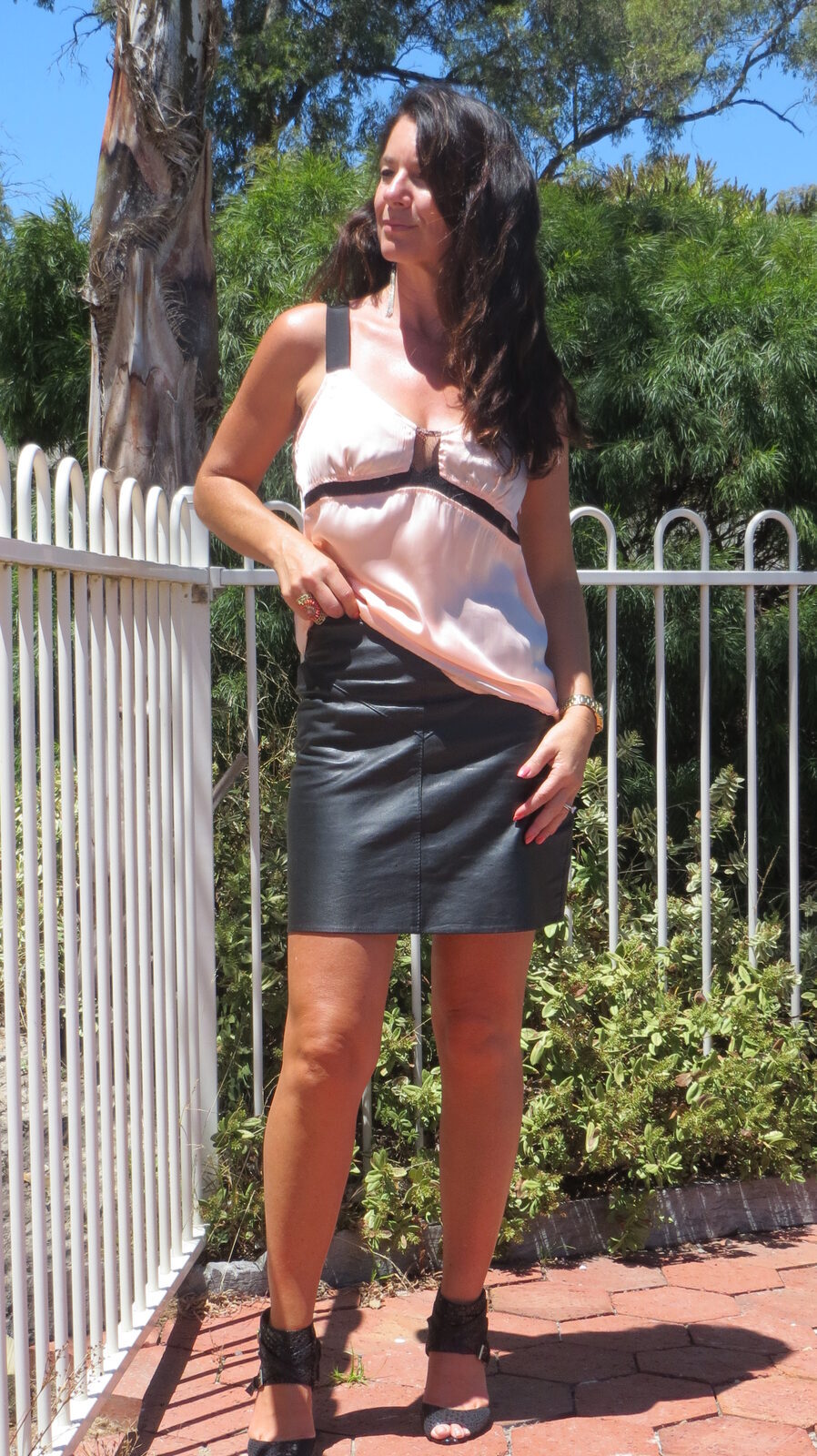
Flat black against flat black is what reads as cheap, and it is the real reason a black outfit can look like a uniform while an identical-looking one looks expensive.
Lace, net, ribbing and broderie all count, and they are the cheapest way to do it. That lace skirt above was six dollars and the netting top turned the whole thing into my favourite outfit of that winter.
Black in daylight and black at night
The same garment is two different things depending on when you put it on, and this catches people out constantly.
Daylight is unkind to black. It shows every fade, every stray thread, every bit of lint and every pill. Black is the most demanding colour to wear in full sun.
Evening is where black is at its best. Artificial light flatters it, the texture reads, and the severity that can look hard at eleven in the morning looks elegant at eight at night.
Which is practical advice, not philosophy. If you only own black and you feel wrong in it during the day, try the same pieces at night before concluding black is not for you. And in daylight, lean on the newest black you own.
Black next to your face
This is the only place where black genuinely does not suit some people, and it is worth being precise about.
Black casts a shadow upwards. On high-contrast colouring, dark hair and clear skin, that is flattering. On fair, warm or softer colouring it can pull grey into the face.
That is an argument about placement, not about black. Black trousers, black skirt, black coat: no issue at all.
Near the neckline, intervene. A scarf, a collar in another colour, a necklace that sits in the gap, or a lighter top under a black jacket. Any one of those breaks the shadow.
And if you have never tested it properly, the colours that suit your skin tone sets out the method, which takes about ten minutes at a window.
One black dress, two evenings
Here is the whole argument in a single garment.
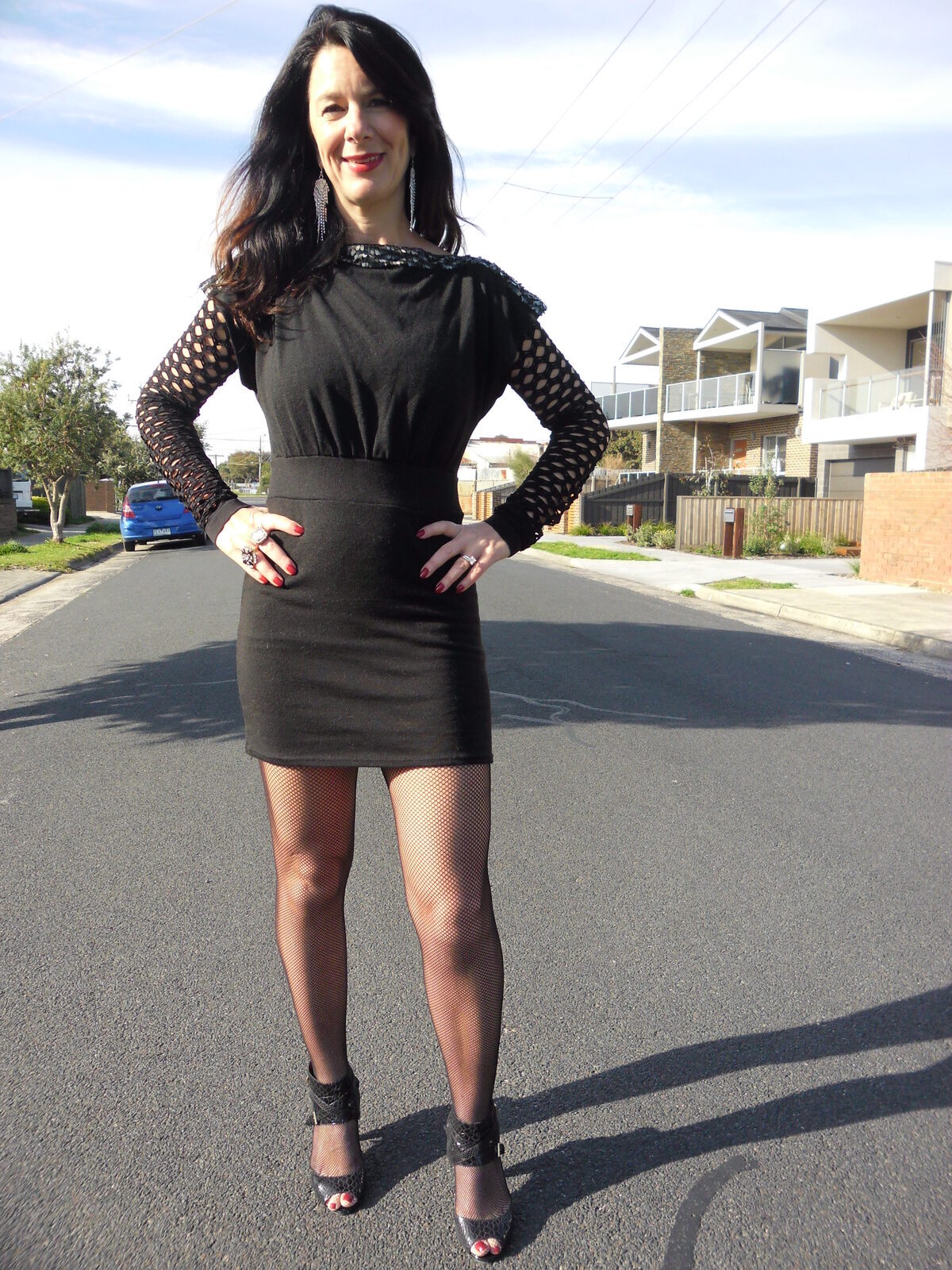
The dress at the top of this post is a sleeveless little black dress with a panel of sequins at the neckline, and it cost me under ten dollars at my favourite op shop. Dressed up for dinner, as it is there, it takes fishnet tights, a netting top over the top, heels and some serious bling. Dressed down it is opaque tights, a plain long-sleeved top underneath, and flats or boots.
Same dress. Two outfits. Nothing changed except the surfaces around it, which is the point of the whole post.
Melbourne’s problem, specifically
This city wears black, and that is both the best and the worst thing about dressing here.
Black is genuinely practical here. It survives public transport, it works at every temperature we get, and it does not show the rain.
But a default is not a decision, and that is where the drabness comes from. Five days a week in black you did not choose is different from five days a week in black you did.
One deliberate thing is usually enough. A texture, a colour at the neck, a coat that is not black. The point is that somebody made a choice, and that is visible.
The colours that lift black
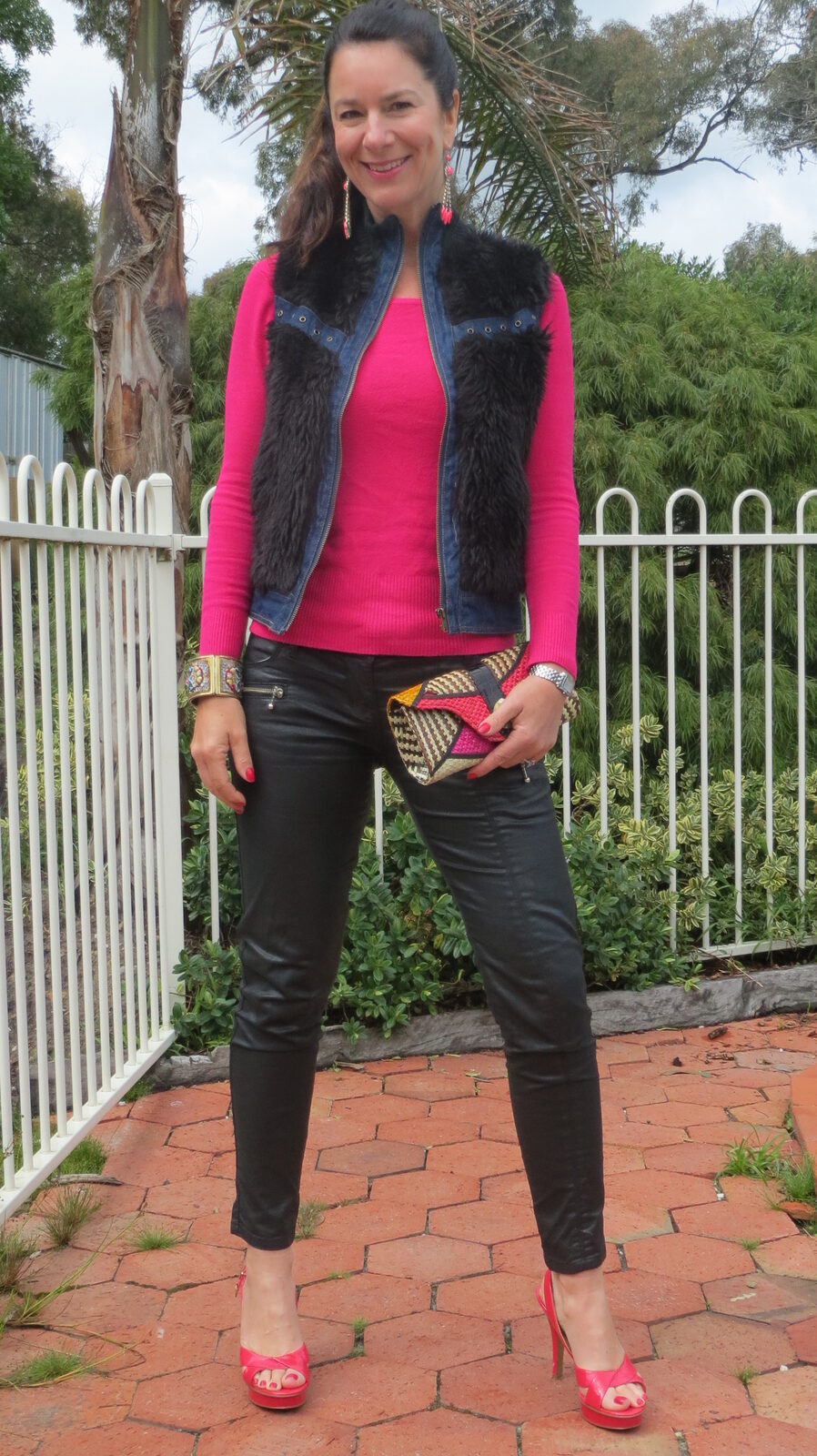
Clear brights are the easy win. Hot pink, scarlet, cobalt, emerald. Black is the best backdrop there is and a bright against it looks intentional even when it was not.
Metallics count as colour after dark. Gold and bronze against black are warm in a way silver is not.
White is the obvious one and the sharpest, though it is also the most formal.
The disappointments are the mid-tones. Mushroom, dusty mauve, mid-brown. Black overwhelms them and they muddy it back, and neither comes out well.
And the one to actually avoid is nearly-navy. Black with a dark navy that is not quite a contrast reads as a mistake rather than a choice, which is the two-blacks problem wearing a different hat.
The black things genuinely worth owning
Not a capsule, just the ones that repay their keep.
A black knit in a good fibre. Merino or a wool blend rather than acrylic, because this is the piece that sits against your face and the cheap version pills within a season.
Black trousers that fit properly. The most-worn garment in most wardrobes and the one people most often own in the wrong size.
One black dress with an interesting surface. Not a flat jersey shift. Something with a texture, a seam or a detail, because that is the one that goes out at night.
A black jacket or coat, which does more for an outfit than anything else black you own.
And black shoes you can actually walk in, in a finish you like, because scuffed black shoes undo an entire outfit faster than any other single thing.
What is not worth owning is nine black tops of the same weight. That is the pile most people already have, and it is why the wardrobe feels both full and useless.
When black is the wrong call
Rare, but worth knowing so you are choosing rather than defaulting.
A first interview. Head-to-toe black can read as closed in a room where you want to seem open, and navy or charcoal does the same job more warmly. That argument is laid out in what to wear to a job interview.
A christening, where the room is built around a baby in white and black can feel heavy, though it is nobody’s rule. The christening guide has the detail.
A cocktail event where you want to be remembered. Black is correct and it is also what two thirds of the room will be wearing, which is the trade. Cocktail dress code covers the alternatives.
And a funeral is the opposite case, where black is never wrong, and even there it is no longer required.
Black in an Australian summer
Not off limits, but fabric decides it.
Black absorbs heat, so what the garment is made of matters more than the colour.
Black linen, cotton voile, loose silk are perfectly comfortable at thirty degrees.
Black polyester is miserable at twenty-five and will be the reason you decide black is a winter colour.
Loose, not fitted. Air moving against the skin does more than colour ever will.
Where to spend on black
A short buying note, because the economics are not obvious.
Spend on the black things nearest your face and your hands. A black knit, a black shirt, a black jacket. These are seen closely and in daylight, and cheap versions pill, fade and go shapeless fastest.
Save on black below the waist. A black skirt or black trousers in a decent fabric are seen less critically and last longer anyway.
And replace black basics more often than you want to. A black T-shirt is a consumable, not an investment. Three years is generous.
The short version
- Most drab black is just faded black. Check it against something new, in daylight.
- Wash inside out, cold, less detergent, and dry in the shade.
- Two blacks in one outfit need checking by a window first.
- Surface is your only variable. Put two different ones together.
- Flat black on flat black is what looks cheap.
- Daylight is unkind to black, evening flatters it.
- The only real problem is black next to some faces, and that is placement.
- Brights lift it, mid-tones muddy it, nearly-navy looks like an error.
Here is the arithmetic that surprises people. Pull everything black out of your wardrobe and put it on the bed, and for most Australian women it is somewhere between a third and a half of everything they own. Then count how many of those pieces you actually wear. The answer is usually about six, and the rest are faded, or the wrong black, or perfectly good and simply never combined with anything. That is not a shopping problem and buying a seventh black thing will not touch it. It is two hours of standing in front of it with somebody who can see it clearly, which is what a personal stylist in Melbourne does for $299, and the usual outcome is a smaller pile of black doing considerably more work.
Now go and hold your favourite black top up to the window.
And now you’re Looking Good Girls.
“Even the darkness will not be dark to you; the night will shine like the day.” Psalm 139:12.