
I’m literally up to my eyeballs in clothes and fashion at the moment, and so the timing is perfect to talk about investment pieces.
Somewhere in between styling ladies and selling clothes to budding fashionistas, I’ve realised you’ll do yourself a big favour by pouring cash into quality clothing rather than cheap pieces.
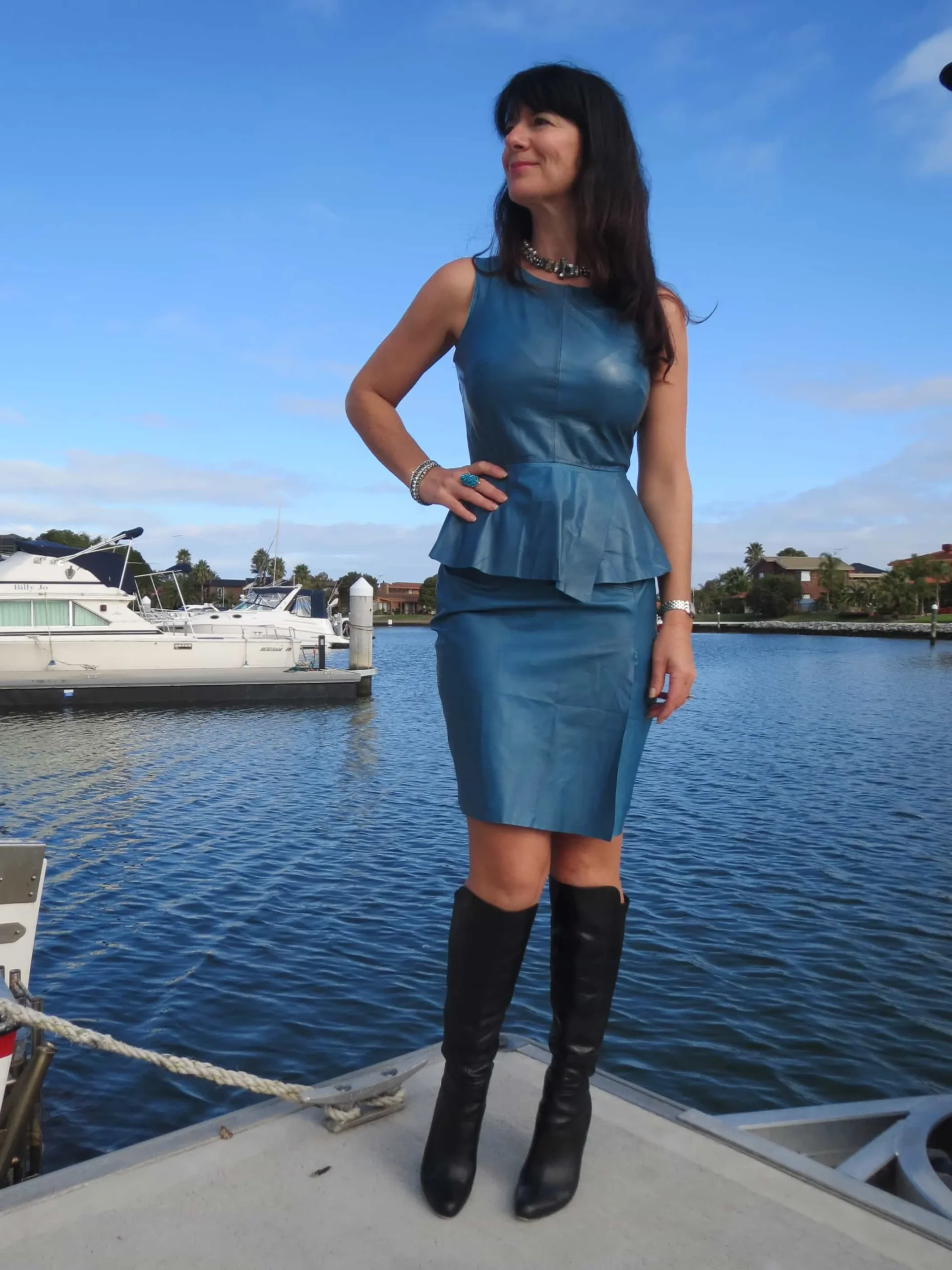
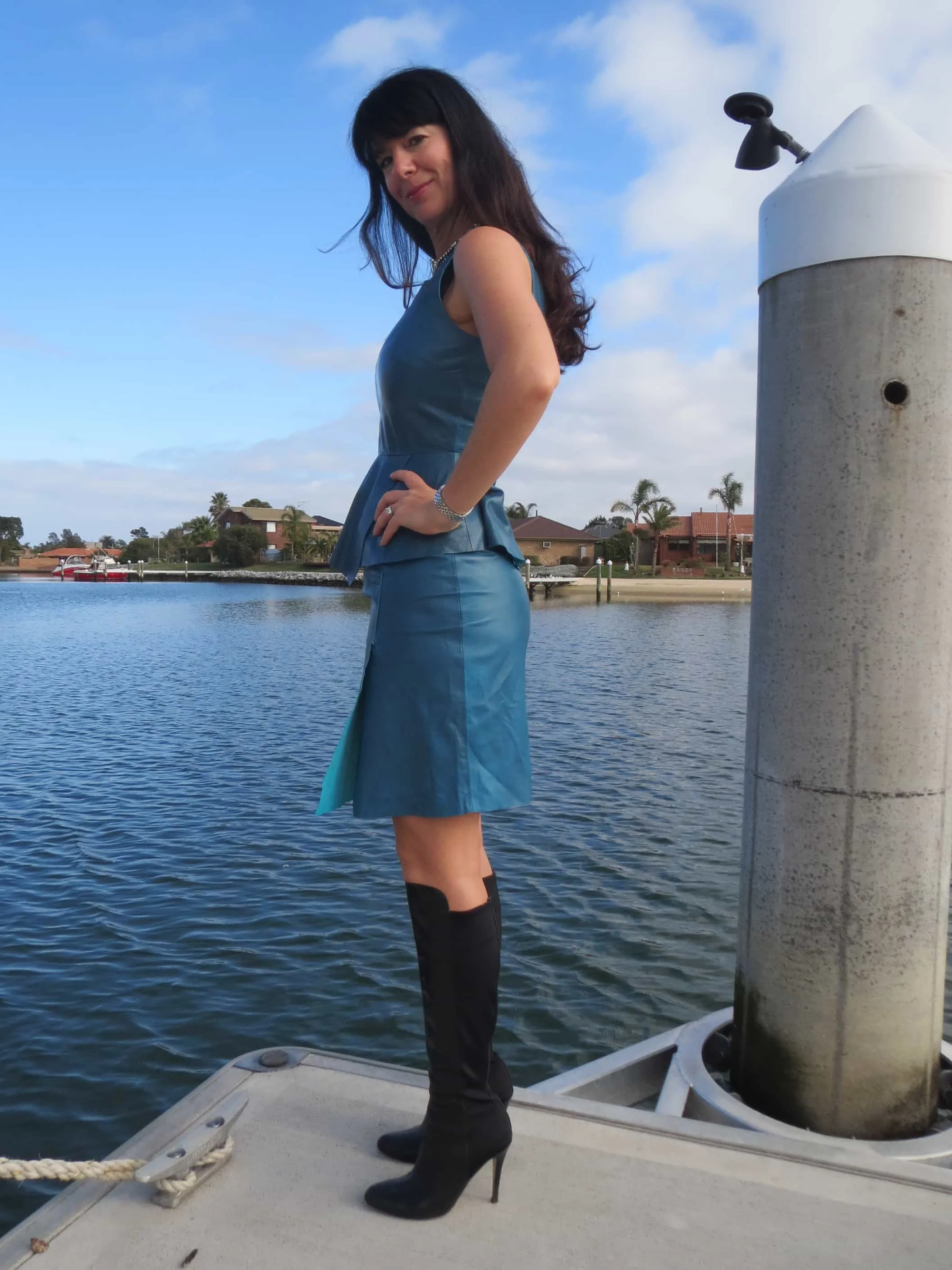
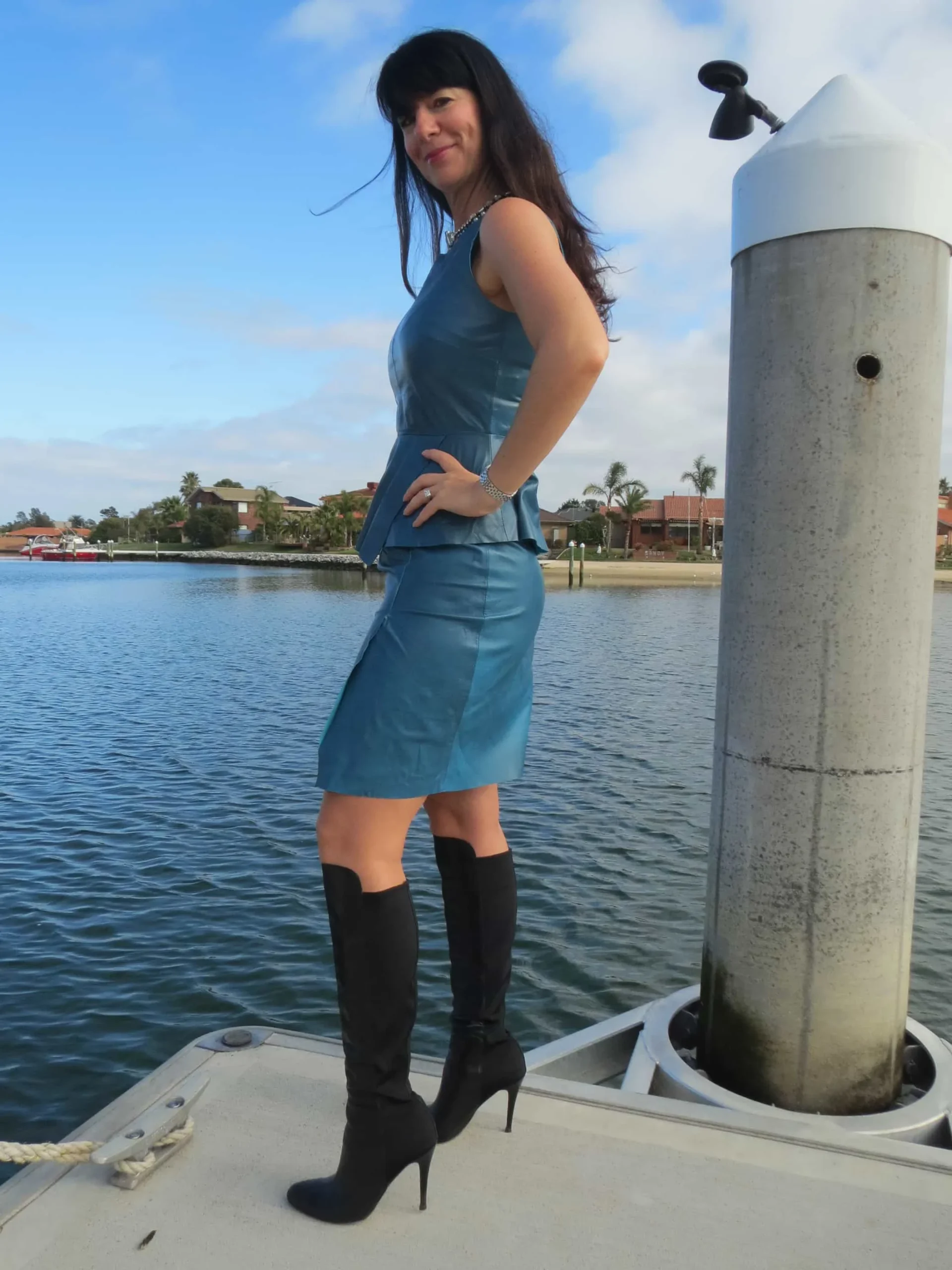
This $800 designer Morrison teal leather skirt and matching peplum top is the perfect case in point. The quality is unbelievable (it would want to be, for that price) and I know it will be a stand-out piece for years to come.
Yes, the frugal fashionista just spent $800
I can hear it, so let me deal with it head on.
Fourteen years of this blog is mostly $4 skirts and op shop coats, and here I am in an $800 outfit. Those two things are not in conflict; they are the same strategy seen from two ends.
Spending nothing on everything is not thrift, it is just a wardrobe full of things you do not quite like. Real thrift is deciding where the money goes, which means spending almost nothing on most of it precisely so you can spend properly on the few pieces that carry the rest.
The $4 skirt and the $800 skirt live happily in the same wardrobe. What does not belong is the $180 skirt bought without thinking, worn twice, and quietly resented. That is where most clothing budgets actually die.
The only sum that matters
A purchase like this might sting at the time, but it will earn its keep.
The number to use is not the price. It is cost per wear, price divided by the number of times it will realistically leave the house.
An $800 skirt worn twenty times a year for five years costs eight dollars a wear. A $60 skirt worn three times costs twenty. The expensive one is, straightforwardly, the cheaper garment.
The catch is the word realistically. Everyone overestimates. Before anything expensive, I ask three questions:
Where exactly will I wear this? Name three actual occasions in your actual life, not three imagined ones. If you cannot, put it down.
What do I already own that it goes with? If the answer is nothing, you are not buying one thing, you are buying an outfit, and the real price is much higher than the tag.
Would I still want this if nobody knew what it cost? A useful question, and an uncomfortable one.
What deserves real money
I’ve noticed the most expensive goodies in my wardrobe: particularly the coats, jackets and boots: remain timeless and chic, and I can rely on them each and every winter.
There is a pattern in that, and it holds every time:
Coats and jackets. Worn over everything, seen most, and structure is what money actually buys. A good coat is the single highest-return purchase in a wardrobe.
Boots and everyday shoes. Worn hardest, and the difference between a well-made sole and a cheap one shows up within a season.
Leather, in any form. Improves with age, which almost nothing else does. This skirt will look better in five years than it does now.
Bags. No sizing risk, no fit risk, no body-shape risk. A bag either suits you or it does not, and it is not going to stop suiting you next year.
Anything tailored. Fit is what you are paying for, and fit is the thing a cheap version cannot fake.
The common thread: no fashion in them. These pieces are shapes rather than trends, so they cannot go out of date, only out of repair.
Where to stay cheap, cheerfully
I’m not saying don’t spend on cheap items (after all, a girl’s gotta have fun with the latest trends) but take stock of your wardrobe before you start throwing cash around.
Spend as little as you can get away with on:
Anything strongly of its moment. The lacing, the print, the silhouette everyone is wearing. It is fun, it should be cheap, and you should be able to abandon it without guilt.
Bright colours. You will tire of a strong colour long before it wears out.
Trend shoes. Buy a $59 flat rather than a $300 one.
T-shirts and basics you wear to death. They wear out regardless. Replace them cheaply and often.
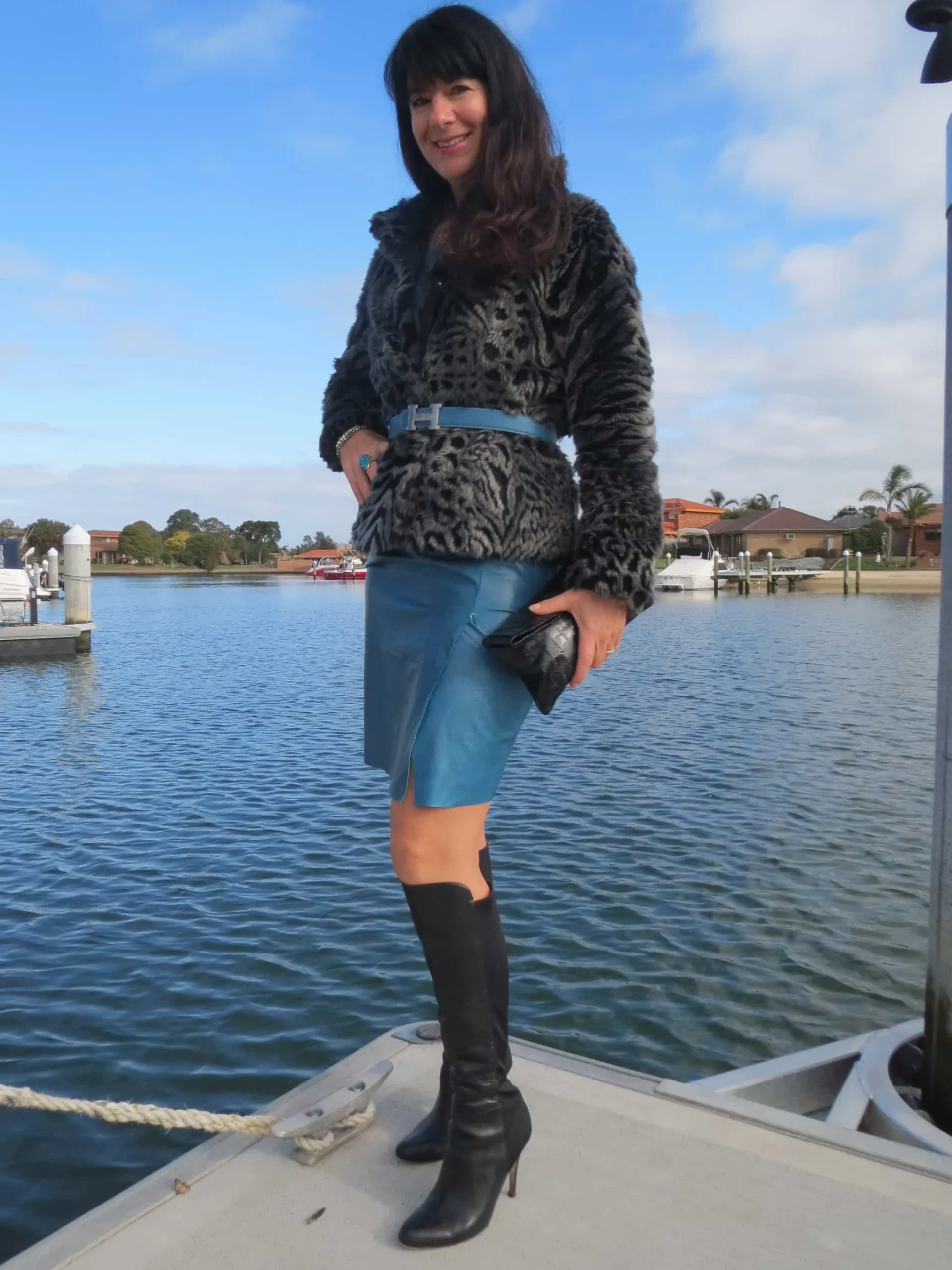
I picked up this animal print fur at H&M last year for an absolute steal. Fortunately, animal print and fur are bigger than ever this autumn/winter. That was money well spent in my book.
That is the strategy working exactly as intended: a chain-store trend piece next to a designer investment, and nobody looking at the outfit can tell you which is which.
Clear the decks first
I recently culled my wardrobe and donated tonnes of clothing to The Salvation Army. It was very refreshing, and it’s made room for more great investment pieces.
That order matters. Culling before buying is not just tidiness. It is the only way to find out what you actually own, and most people discover they already have three versions of the thing they were about to buy.
A cull also makes the gaps obvious. Once the noise is gone you can see that what is missing is a decent winter coat, not another top. That is when spending properly becomes easy, because you are buying a known gap rather than a hopeful maybe.
If working out which pieces deserve the money is the part you find hard, that is most of what a wardrobe edit is: going through what you own, keeping what earns its place, and building a short list worth spending on.
“The Lord your God has blessed you in all the work of your hands. He has watched over your journey … the Lord your God has been with you, and you have not lacked anything.” Deuteronomy 2:7