
A maxi dress is a must!
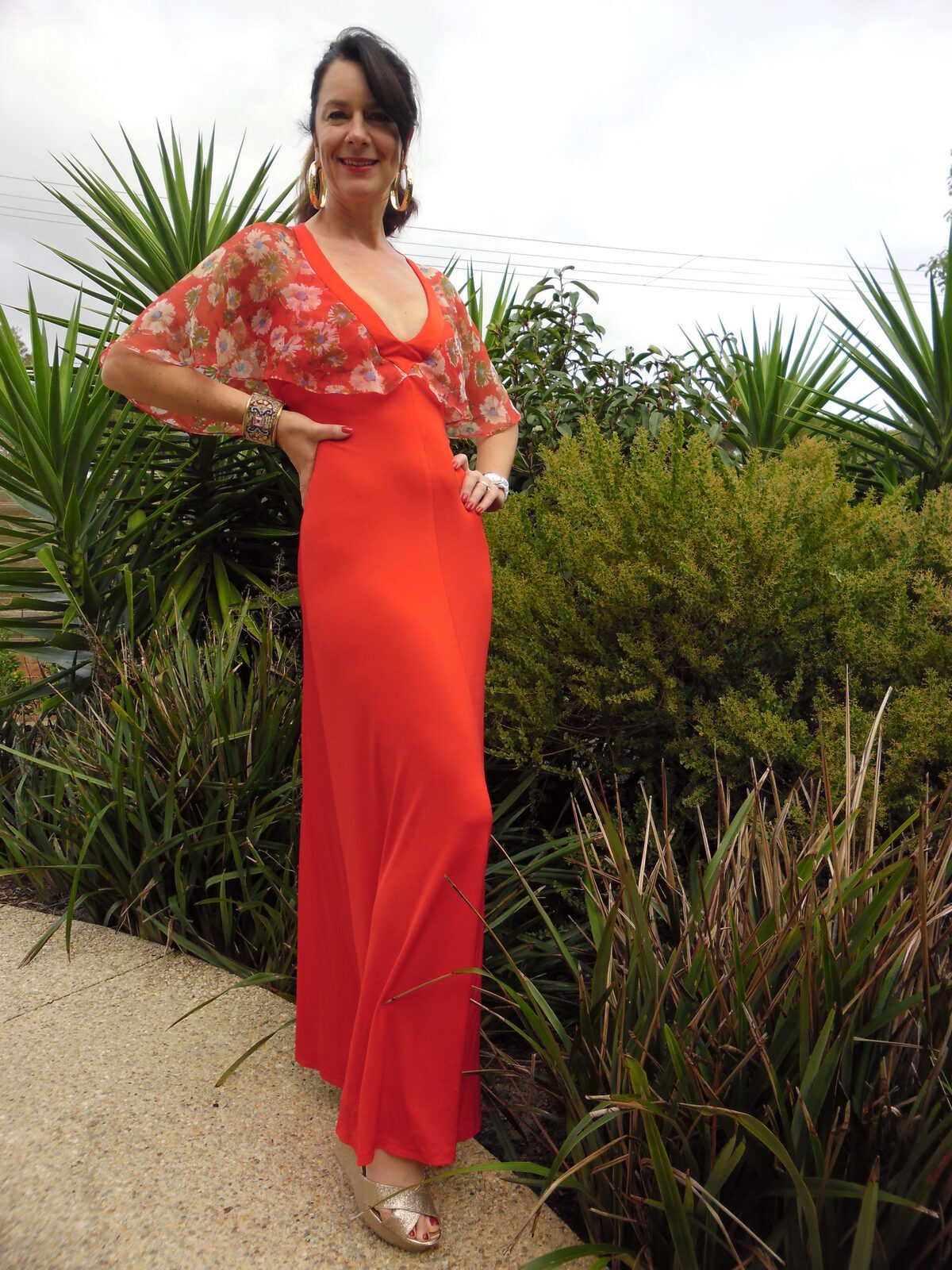
This vintage beauty came straight out of the 60s and from Mum’s burgeoning collection. I wore it to a friend’s birthday party a couple of years ago when maxis were not around. It takes a brave soul to make such a move. Several months later they were everywhere, and fortunately, they are still hitting the fashion spot.
The maxi problem, and the fix
A maxi is a lot of fabric, and fabric is volume. Get it wrong and it wears you rather than the other way round.
There are only really two rules, and this dress happens to demonstrate both.
Something has to be fitted. Anywhere will do. The waist, the bodice, the shoulders. This one is fitted right through the body with the volume kept for the sheer wings, which is why it does not swamp. A maxi that is loose from shoulder to floor has no shape to give you, and no amount of accessorising will put one back.
The hem has to nearly touch the floor. This is where most maxis fail. A hem finishing at mid-calf or at the ankle bone cuts your leg at the widest point and takes inches off you. It should skim the top of your foot, and it should do it in the shoes you will actually wear.
That second one is worth taking seriously, because it means a maxi is a shoe-specific garment. Buy the dress, then hem it to your shoes, not the other way round. A good alterations place will do it for very little and it is the difference between a dress you love and one that hangs there.
A third, optional rule: keep the top half simple. A maxi is already the whole outfit. Add a fussy top, a big necklace, a jacket with detailing, and it becomes a lot to look at.

I love the plunging neckline and open back of this maxi. The sheer ‘wings’ are so feminine.
Skin, and where to show it
An open back is the most useful detail a long dress can have, and it is worth understanding why.
A maxi covers you from shoulder to floor, so unless something breaks it up, the eye has nowhere to go. One area of skin gives the whole dress a focal point, and the back is the easiest one, because it requires no confidence at all from the front and it is a part of the body that is generally very forgiving.
The general rule: one area of skin, not three. Plunging neckline and open back and a split is a lot. This dress gets away with two because the sheer panels soften both.
If you are wearing a maxi and it feels like too much dress, look for where you could show a bit of skin rather than for something to add. Pushing the sleeves up works. So does a deeper neckline, or simply taking off the cardigan.
Wedges under a maxi, every time
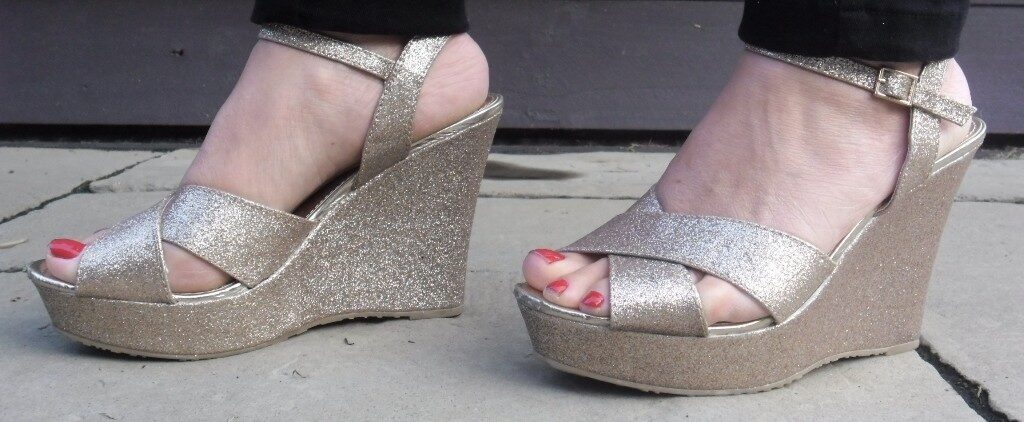
These gold glitter wedges were a $10 bargain from Famous Footwear.
A wedge is the correct shoe under a long dress and I will happily argue the point.
Nobody sees the shoe, so its only job is to add height and let you stand up for four hours. A stiletto does the first and fails the second, and it sinks into grass at every outdoor party you will ever attend. A flat leaves you treading on your own hem all night.
A wedge gives you the height with a stable base and complete comfort, and since it is invisible under the fabric, it does not matter in the least what it looks like. This is the one occasion where you can buy purely for comfort with no aesthetic consequence whatsoever.
The exception is if the dress has a split, in which case the shoe reappears and you should like it. These glittery gold ones would pass either test, which is presumably why they cost ten dollars and got a great deal of wear.
Buying vintage without regretting it
This one came out of Mum’s collection, which is the best possible source. If you are hunting your own, a few things to check.
Underarm seams and stains. The most common place vintage has given up, and the least fixable.
Zips. Old metal zips seize, and a full-length back zip on a dress is a real repair. Run it before you buy.
The fabric under strong light. Look for thin patches and pinholes, especially at the shoulders where clothes hang for decades.
Sizing means nothing. A vintage 14 is nothing like a modern 14. Take a tape measure or take the risk knowingly.
Smell it. Musty comes out with airing. Anything sharper does not.
Vintage is also where you find fabric that simply is not made any more, which is the real reason to bother. The weight and the drape of a 1960s dress is not something a modern chain store can reproduce at any price.
(From 2012, and the dress is older than I am. Mum’s collection is still the best shop I know.)
If there is something beautiful in your wardrobe, or your mother’s. That you have never worked out how to wear, that is one of the loveliest parts of a styling session.
“Lazy hands make for poverty, but diligent hands bring wealth.” Proverbs 10:4.