

I just spotted a Tigerlily bikini in Vogue for $155. I paid $6 for this vintage Tigerlily bikini.
You’ve gotta love that.
With the temperature set to climb to 39 degrees today the only place I’ll be heading is the pool. So I thought I’d show you a bit of poolside glamour before I jump in and come up looking like a drowned rat.
Yes, you can buy swimwear secondhand
I know. I can hear some of you already.
But swimwear is one of the great op shop categories, for a very simple reason: people buy togs for a holiday, wear them for one week, come home, and never put them on again. The racks are full of near-new swimwear that has seen precisely seven days of sunshine.
The trick is knowing what to check, and it takes about thirty seconds.
Stretch the elastic at the leg and back. Pull gently and let go. It should snap straight back. If it stays stretched, or the elastic has gone crinkly and separated from the fabric, put it down. That is age, and no amount of washing fixes it.
Hold it up to the light. Swimwear thins where it has been worn, particularly across the seat. If light comes through unevenly, it will be transparent when wet.
Check the hygiene liner. Bikini bottoms should have one. If it has been removed, or looks anything other than clean, walk away. This is the one place I would not compromise.
Look at the ties and clasps. Halter ties fray where they knot and clasps corrode. Both are visible in a second.
Watch for chlorine damage. Faded patches, or fabric that feels slightly stiff and chalky. Pool swimwear ages far faster than beach swimwear.
Then wash it properly before you wear it: cold water, gentle detergent, never a machine. That is the whole method, and it is how a $155 bikini ends up costing six dollars.
The exception is a one-piece with underwire or serious structural support. Those depend on the elastic being exactly right, and you cannot judge that on a hanger. Buy those new.
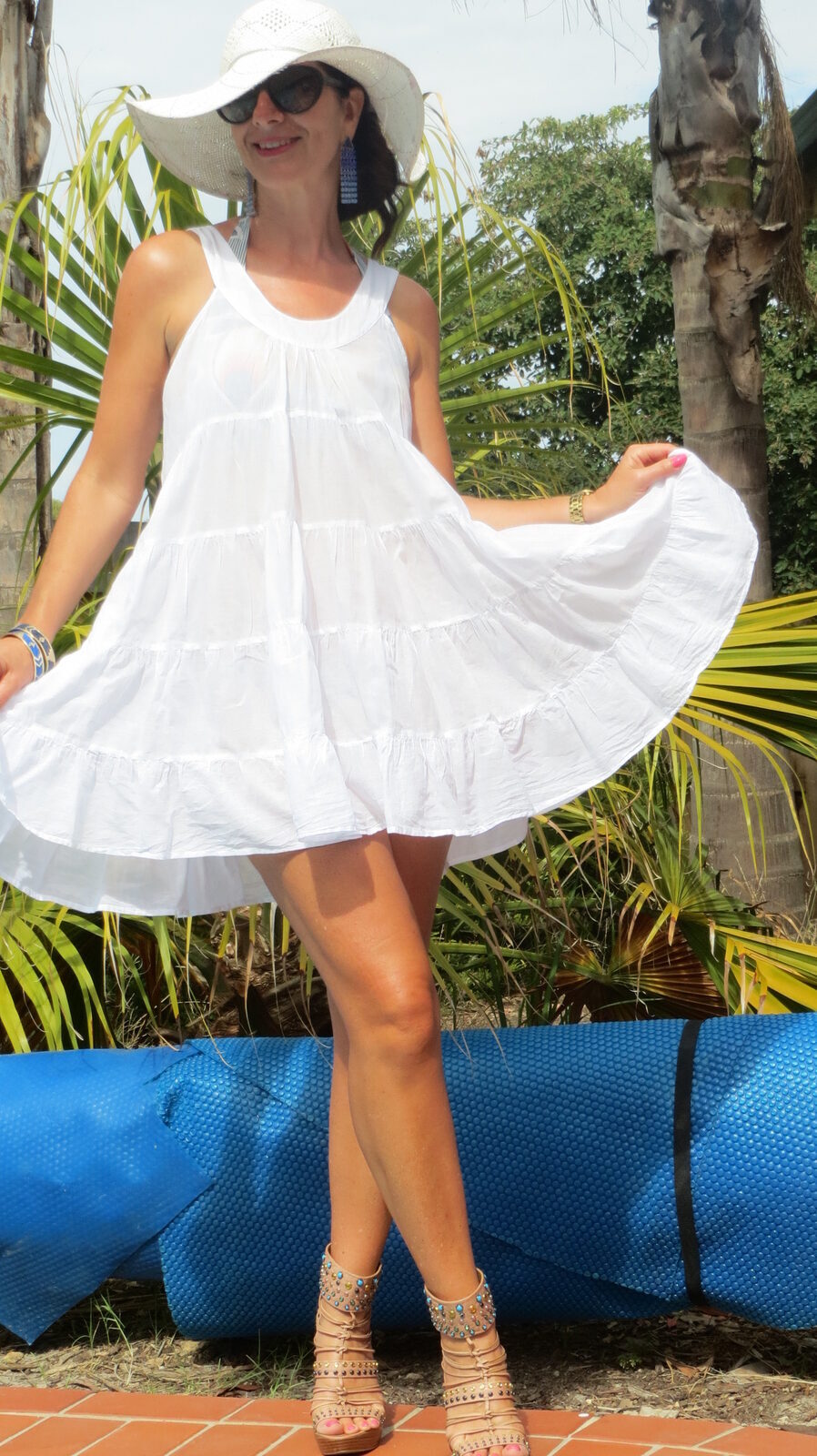
The cover-up matters more than the bikini
A light cotton dress is a chic way to cover up on your way to and from the beach or pool. Mum picked this one up on her travels to Thailand.
Obviously I’d normally trot around in bare feet and thongs, but I adore these embellished platforms and couldn’t resist amping it up a bit.
Here is the practical point. You spend maybe an hour actually in the water and the rest of the day walking to it, sitting beside it, buying coffee near it and driving home from it. The cover-up is doing far more work than the swimsuit, and deserves more of your attention.
What makes a good one:
Cotton or linen, never polyester. It has to breathe when you are hot and dry fast when you are damp.
Loose enough to go on over wet skin. This is the test everything fails. A fitted dress will not go over a wet body without a fight.
It has to work with shoes. A cover-up you can only wear barefoot is a towel with ambitions. This one goes just as happily with platforms as with thongs, which is the difference between a beach item and a summer dress.
No ironing. Which brings me to the other one.
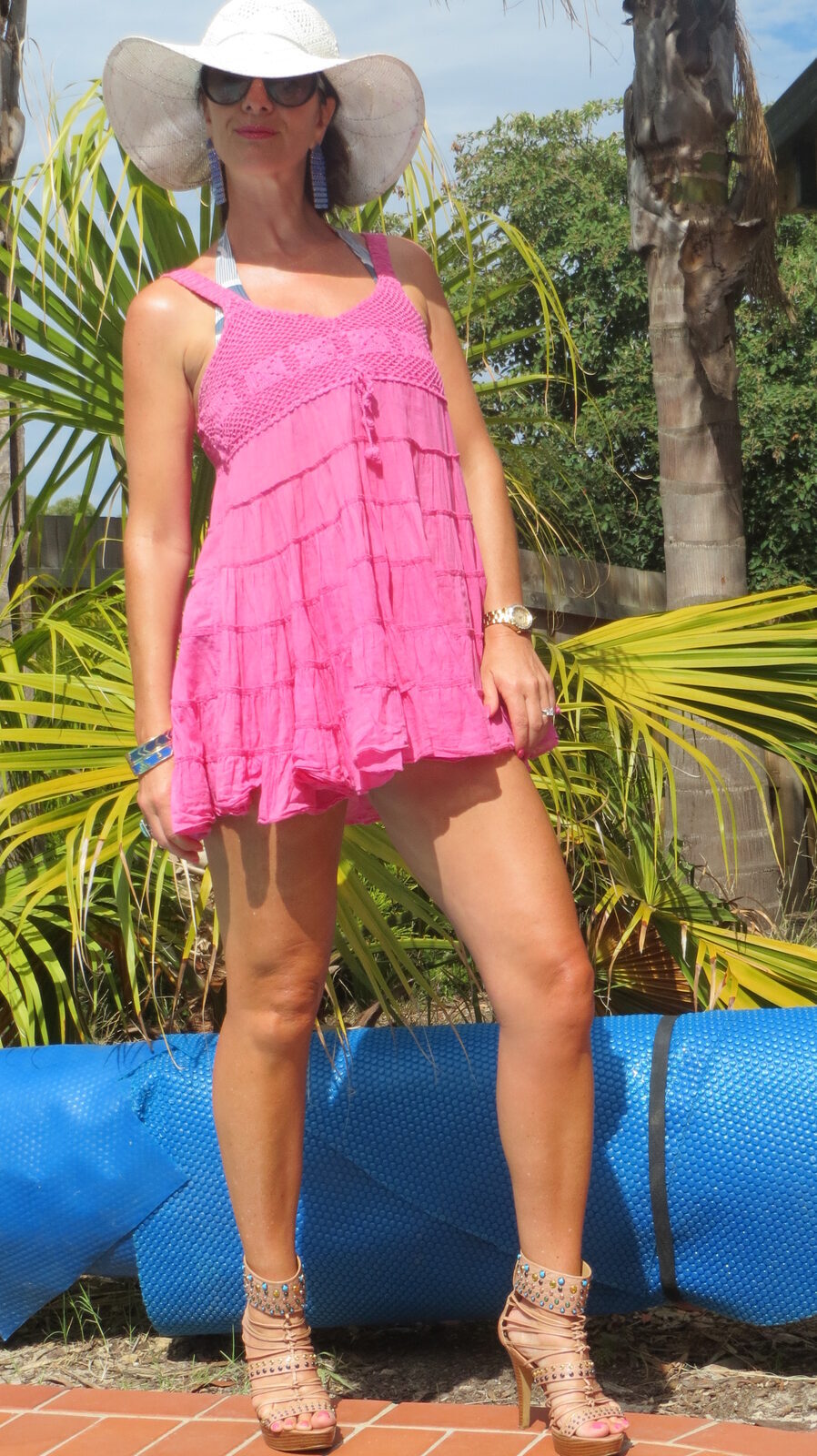
I also scored this hot pink mini dress from Mum and Dad’s Thailand sojourn. This one gets a lot of wear because I don’t have to iron it!
The white Rip Curl hat was a $10 surf shop bargain. It was actually marked down to $15, but I spied a tiny mark on it, pointed it out to the assistant, and voila, down to $10.
Ask about the mark
That hat is worth pausing on, because it is a trick almost nobody uses and it works constantly.
Retail staff generally have some discretion on damaged stock, and a small mark on a white hat is exactly the sort of thing they would rather discount than send back. You are not haggling, which Australians are hopeless at and shops dislike. You are pointing out a flaw and letting them decide what to do about it.
The wording matters. Not “will you take ten dollars for it” but “I love it, but there’s a mark here, is there anything you can do?” One is a negotiation, the other is a favour, and people are far more willing to do favours.
It works on marked stock, missing buttons, a broken zip pull, one scuffed shoe in the display. The worst thing that happens is they say no.

These Dolce & Gabbana sunglasses are on trend and very durable. They’ve survived a few drops without so much as a scratch.
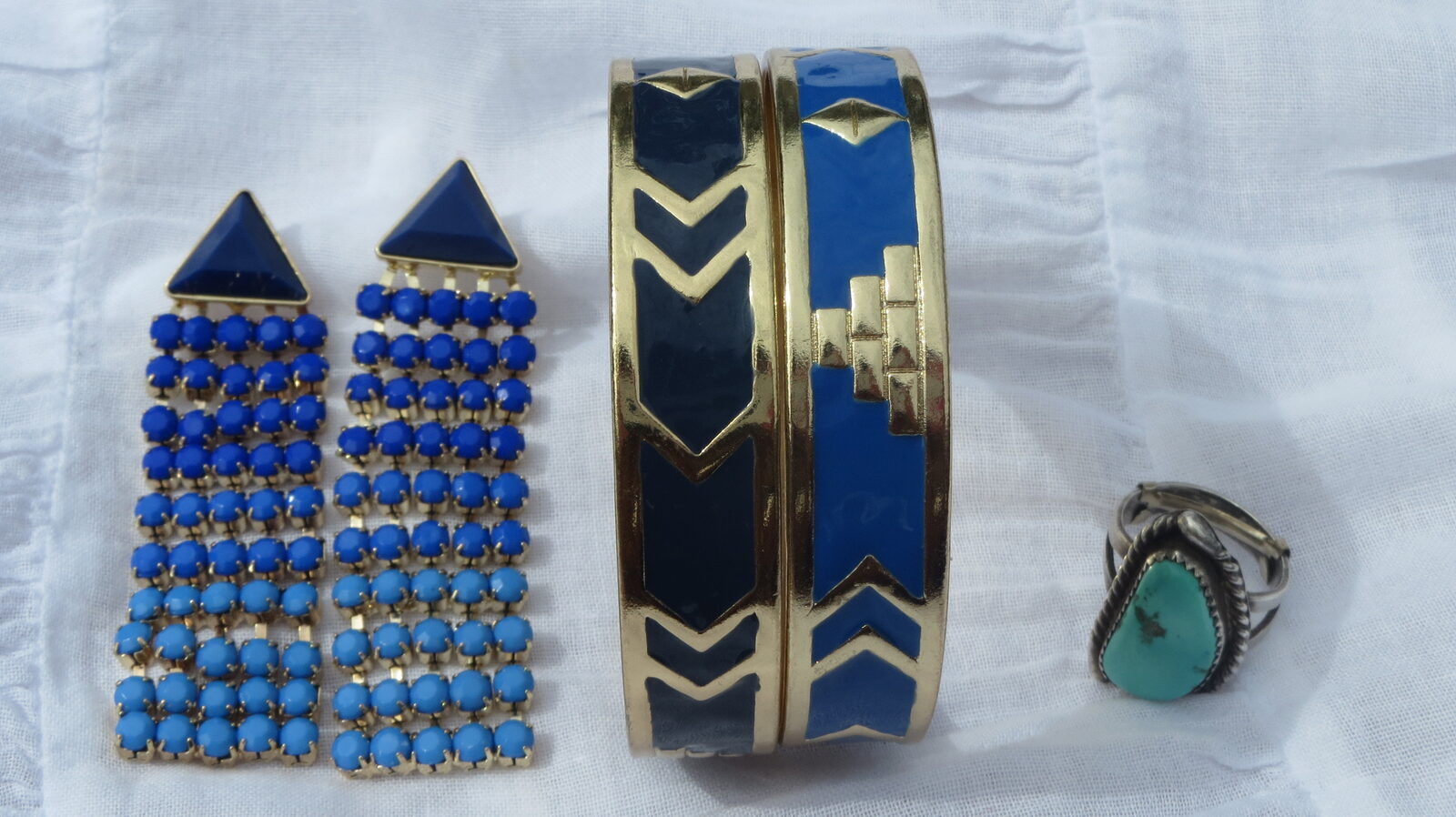
Some new goodies: Diva drop earrings $3, Diva blue and gold bangles $3 each, and a turquoise ring that was a gift from Mum.
Jewellery at the pool
Wearing proper jewellery with swimwear feels wrong to a lot of people, and it is the fastest way to make a beach outfit look considered rather than thrown together.
Gold and turquoise against a tan is an old combination for a good reason. Anything that catches the light does more by the water than it would indoors, because there is so much light about.
What I would leave at home is anything that will not survive salt or chlorine. Silver tarnishes, plated pieces lift, and good stones work loose. Which is precisely why $3 Diva earrings are the right choice for a pool and a treasured necklace is not.
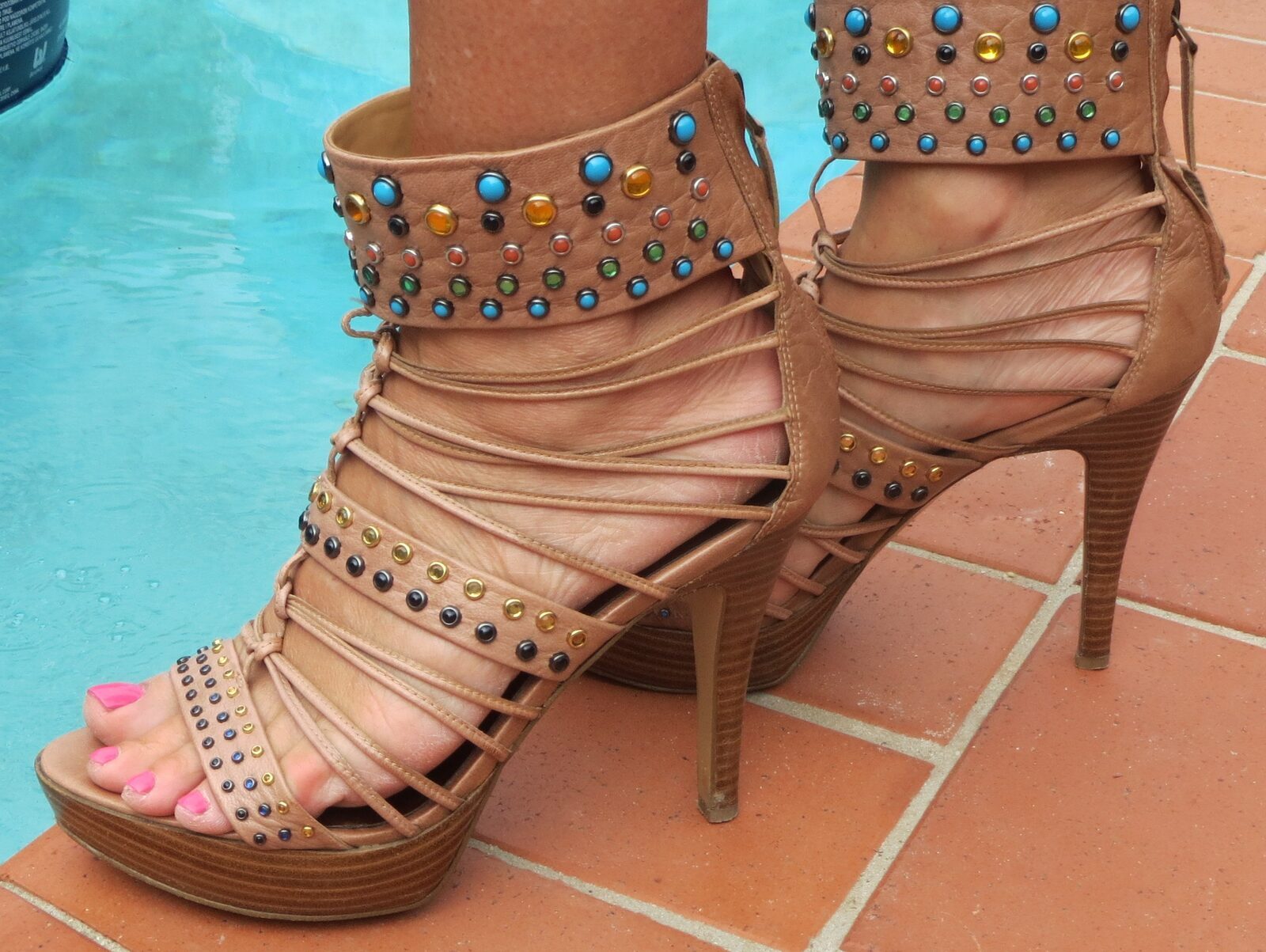
Found these hot embellished platforms in Nine West at the Direct Factory Outlets a couple of years ago for under $40. Colour on nails: Sweet Tart by Revlon.
(This is from January 2013, in a 39-degree Melbourne heatwave. The $6 bikini, the $10 hat and the $3 earrings all belong to that summer. The way to find them does not.)
If your summer wardrobe is all swimwear and nothing to wear over it, that is a common gap and a quick one to fix on a shopping day.
And now you’re Looking Good Girls.
“I will sing about the Lord’s faithful love forever; I will proclaim Your faithfulness to all generations with my mouth.” Psalms 89:1.