
One winter morning I got dressed in floral jeans, a fuchsia knit, a leather jacket and boots.
Spring on the bottom, winter on top, all in one outfit, because that is what the day was going to do.
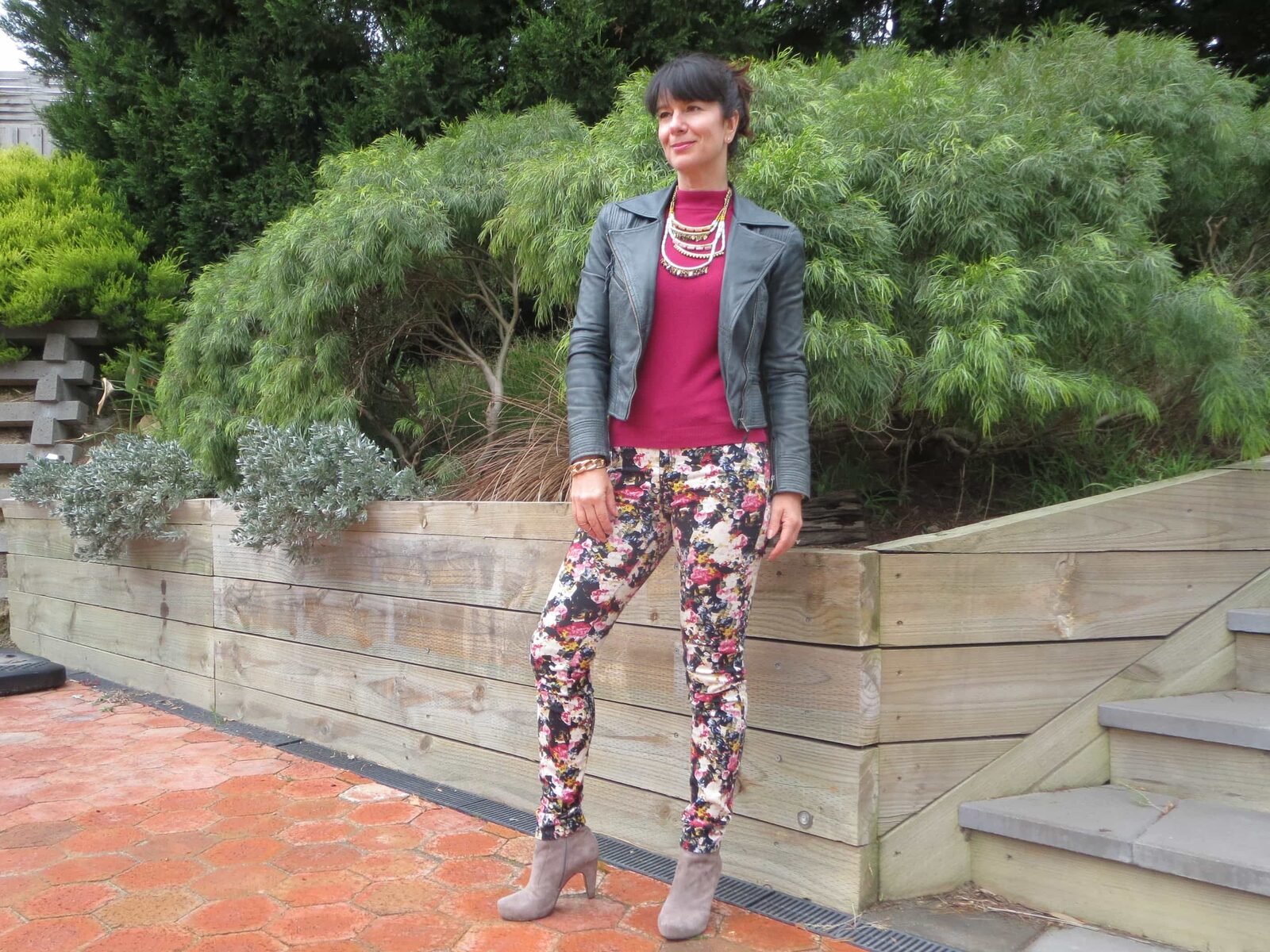
The jeans were $2.50 from a rummage through the sales boxes at Jay Jays, which is beside the point except that it is always slightly the point.
Every person who has ever lived here has had this problem. You leave the house dressed correctly and by two in the afternoon you are wrong. So let us actually solve it, starting with why it happens, because the reason changes what you should do about it.
It is not a joke, it is geography
Four seasons in one day is a genuine meteorological description of this city, and the Bureau of Meteorology explains exactly why.
Melbourne sits in what is called the westerly belt, a band where winds run west to east and cold fronts cross regularly. To the north is Australia’s hot, dry interior. To the south is the cold Southern Ocean. The city sits precisely where those two air masses meet.
So a searing northerly can be carrying heat off the desert at lunchtime, and be replaced within the hour by cold, showery air that began somewhere near Antarctica. Drops of more than twenty degrees are normal here and would be a national news event almost anywhere else.
None of that is random. It is regular, it is predictable, and you can dress for it.
The number that should change your coat
Here is the fact that reframes the whole thing.
Melbourne gets rain on roughly 143 days a year, but only around 640 millimetres of it.
Do that arithmetic and it comes out at a few millimetres per rainy day. Melbourne rain is frequent and light, not heavy. It is drizzle, showers and twenty minutes of nuisance, over and over, rather than the downpours that word “rain” suggests.
Which means most people own the wrong coat. A serious waterproof raincoat is built for weather Melbourne almost never has, so it spends the year in the boot of the car while you get damp in something else.
What you actually want is a layer that shrugs off twenty minutes of drizzle and looks like clothing rather than equipment.
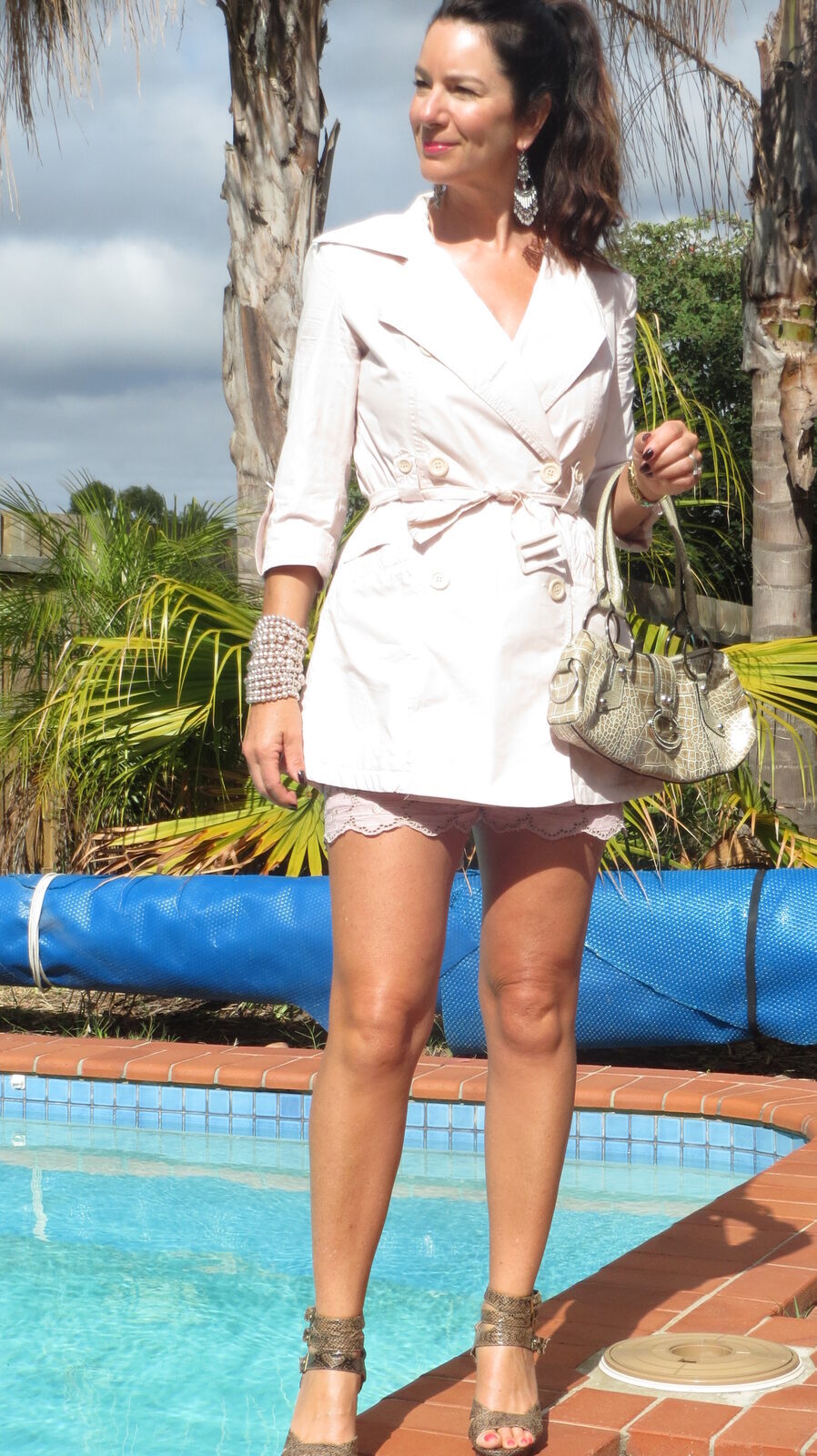
A trench, in other words. Water-resistant, works over a dress or trousers, warm enough for most of the year and not so warm you are trapped in it, and it reads as deliberate rather than practical. If you own one good coat in this city, make it that.
Dress for the range, not the forecast
This is the whole method and it fits in a sentence, but it takes some doing.
Most people check the app, see twenty-one degrees, and dress for twenty-one degrees. Then they spend from eight until eleven cold and from three onwards carrying something.
Look at the low and the high, and dress for both.
Base layer: comfortable at the top temperature. Whatever you would wear if it were the warmest part of the day. If twenty-one is the peak, that is a dress, or a shirt, or a knit you can push the sleeves up on.
Second layer: comfortable at the low. The thing that gets you from the car to the office at nine degrees and comes off by eleven.
And that is usually it. Two, occasionally three. Melbourne is a mild city that behaves dramatically, not a cold one.
Make the layer belong to the outfit
This is the bit that separates dressing well here from simply coping.
A layer you resent carrying will be left at home, and then you will be cold. Every time.
So the second layer cannot be an afterthought. It has to look right over the top and look fine hooked over your arm or across the back of a chair, because it will spend half the day there.
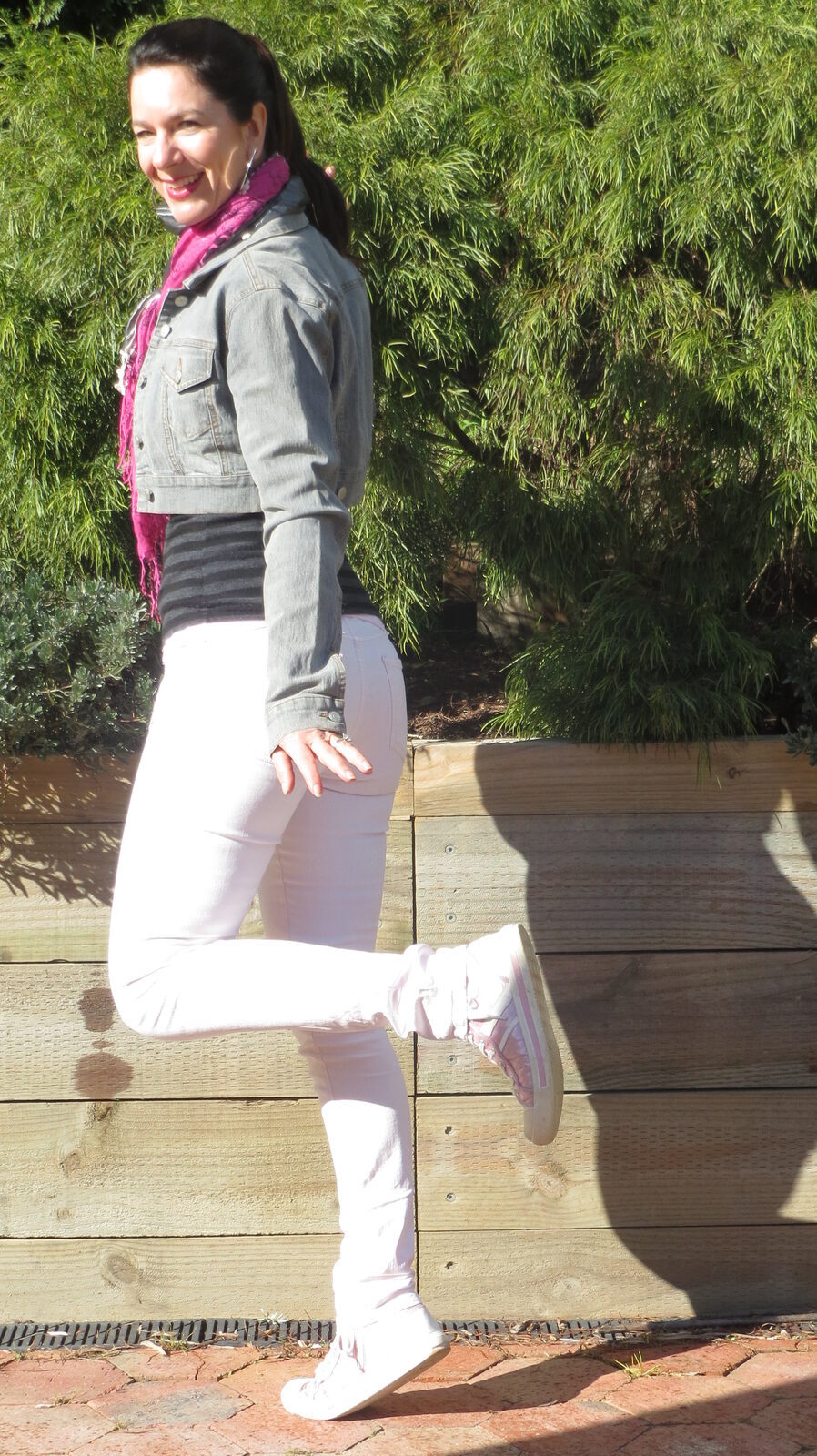
A cropped jacket, a good cardigan, a blazer, a denim jacket, a trench. Things that finish an outfit rather than covering it up. That is why a scarf is such a useful thing in this city: it is a layer that weighs nothing, takes up no room in a bag, and is genuinely decorative.
How to layer without looking like a parcel
Three layers at most, and each thinner than you think.
Keep the volume in one place. A slim base and a slim mid under a fuller coat. Or something fuller on top under a slim jacket. Bulk almost never comes from the number of layers, it comes from three medium-weight things all competing.
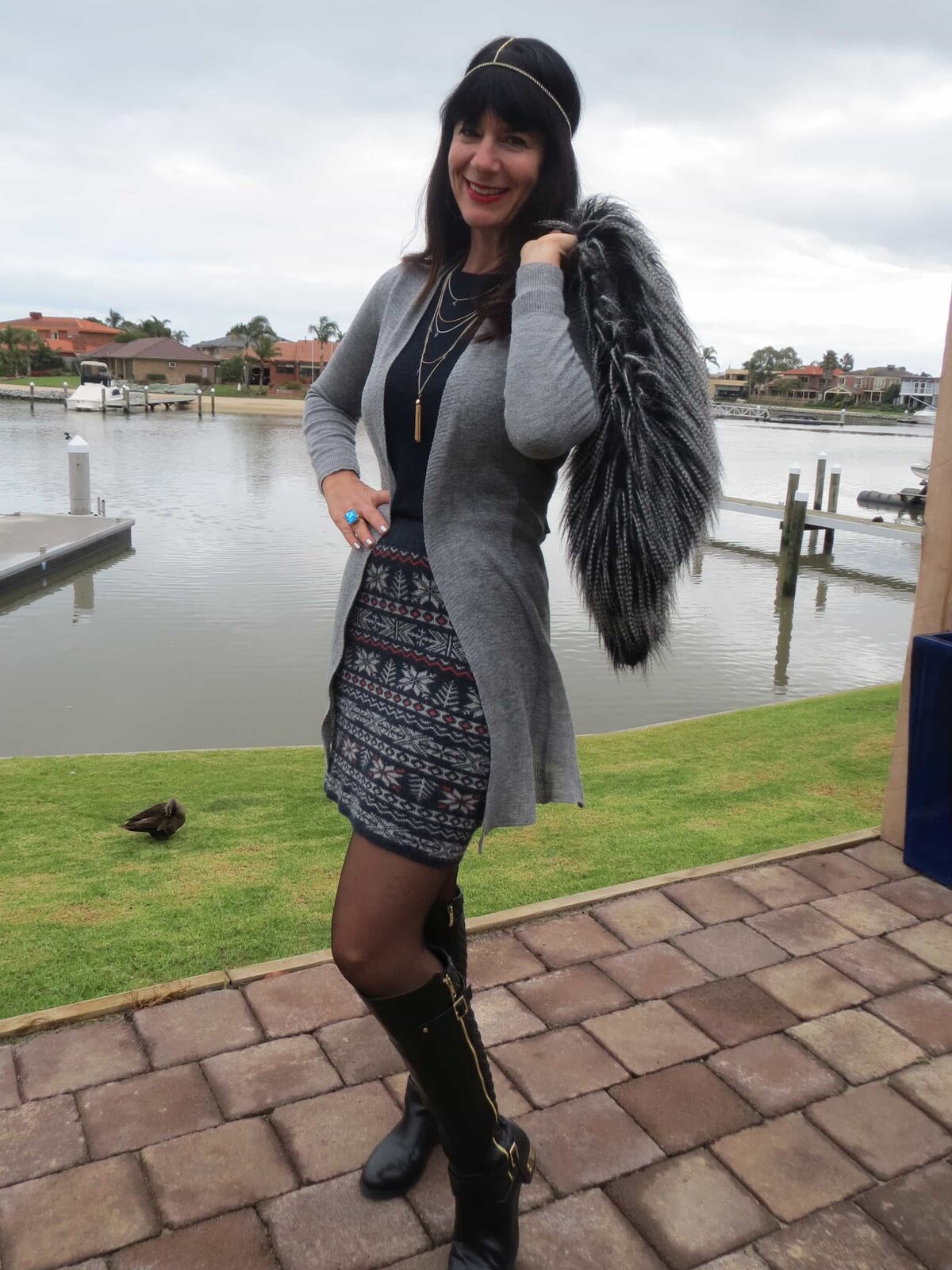
Let the layers show. A hem, a collar, a cuff peeking out reads as intentional. Layers that completely hide each other just look like you are wearing a lot.
Watch the length ladder. Each layer either clearly shorter or clearly longer than the one beneath. Two things ending within an inch of each other is what makes a middle look thick.
And go up half a size on the outer layer only. A coat that pulls across the back when you are wearing a knit under it is a coat you will not wear in winter, which is the only season you bought it for.
Season by season, honestly
Spring, September to November. Daytime near twenty, mornings much colder, and the most changeable weather of the year. The season that catches people out most, and the one where the layer matters most. This is also race season, which is why dressing for the Cup is a layering problem as much as a fashion one.
Summer, December to February. Mid to high twenties, and still capable of turning. A hot northerly day can end with a cool change in the afternoon, so the beach outfit still wants something for the evening.
Autumn, March to May. The best dressing season we have. Near twenty in the day, stable by Melbourne standards, and everything you own works.
Winter, June to August. Low to mid teens in the day. Genuinely mild by world standards and colder than it sounds, because of wind and damp rather than temperature. A good coat and a scarf solve almost all of it.
The two things people get wrong at ground level
Shoes. Suede and Melbourne are not friends between May and September, and a leather sole on a wet tram stop is dangerous rather than merely inconvenient. Ankle boots do more work in this city than any other shoe, because they cover the gap between hem and ground when the wind gets up.
Bags. You will be carrying a layer at some point today. A bag with a strap frees a hand for it. This is unglamorous and it is the difference between arriving looking composed and arriving with a jumper under your arm.
The indoor problem nobody mentions
Melbourne does not only change outside. It changes when you walk through a door, and in winter that swing can be bigger than the one the weather managed all day.
Offices, trams and shopping centres are heated to about twenty-two degrees regardless of what is happening outside. So a jumper thick enough for a nine degree tram stop is a jumper you will be quietly suffering in by ten past nine.
This is the real argument for two thin layers over one thick one, and it is why I keep saying it. Two thin knits let you shed one at your desk and put it back on for the walk to the car. A single heavy jumper gives you one setting, and it is the wrong one for most of your working day.
The same goes for sleeves. A sleeve you can push up is a temperature control. A tight sleeve is not.
And it is why a scarf earns its place. It is the fastest layer to remove, it takes no room in a bag, and nobody has ever looked odd carrying one.
What I would actually own
Not a long list, and most women already have most of it.
One good trench. The single most useful garment in this climate.
One proper winter coat in a colour that goes with everything you own, because you will wear it every day for three months.
Two or three light layers that finish an outfit. A blazer, a denim jacket, a cardigan you do not feel dowdy in.
Scarves. Cheap, weightless, and they do a genuinely disproportionate amount of work.
Ankle boots you can walk in. Wet footpaths, tram stops, cobbles.
And knits in layers rather than one thick jumper. Two thin knits are warmer than one thick one and infinitely more adaptable, which is the whole Melbourne problem in miniature.
That is a wardrobe, not an outfit, which is exactly why this is worth doing properly once rather than improvising every morning. The full method for working out what you actually own and what is missing is in how to build outfits from clothes you already own.
And know your own thresholds. Everyone has a temperature at which they stop thinking about anything else, and it is worth knowing yours rather than deferring to the forecast’s opinion of what is cold. Some people are miserable below fifteen and fine in the rain. Others are the reverse. Dress for the number that actually bothers you, not the one the app thinks should.
The small kit that saves the day
None of this is fashion advice and all of it is the difference between a good day and a damp one.
Keep a light layer in the car or at work permanently. Not your good jacket. A cardigan or a denim jacket that lives there and gets you out of trouble on the day you dressed for the forecast and the forecast lied.
A small umbrella that actually lives in your bag. The one at home does nothing. Melbourne rain is short and frequent, which means an umbrella is used for ten minutes at a time and works perfectly, unlike in a city where it would be turned inside out.
Flats in the bag if you are wearing heels. Wet footpaths and a long walk to the tram are not the day to test a heel you like.
And check the low, not just the high. The single habit that fixes most of this. The app shows both, most people read one, and the low is the number that decides what you carry.
The short version
- Four seasons in one day is geography, not a joke. Cold fronts cross constantly.
- Rain on about 143 days but only 640mm. Frequent and light, so you want water-resistant rather than waterproof.
- Dress for the range, not the forecast. Base for the high, second layer for the low.
- The layer must belong to the outfit, or you will leave it at home.
- Three layers maximum, each thinner than you think, volume in one place.
- A trench is the best coat in this city.
- Ankle boots and a bag with a strap.
A wardrobe that fights this climate is not an outfit problem, it is a structural one, and structural problems are fixable in an afternoon. Two hours with a personal stylist in Melbourne costs $299 and nearly always turns up more workable layers than their owner expected. Should the gaps prove real, $399 covers a Half Day of personal shopping in Melbourne, and I have already written down where in this city to find them.
Now go and check tomorrow’s low as well as its high.
And now you’re Looking Good Girls.
“When evening comes, you say, It will be fair weather, for the sky is red.” Matthew 16:2.