
A personal stylist does not save you money by finding cheaper clothes. A stylist saves you money by stopping the purchases you should never have made (the impulse buys, the near-duplicates, the panic outfits) and by making the clothes you already own do far more work than they currently do.
That is the part people miss when they see the fee and flinch. The cost of a wardrobe is not really the price tags. It is the slow, invisible leak of money into things that hang unworn, and that leak is almost always bigger than the price of a session. I have been styling women in Melbourne for fourteen years, on the smallest of budgets, and the maths surprises people every single time. So here it is, honestly.
Where the money actually goes
Start with the number that reframes everything. Australians buy more clothing per person than anyone else on earth: 56 new items a year, at an average of about $13 each, according to the Australia Institute. That is roughly $700 a year, per person, most of it spent one hopeful purchase at a time.
Now ask how many of those 56 items you still reach for. For most people it is a fraction. The rest went into the wardrobe, got worn once or never, and quietly represent the real cost of getting dressed. Nobody budgets for it because it never arrives as a single scary bill, it arrives as $40 here and $80 there, all year, and it adds up to far more than an afternoon with a stylist.
A stylist’s whole job, seen through the money, is to shrink that number. Here is where the savings actually come from.
1. The clothes you never buy
This is the biggest saving and the hardest to see, because you cannot photograph a mistake that did not happen.
Half of what I do in a session is talk people out of things, the third black jacket that is almost identical to two at home, the wonderful dress that has nothing to go with it, the sale bargain that is only a bargain if you wear it. A trained eye in the change room, and a firm hand on the budget, stops the exact purchases that make up most of that $700 leak.
The pattern is almost always the same. Someone tells me they have nothing to wear and a shopping habit they cannot control, and when we open the wardrobe it is not a shortage of clothes at all. It is forty things bought one at a time, each lovely on its own, none of them bought to work with anything else. The buying was never the fix; it was the symptom. Fix the reason and the spending stops on its own, which is worth far more than any single day’s bargains.
You feel the value of that within weeks, when the parcels stop arriving and you have not missed a thing.
2. Cost per wear, the only number that matters
Price tags lie. The honest number is cost per wear, what a thing costs divided by how many times you actually put it on.
An $800 coat worn twenty times a year for five years costs eight dollars a wear. A $180 skirt bought on a whim and worn twice costs ninety dollars a wear. The “expensive” coat is straightforwardly the cheaper garment, and the cheap thing you never reach for is the real extravagance. Once you start thinking this way, a lot of spending decisions make themselves, which is the whole argument I laid out in it’s time to invest wisely.
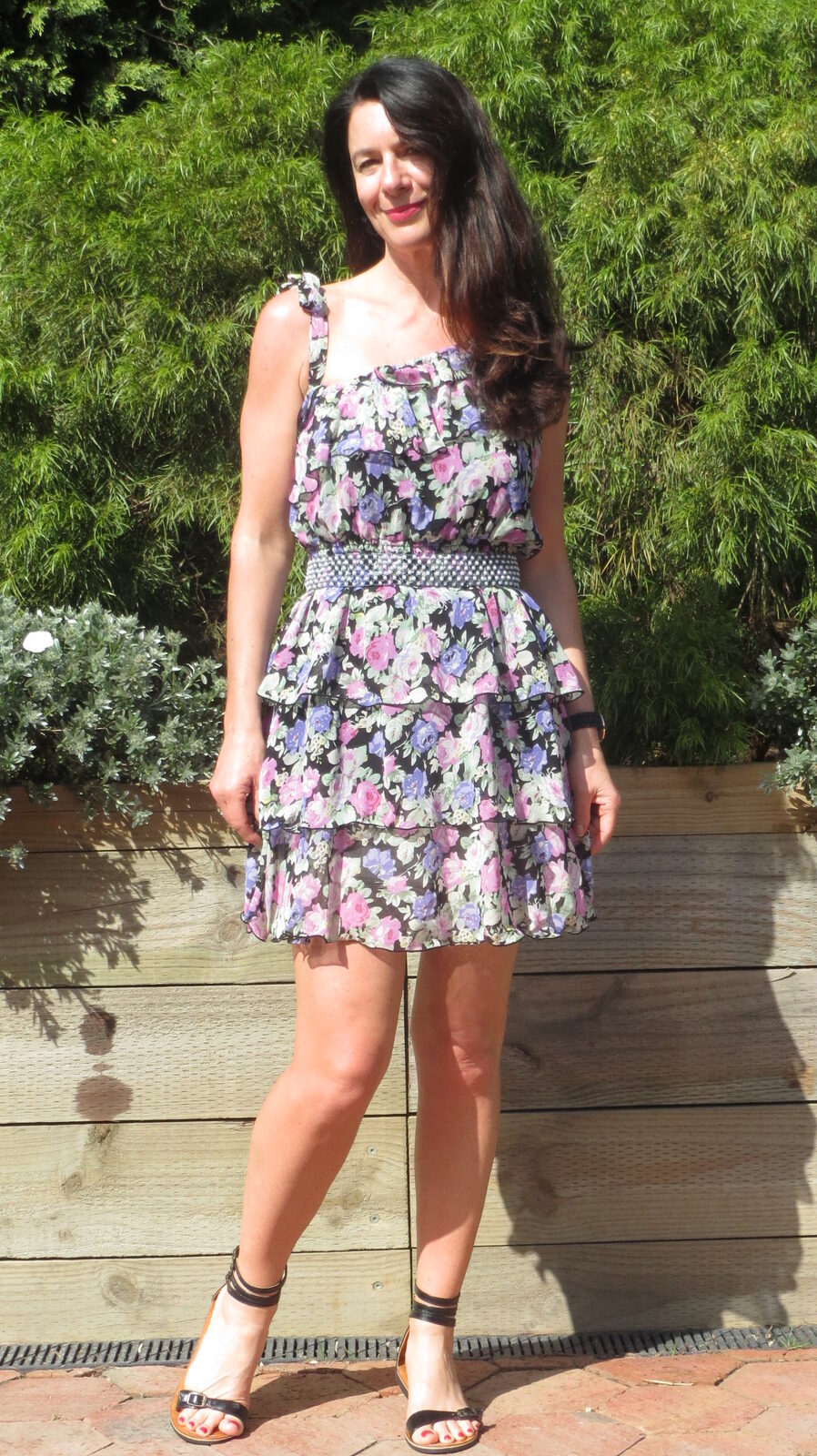
I put my own money where my mouth is on this. After more than a decade of four-dollar op shop finds I spent $800 on a Morrison teal leather skirt and matching top, and I still count it among the best buys I have made, precisely because I have worn it and worn it, and the cost per wear keeps falling every time I do. A stylist is not there to stop you spending. They are there to make sure that when you do spend, it lands on the piece that earns it, and not on the fifth thing that seemed like a good idea at the till.
The flip side matters just as much: cost per wear is exactly why you do not need to spend big to dress well. The dress I wore in a national television commercial was given to me for nothing by a friend clearing out her wardrobe, tags still on, I told that story in the AAMI shoot post. Worn enough times, its cost per wear rounds to zero. Fit and colour did the work; the price did none of it.
3. Tailoring instead of replacing
The most ignored saving in fashion is the tailor, and it is the one I bang on about most.
In every wardrobe edit there is a pile of things that do not fit, and people assume that means replacing them. It usually does not. A $60 pair of trousers taken in properly beats a $300 pair that gapes, and the alteration costs about twenty dollars. Half of what people think they need to buy again, they need to alter, and the difference between those two numbers is enormous over a year.
A stylist tells you which pile a garment belongs in (keep, tailor, or genuinely gone) so you stop replacing things that a hem would have saved.
It works on new purchases too, and this is where it quietly earns back the fee. A jacket that fits everywhere but the sleeves, at a good price, is a smarter buy than a pricier one that fits off the rack, because a sleeve shorten is cheap and predictable, and now you own the better jacket for less. Knowing which alterations are worth doing, which are not, and roughly what each should cost turns “it doesn’t quite fit” from a reason to walk away into a reason the piece was a bargain. Most people simply were never taught to see it.
4. A wardrobe that combines
Loose clothes are not a wardrobe. A wardrobe is a set of things that get on with each other, and buying to combine is where the compounding saving lives.
When every new piece has to earn its place against what you already own, each one multiplies instead of just adding. A gold skirt I bought for almost nothing has been photographed on this blog across three different years with three different tops. One cheap skirt, many outfits. That is the opposite of the nine-things-in-rotation wardrobe, where forty garments somehow produce five looks because none of them were bought to work together. The op shop finds do the same job: bought to combine, worn for years.

5. Getting off the trend treadmill
Chasing trends is a subscription you never signed up for, billed four times a year. A stylist gets you off it.
The work is learning what actually suits your shape and colouring (the rules that do not change with the season) so you stop buying the fashionable thing that flatters no one and start buying the classic thing that flatters you. That knowledge is the real product of a session, and it keeps paying out long after I have gone, because you make better calls on your own. The full version of what that afternoon looks like is in what a personal stylist actually does.
There is a Melbourne angle here too. Four seasons in a day means anything that cannot take a layer on or off without wrecking the outfit is a bad buy in this city, and a wardrobe planned for layering quietly saves you from owning three coats to do one coat’s job.
6. The time you get back
Time is the saving nobody costs, and it is real money for most working people.
A styling session ends with a lookbook of finished outfits (fifteen or twenty complete looks, photographed, made from clothes you already own) so the morning decision is already made. No standing and staring, no last-minute online order before an event because you have “nothing to wear”. If you have ever bought a whole outfit at 9pm the night before something because panic is expensive, you already know the number.
A year of small leaks, added up
None of these savings feels dramatic on its own. That is exactly why they cost so much. They never arrive as one bill you would notice and question.
Picture an ordinary year. Six impulse buys at forty dollars each that never get worn, and there is $240 gone. Two “I have nothing for Saturday” panic outfits at $150, another $300. A pair of trousers replaced for $200 when a $20 hem would have saved them. A couple of trend pieces at $80 that looked dated by winter. None of it feels reckless in the moment, and all of it together is comfortably past the price of a session, with nothing to show for it but wardrobe space taken up by things you do not wear.
Now run the same year with the leaks closed. The impulse buys do not happen, the panic outfits are unnecessary because the wardrobe already answers, the trousers get altered, and any real spending goes on a short, deliberate list. Same person, same budget, a wardrobe that works, and money left over. That gap, repeated every year, is the whole case for hiring someone to sort it out once and properly.
“But the session still costs money”
It does, and that is the honest objection, so let me answer it plainly.
Styling runs from $299 to $799, and a shopping day is $399 to $649. I take no commissions from any store, so the price on the page is the entire cost. Nothing is quietly added to your bill through where we shop. That matters, because under Australian consumer law a business has to be able to substantiate the claims it advertises, pricing included, and you are entitled to a straight answer about what a service costs and how the person is paid.
Now do the maths against that $700 a year of mostly-wasted spending. It takes only a handful of avoided mistakes, or one prevented panic-buy before a wedding, to cover a session, and unlike the clothes, the wardrobe knowledge does not wear out. That is the difference between a cost and an investment.
Is it actually worth it for you?
Not for everyone, and I would rather say so. If you enjoy shopping, know what suits you, and get dressed each morning without friction, keep your money. You are already doing the thing a stylist is paid to teach.
It pays off when something has shifted: a new job with a different dress code, a body that has changed, a wardrobe full of clothes that has somehow stopped working. That is usually when the quiet leak is at its worst, and when a session recovers its fee fastest. If you are weighing up styling against a straight shopping trip, the difference between a shopper and a stylist is worth a read first, and the styling packages and shopping days both lay their prices out in full.
Whatever you decide, the principle underneath it is the one I have been repeating here since 2012: it is not about size, age or labels. It is about knowing what suits you, then owning fewer, better versions of it, which, it turns out, is also how you stop spending a small fortune on clothes you never wear.
And now you’re Looking Good Girls.
“The plans of the diligent lead surely to abundance,” Proverbs 21:5.