
In fourteen years I have met plenty of women who had one bad experience with a stylist and never booked another.
Almost none of them hired a bad stylist.
They hired the wrong kind, which is a completely different problem and an avoidable one.

So this is not another list of questions to ask, because I have written those already and so has half the internet. This is the part that comes first: working out what you actually need, and how to read the person in front of you.
“Stylist” is at least six different jobs
The word covers an enormous range and the skills barely overlap. Here is the honest breakdown.
Wardrobe stylist. Comes to your house, works with what you own, builds outfits, removes what does not serve you. The most useful service for most women and the least glamorous sounding.
Personal shopper. Goes shopping with you. Different skill entirely: route planning, knowing current stock, sizing across brands, and being honest in a change room. I set the two side by side in personal shopper versus personal stylist.
Image consultant. Broader remit, often including grooming, body language and professional presentation. Useful for a career context, more than you need for a wedding outfit.
Colour analyst. Works out which colours suit your natural colouring. A genuinely useful piece of a bigger puzzle rather than a whole service, and the reasoning is in the best colours for your skin tone.
Editorial or commercial stylist. Dresses people for photographs, film and advertising. Brilliant at making an image. That is not the same as making a Tuesday morning easier, and it is the most common mismatch I see.
Virtual stylist. Works remotely, over video and written plans. Cheaper, more limited, and it cannot tell you how something sits across your back.
So name the problem first. “I own plenty and wear none of it” is a wardrobe stylist. “I have nothing for my son’s wedding” is a shopping day. “I have been promoted and I look junior” is closer to image consulting. Hire to the problem.
What a qualification actually means here
Be clear-eyed about this, because it is not what most people assume.
There is no licence to practise as a personal stylist in Australia the way there is for an electrician or a physiotherapist. The title is not protected. Anyone may use it tomorrow.
Training does exist, and some of it is serious. The Australian Style Institute runs certificates in personal styling, and there are other providers. Some of these courses are nationally accredited and some are not, and providers are generally upfront about which.
If you want to check, you can. ASQA, the national training regulator, accredits courses so they count as nationally recognised training, and only registered training organisations may deliver them. Anything nationally recognised is listed on the government register at training.gov.au, and you can look up a course name in about a minute.
But hold that lightly. Some of the best stylists I know hold no certificate at all and learned by dressing several hundred women. Some of the worst have a folder full of them. A qualification tells you somebody invested in learning, which is a genuine positive signal and not a guarantee.
What it should never be is a substitute for showing you the work.
How to read a portfolio properly
This is the test I would use above every other, and almost nobody applies it.
Do the clients look like themselves, or do they all look like the stylist?
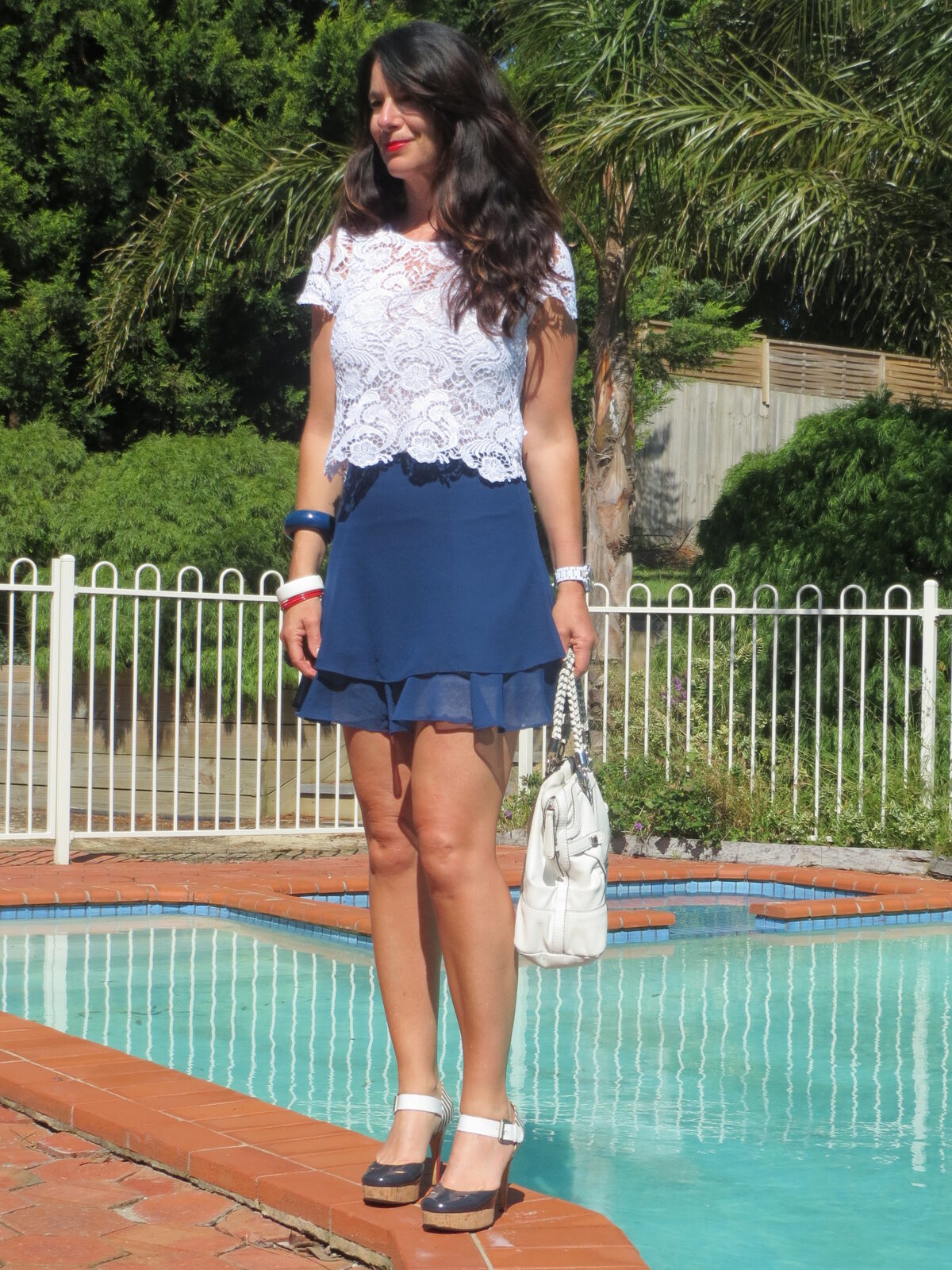
Scroll a stylist’s work with that one question. If every woman has ended up in the same silhouette, the same palette and the same shape of trouser, you are looking at someone with one aesthetic who applies it to everybody. Sometimes that aesthetic will happen to suit you. Usually it will not, and you will end up with a wardrobe that belongs to somebody else.
If instead the women look different from each other, and each looks like a slightly better, clearer version of herself, that stylist is looking at the person in front of them. That is the whole job.
A second test. Do they show anything that did not work? Fourteen years of this blog includes outfits I got wrong, and those are considerably more useful than the wins, because they show judgement rather than a highlight reel.
Taste fit is not the point. Method fit is
A lot of women rule out a stylist because they would not wear what the stylist wears. I think that is backwards.
You do not need someone who shares your taste. You need someone who can see it.
I dress in colour and prints and am very happy about it. Some of my most satisfied clients wear navy, grey and black exclusively, and I have never once tried to talk them out of it. My job is not to make them like what I like. It is to make the navy work harder.
The real signal is what they ask about. Someone who wants to know what your week actually looks like, what you do for work, what you will not wear and what your budget is, is doing the job. Someone who opens with what is big this season is selling trends, which are free and everywhere.
Match the stylist to your actual situation
A wardrobe full of clothes and nothing to wear. A wardrobe stylist, in your home. Nothing else touches this problem.
One big occasion coming. A shopping day. Do not buy a full wardrobe programme to solve a single wedding.
Your body has changed. A wardrobe session first, with someone who will speak plainly and kindly about fit. Then shopping, once you know the real gaps.
A new job or a step up. Closer to image consulting. Look for someone with corporate experience rather than a purely editorial portfolio.
You are on a genuinely tight budget. Look for a stylist who works in op shops and outlets without flinching. Plenty will not. If somebody’s whole portfolio sits in the $400 dress bracket, they are not going to be much help at $40, and the difference in where they will take you is enormous.
You want to be told what to wear. Be careful. That never sticks, whoever you hire. The sessions that last are the ones where you come out understanding why something works.
What a stylist cannot do for you
Worth saying plainly, because expectations are where most disappointment actually comes from, and the right stylist will tell you this before they take your money.
We cannot make you a different shape. We can make clothes fit the one you have, which is a far better outcome and a different promise. Anybody selling the first thing is selling something that does not exist.
We cannot give you confidence directly. What tends to happen is that getting dressed stops being a daily argument, and confidence turns up later as a side effect. That is real, and it is slower and quieter than the transformation language suggests.
We cannot make the decision to change for you. A wardrobe edit works on the clothes. If the underlying problem is that you have been buying for a life you do not lead, no amount of styling fixes that until you are ready to look at it.
We cannot make a bad garment good. A jacket that pulls across the back at $600 pulls across the back forever. The most useful thing a stylist says some days is that the thing you love does not work, and you should want someone who will say it.
And we cannot do it once and be finished. Bodies change, jobs change, seasons change. A good session leaves you with a method rather than a set of outfits, which is why I would always rather teach you why something works than hand you a list.
If a stylist promises you any of the things on that list, that is worth more attention than anything on their qualifications page.
The first twenty minutes tell you everything
You will know quickly, and you should pay attention rather than politely waiting to find out at the end.
Count the questions. In the first twenty minutes you should have been asked more than you have been told. Someone who arrives with a plan before they have seen your wardrobe is running a template.
Notice whether they look at you or at the clothes. Both matter. Only one of them is the reason you called.
See what happens when you say no. Push back on something early, deliberately. “I do not wear anything sleeveless.” A good stylist absorbs it and moves on. A poor one argues, which tells you the session is about their vision.
And notice how they handle your existing clothes. Contempt for what you already own is a bad sign. Most wardrobes contain more workable things than their owner believes, which is the entire premise of building outfits from what you already have.
If it is not working, say so during
Not afterwards in a review. During.
“This is not feeling like me” is a complete sentence and a professional will be glad you said it, because the alternative is spending three hours going the wrong way.
A good stylist changes direction immediately and often gets much better after that moment, because you have given them real information. If instead they get defensive, or carry on regardless, you have learned what you needed to know and you are entitled to stop paying for a service that is not serving you.
Finding one in Melbourne
Read rather than scroll. Anyone can assemble a beautiful page of mood boards from other people’s photographs. Far fewer can explain what they would actually do with your wardrobe on a Tuesday morning. Look for someone whose own words tell you how they think.
Check they work where you live. Melbourne is enormous. A stylist who only works the inner east is not much use in Frankston, and shopping routes are local knowledge.
Look for real prices on the page. Not “packages from” and an enquiry form. If the number is hidden, ask why.
And look for how long they have been at it. Not as snobbery about newcomers, but because the useful part of this job is pattern recognition across a lot of different bodies and budgets, and there is no shortcut to that.
For the specific questions to put to any stylist before you book, including the one about commission that almost nobody asks, the pricing post covers it properly alongside what everything actually costs.
The short version
- Work out which job you need. Stylist covers at least six of them.
- The title is not protected in Australia. A certificate is a signal, not a licence, and you can check accredited courses on training.gov.au.
- Read the portfolio for one thing: do the clients look like themselves, or like the stylist?
- You do not need someone with your taste. You need someone who can see it.
- Count the questions in the first twenty minutes.
- Push back early and watch what happens.
- If it is not working, say so during the session, not after.
Read all that and still think we would get on? Two hours in your own wardrobe with a personal stylist in Melbourne is $299, and $399 buys a Half Day of personal shopping in Melbourne once the list exists. Read it and conclude I am not your person, and that is a perfectly good result as well. Fourteen years of how I think is sitting here in public precisely so you can make that call without paying for the privilege.
And now you’re Looking Good Girls.
“Plans fail for lack of counsel, but with many advisers they succeed.” Proverbs 15:22.