Looking longer and leaner has almost nothing to do with what size you take. It is a matter of line and proportion (where the eye travels, where a hem lands, where the colour breaks) and above all of fit. A garment cut to your actual body will always be more flattering than a smaller one that isn’t.
I want to say something before the list, girls, because it matters. You do not owe anybody a smaller silhouette. Plenty of days I dress for comfort and joy and nothing else. But when you do want a longer, leaner line (for a wedding, a photograph, a job interview) there are real, learnable rules behind it, and none of them involve hiding.
First: ignore the number on the label
This is the most freeing thing I can tell you, and it is a fact rather than an opinion. Australia has had no clothing size standard since 2007, when the old one was withdrawn as out of date, and it had been built on body measurements taken decades earlier. As CHOICE has documented, the result is that sizing now varies wildly between retailers, with vanity sizing widespread.
So a 12 in one shop is a 16 in another and a 10 in a third, and none of them is telling you anything true about your body. I have clients who own four sizes and fit all of them.
Buy the garment that fits. Cut the label out if it bothers you. Chasing a number across shops that do not agree with each other is a genuinely pointless way to spend a Saturday, and it is the single biggest reason women end up in clothes that are too small, which, as we are about to see, is the least flattering thing you can do.
What genuinely works
Fit, before every other trick on this list
Too tight and the fabric pulls, showing every line you hoped to smooth. Too loose and the eye reads the widest point of the fabric as the widest point of you. Both add. The flattering middle is a garment that skims: touching you at the shoulder, the bust and the waist, and falling clean past everything else.
This is why a tailor beats every tip here. Twenty to fifty dollars, on clothes you already own, and it does what no styling trick manages. I have said it in the best fashion investments under $200 and I will keep saying it.
One unbroken column of colour
The strongest visual tool there is. When an outfit is a single colour from shoulder to hem, the eye travels the whole length without stopping, and reads the shape as longer and narrower. Break it into contrasting halves and the eye stops at the join, which shortens and widens.
It does not have to be black. Navy, charcoal, plum, chocolate, forest, any deep shade does the identical job. If black drains your face, use one that doesn’t; the effect comes from the unbroken part, not the colour.
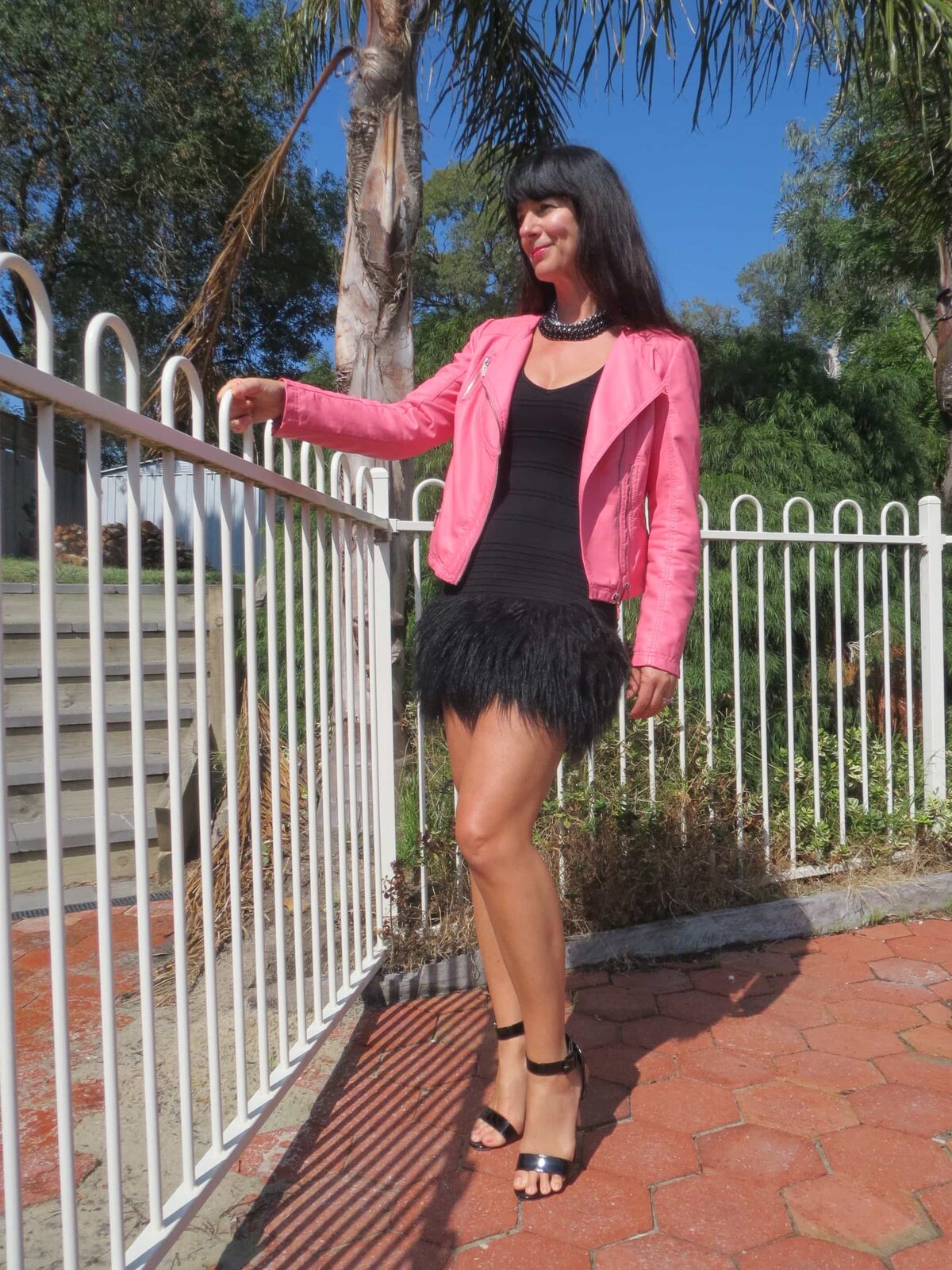
You can also cheat this brilliantly: a dark column underneath with an open jacket over the top, in any colour you like.
Define the waist, at its narrowest point
Every silhouette benefits from one point of definition, and it should sit at the narrowest part of your torso, often a touch higher than you think, just under the ribs rather than at the hip.
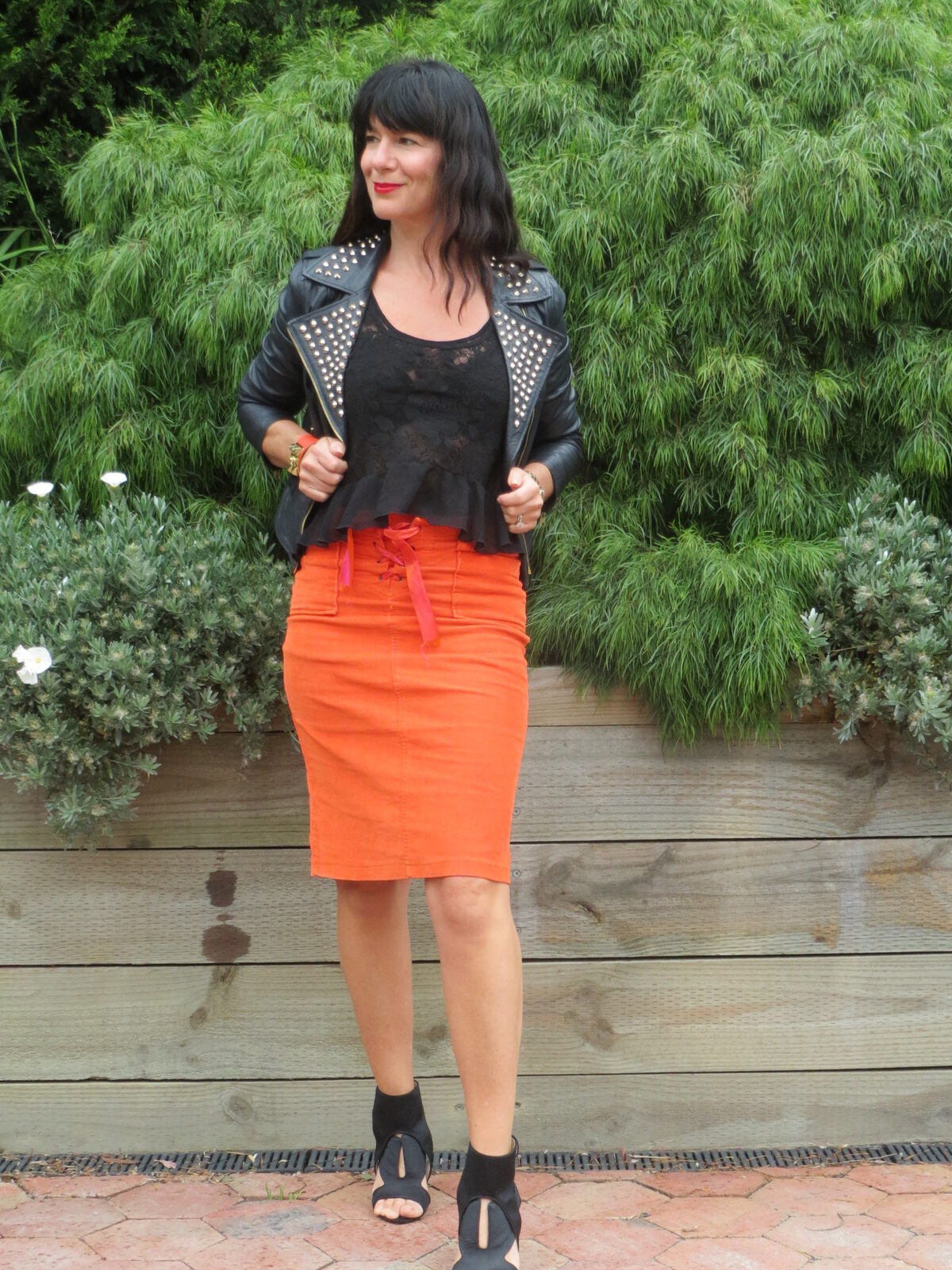
A high-waisted skirt or trouser does this without a belt, and lengthens the leg into the bargain, which is why the orange skirt at the top of this piece works as hard as it does. If you do belt, keep the belt close to the colour of the outfit so it defines without chopping you in two.
Take the eye vertical
Anything that draws a long line up and down the body helps: an open jacket or cardigan worn long, a centre-front seam or button placket, a narrow scarf hanging straight, a long fine necklace. These create vertical channels either side of the body and the eye follows them.
This is also why an open jacket almost always beats a closed one for line.
Open up the neckline
A V, a scoop or an open collar creates a diagonal that draws the eye up to your face and lengthens the whole upper body. High, round, closed necklines do the reverse, they shorten the neck and widen the shoulder line. If you like a high neck, keep the rest of the outfit long and lean to compensate.
Land your hems where you are narrowest
A hem is a horizontal line, and wherever it falls is where the eye stops and takes a measurement. So put it somewhere narrow. Just above or below the knee for skirts, because the leg genuinely narrows there. Full-length trousers to the shoe, or cropped at the slim part of the ankle, not mid-calf, which is the widest point on most legs.
Sleeves work the same way. A sleeve ending at the fullest part of the upper arm is unhelpful; one ending just above or below the elbow, or at the wrist, is not.
Choose fabric with some structure
Cloth with a little body skims. Limp, clingy jersey shows everything underneath. Stiff, heavy fabric stands away from you and adds bulk of its own. Ponte, crepe, a good wool blend, a heavier jersey. These hold their own shape and let you keep yours.
Lengthen the leg at the feet
Where the leg ends abruptly, it looks shorter. Shoes close to your own skin tone, or matching the hem colour, carry the line onward instead of cutting it. A slightly pointed toe extends it further, and any heel at all (a block heel is plenty) adds to the effect. There is more on which pairs are worth owning in the shoes guide.
Scale your prints, and place them deliberately
Print is not the enemy. A badly scaled print is. Very large, high-contrast patterns tend to overwhelm a smaller frame, while a tiny busy print across a fuller figure can read as texture and blur the line. Somewhere in the middle sits a print that reads clearly from across a room without shouting.
Placement matters more than scale, though. Whatever the print sits on gets attention, so put it where you want the eye: a printed top brings the gaze up to your face, a printed skirt sends it down. If there is one area you would rather not draw attention to, keep it plain and let the print work somewhere else. Same rule for texture: sequins, bouclé, heavy knits and anything shiny all advance towards the viewer, so use them where you want volume and keep the flat, matte fabrics where you don’t.
Sort the foundations before anything else
Nobody enjoys this bit and it changes more than the whole list above. Most women are wearing a bra that no longer does its job, and it alters the line of everything worn over the top. A good dress over a tired bra simply will not hang properly, because the whole torso reads shorter when the bust sits low.
Get measured properly rather than guessing, replace them when the band goes rather than when they fall apart, and keep something smooth for wearing under fine knits. It is the least glamorous fifty dollars in this article and comfortably the highest-returning.
The four proportion questions
Forget the fruit. Body-shape systems get complicated for no good reason, and you can get most of the way with four honest questions in front of a mirror.
Where is your narrowest point? That is where definition belongs, for many women it sits higher than expected, under the ribs rather than at the hip.
Are you longer in the body or the leg? Long body, short leg: raise the waistline and keep hems clean to lengthen the leg. Long leg, short body: a lower or natural waist and a slightly longer top balances it back.
Where do you carry width? Whatever it is, the answer is the same, keep that area in a plain, matte, skimming fabric and put your print, texture, colour and detail somewhere else. Balance is far more useful than concealment.
What do you actually like about yourself? Genuinely the most useful of the four, and the one nobody asks. Ankles, collarbones, shoulders, waist, arms, calves, pick something and dress to show it. An outfit built around a feature you are pleased with always looks better than one built around avoidance, because avoidance shows.
The myths, which have done real damage
“Horizontal stripes make you look wider”
The most repeated rule in styling, and it does not reliably hold up. What actually matters is whether the dress fits and how the stripes are scaled. A well-cut striped dress in a fine, even stripe is flattering on most people.
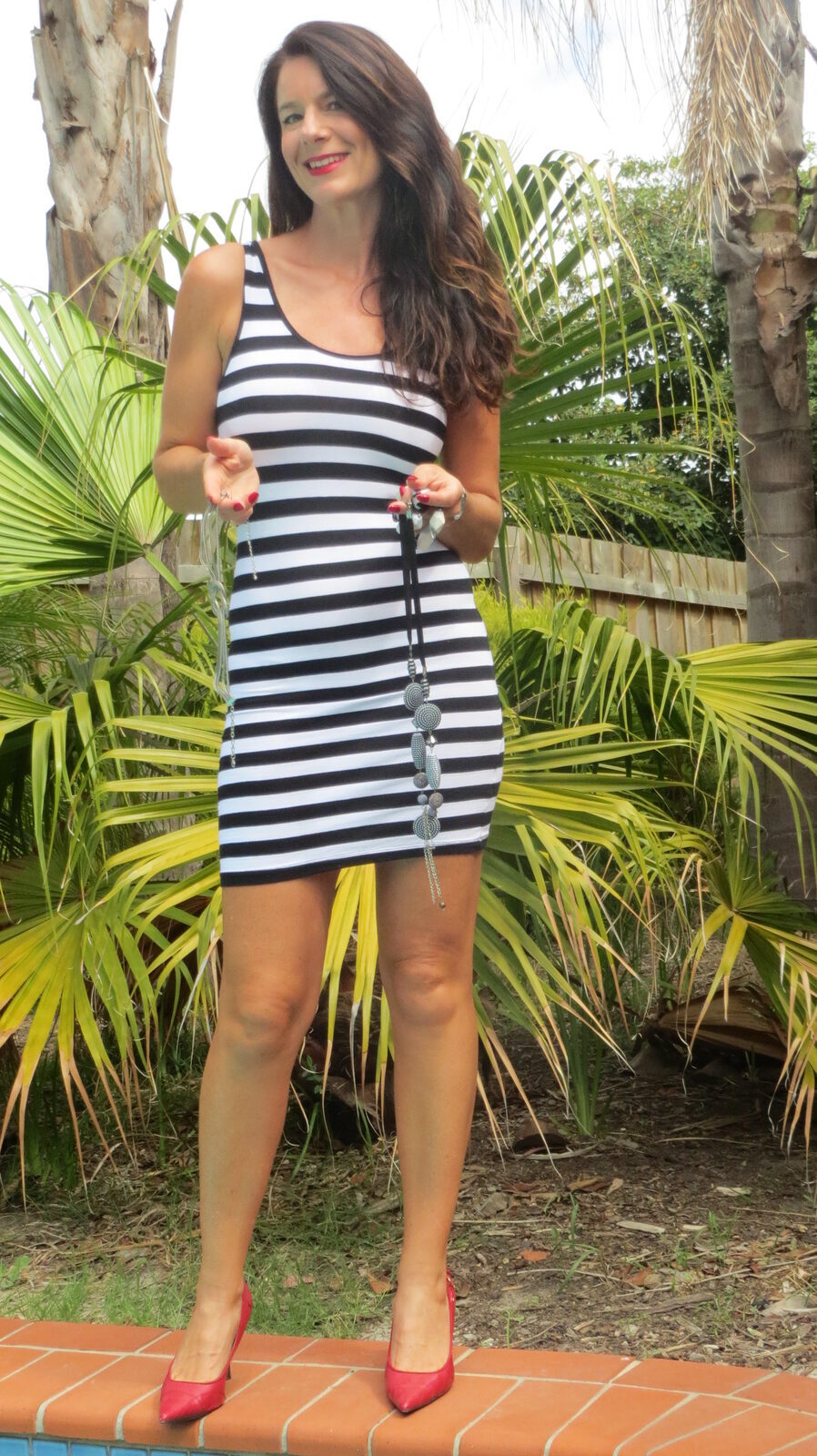
I have worn that dress a great deal and nobody has ever remarked on the direction of the stripes. Judge the fit, not the lines.
“Hide under something loose”
The most common mistake I see, and it does exactly the opposite. A large tent of fabric reads as a large shape. Skimming beats both clinging and hiding, every time.
“Black is the only safe option”
Black is a deep colour, not a magic one. Wearing it head to toe when it doesn’t suit your colouring makes you look tired, and tired reads as heavier, not lighter. Any deep shade in an unbroken column does the same work.
“Shapewear will sort it”
It smooths a line under something fitted, and there is nothing wrong with that for an evening. But it is no substitute for clothes that fit, and it is wretched to wear all day. A properly fitted bra changes the line of an outfit far more than shapewear does, costs less, and you can breathe in it.
“Wait until you’ve lost weight”
The most expensive myth of the lot, because it keeps women in clothes that fit badly today in service of a body they may have next year. Dress the body you have. If it changes, alter or replace a few things. That costs far less than a wardrobe of clothes you never enjoyed wearing.
Putting it together
You do not need all of it. Pick two or three and they compound: a dark column with an open jacket in a colour you love, a waist defined just under the ribs, a hem at the knee, shoes near your skin tone.
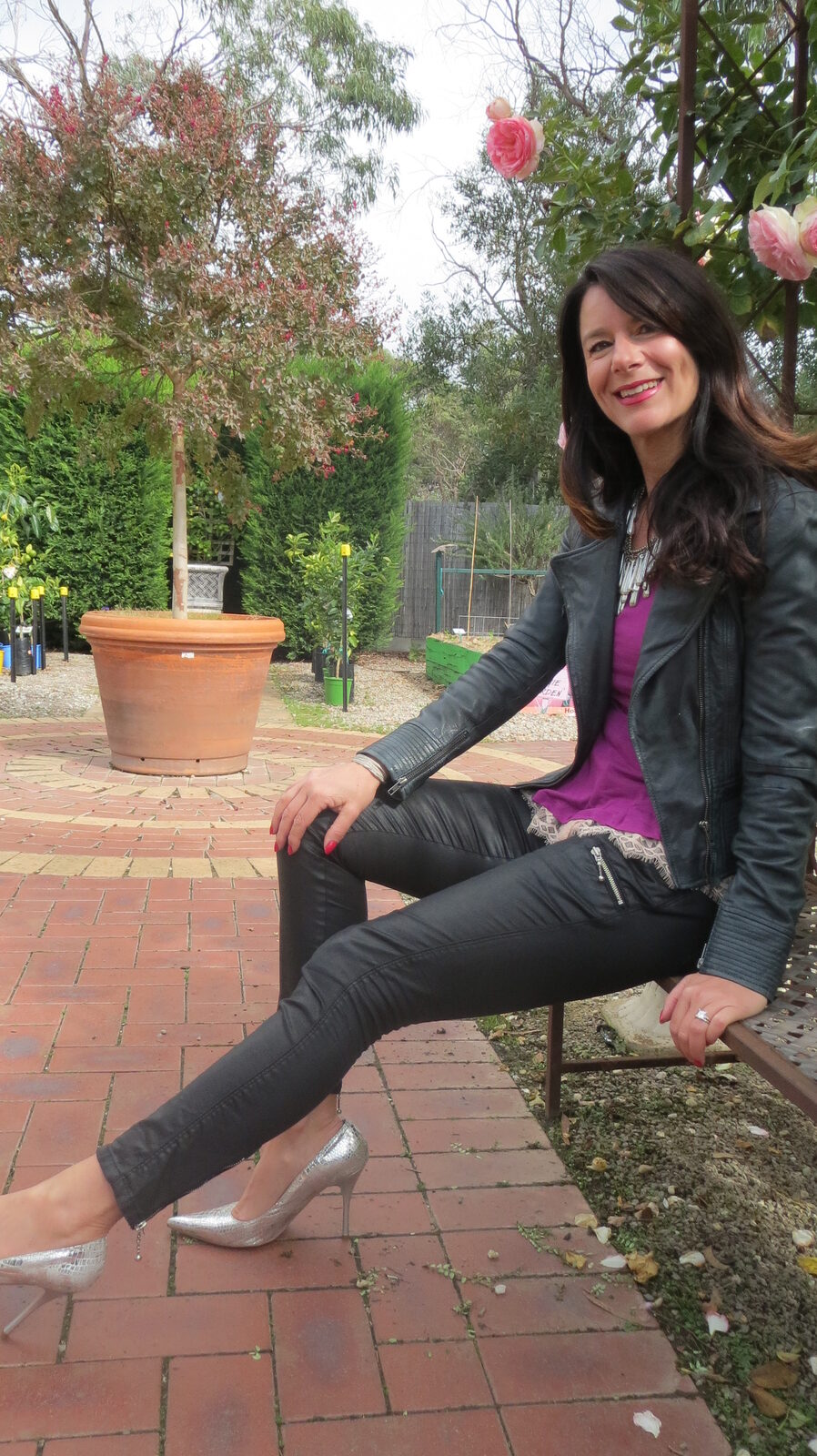
Dark slim base, colour up at the face, jacket open for the vertical line. Three rules doing quiet work in an outfit that took no effort at all.
And the whole thing sits on the same foundation as everything else I write about: fit, decent fabric, and pieces that suit you. That is looking expensive on a budget and dressing well in your forties too: the same short list, applied to a different question.
What actually matters
Fit does more than every trick above combined, and after fit comes how you wear the thing. A woman who feels good in what she has on carries it differently, and that reads before any hemline does.
If working out which shapes genuinely suit your proportions feels like guesswork (it is, until someone shows you) that is what a session is for. A personal stylist will work out your proportions and the cuts that follow from them, and a personal shopper will help you find them without the changing-room misery. More in the styling posts meanwhile.
Fourteen years of this and my position has not shifted: it was never about size. It is about clothes that fit the woman who is actually wearing them.
And now you’re Looking Good Girls.
“I praise you because I am fearfully and wonderfully made,” Psalm 139:14.