
Some years ago I picked up a pair of black J Brand jeans in an op shop for $6.
They are made in California, they retail for around $200, and they were brand new. I stood there in the aisle not quite believing it, and I have worn them to death since.
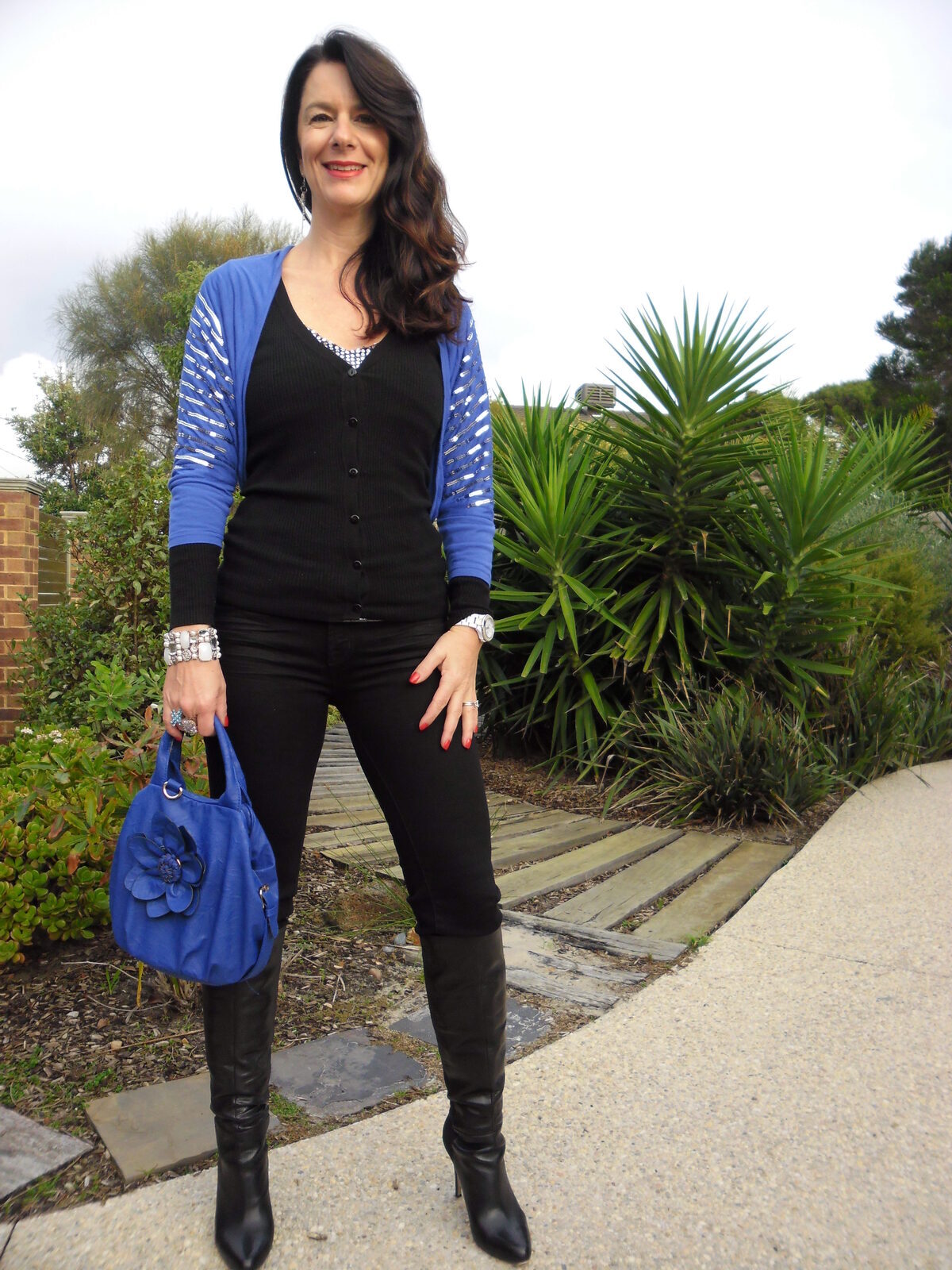
That is op shopping at its best, and I want to be honest with you up front: it is not luck. I find things like that because I go often, I go to the right suburbs, and I know how to clear a rack in four minutes. All three of those are learnable.
After fourteen years of doing this across Melbourne, here is the whole method.
The rule that matters more than any address
Every guide to op shopping hands you a list of twenty shops. Half of them will have closed by the time you read it, because charity shopfronts move constantly.
So learn this instead.
A charity shop can only sell what the streets around it give away. That is the entire mechanism. The stock is not bought, it is donated by the neighbourhood, which means the quality of an op shop is really the quality of its catchment.
In Melbourne that points you at the money: Bayside, the inner east around Camberwell, Hawthorn and Malvern, and the pockets near Toorak. These are the suburbs where a woman clears out a wardrobe of labels because she is bored of them rather than because they are worn out.
Now the part nobody tells you. The shop sitting right in the middle of the wealthiest strip has worked this out too, and it prices accordingly. A charity shop in a well-off high street knows what a designer jacket is worth and will ask for it.
The bargains are in the shops that receive the wealthy suburb’s donations but sit a little outside it, in a cheaper strip, where the same jacket goes out at four dollars because the volunteer pricing it is working to a different sense of what things cost. Learn the catchment, then shop one suburb over.
The shop everybody gets wrong
This one matters, and it has been in the news this month.
Savers is not a charity op shop. It looks like one, it is full of second-hand clothing, and most people walk in assuming their money is going to a cause. It is a for-profit business, the largest thrift retailer in the United States, and it works by buying donated goods from charity partners rather than being a charity itself.
The numbers are real either way. Its Australian non-profit partners were paid $5.6 million last year, around $310,000 per store, and the charities involved value that income. But smaller Melbourne op shops have said openly that they worry about the donations and the money it pulls out of their neighbourhoods.
What it means for you as a shopper, plainly:
- Savers is bigger and better sorted than almost any charity shop. Sized racks, colour-blocked, genuinely easy to shop.
- It is also priced higher, because a business has to make a margin where a volunteer-run shop does not.
- Its first Australian store opened on Sydney Road in Brunswick in 1997 and it is still going.
I use it, and I would tell anyone to use it. I just think you should know which sort of shop you are standing in. If the point of your op shopping is partly where the money goes, that is a decision you get to make rather than one made for you at the door.
The chains, and what each is actually good for
Vinnies and Salvos are the backbone. They are everywhere, the volunteers are lovely, and the pricing is the most old-fashioned of the lot, which is exactly what you want. This is where a $200 pair of jeans goes out at $6 because nobody recognised the label.
Sacred Heart Mission runs a genuinely good group of shops around South Melbourne, St Kilda, Prahran and Fitzroy, including a newer space in North Fitzroy. Inner-city catchment, which means more interesting clothes and more of the fashion end.
Brotherhood of St Laurence shops are well organised and worth the stop.
Savers, as above: the best browsing experience, the highest prices, and a different kind of business.
When to go
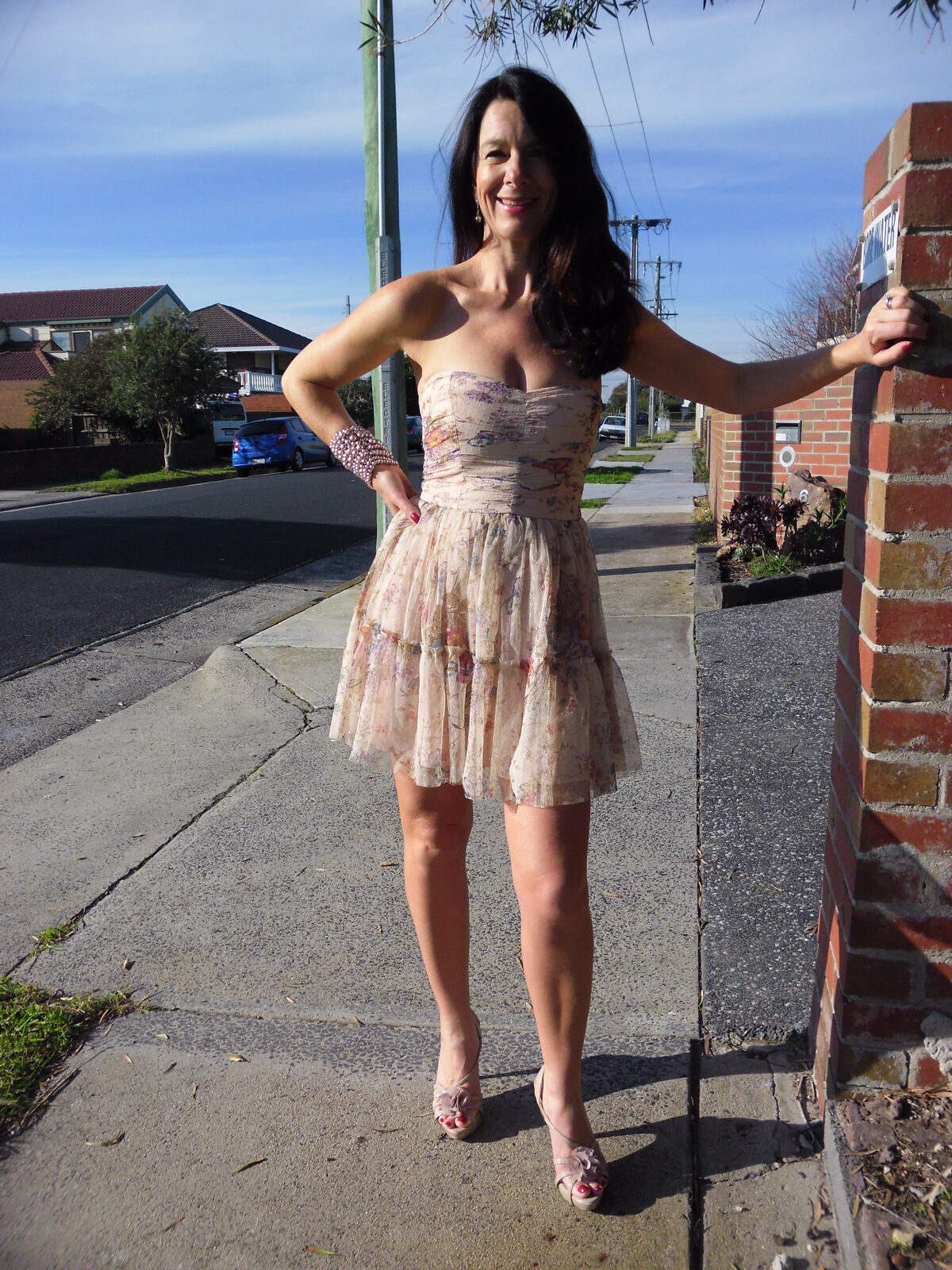
That dress is Zara, it is blush organza and lace, and it was $5 in an op shop. I have worn it to more evenings out than anything I have paid full price for.
Finding something like that is mostly a question of turning up at the right moment.
Weekday mornings, Tuesday and Wednesday for preference. The weekend’s donations get sorted at the start of the week and go out then. By Saturday afternoon you are looking at what four hundred other people have already rejected.
Twenty minutes, not two hours. Op shopping is a habit, not an excursion. The people who find extraordinary things are not luckier than you, they have simply looked more times. Five twenty-minute visits beat one long Saturday every time.
Go with nothing to prove. Leaving empty-handed is a normal outcome and not a wasted trip. The moment you feel you must buy something to justify the drive, you start buying badly.
How to clear a rack in four minutes
This is the skill, and it is the bit I teach clients first.
Touch, do not look. Walk the rack running the back of your hand along the shoulders. Stop at anything that feels like silk, wool, linen or a heavy cotton. Good fabric announces itself before you have read a single label, and your hand is much faster than your eye.
Then check three things, in this order: the label, the seams, and the underarms. Label tells you what it was. Seams tell you how it was made. Underarms tell you whether it is coming home with you, because staining and smell never come out.
Ignore the size on the tag entirely. Sizing from 1995 has nothing to do with sizing now, and half of this stock is older than that. Hold it against yourself.
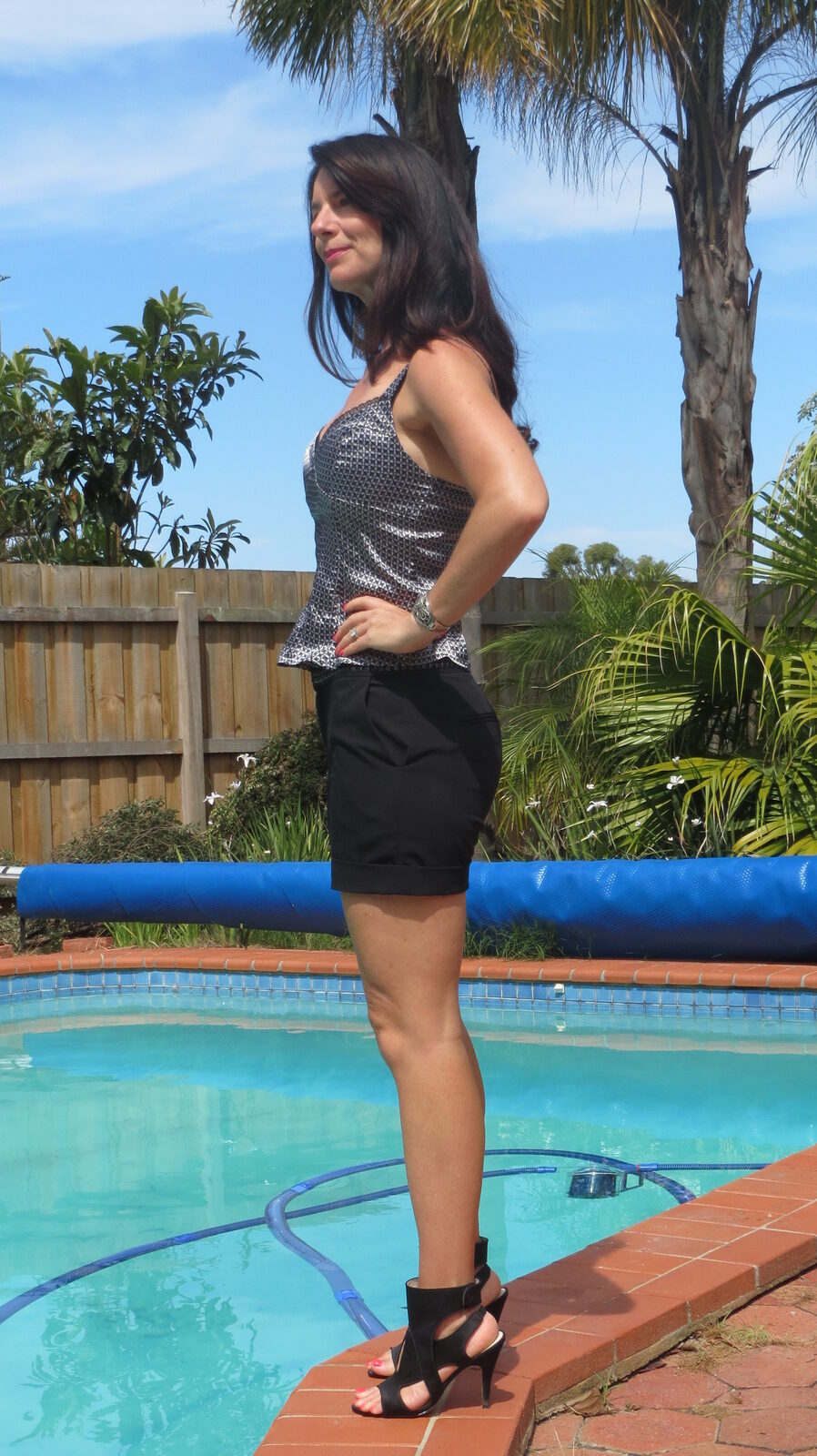
Those Zara shorts were under $5 and brand new, still crisp. The satin top with the black lace trim was another five. Two op shop finds making one outfit that looked like it cost a great deal more, which is the whole premise of this site and the argument I made at length in how to look expensive on a budget.
What is genuinely worth buying second-hand
Coats, wool knits and leather. The best value in the entire city and it is not close. These are expensive new, they are given away barely worn, and good ones last decades.
Occasion dresses. Worn once, kept for years out of guilt, then donated. An op shop is full of them.
Bags and belts. Leather improves. A good bag at four dollars is the accessory that lifts everything else.
Denim, if you try it on. Sizing is a lottery, but the reward is a pair of jeans somebody else already broke in.
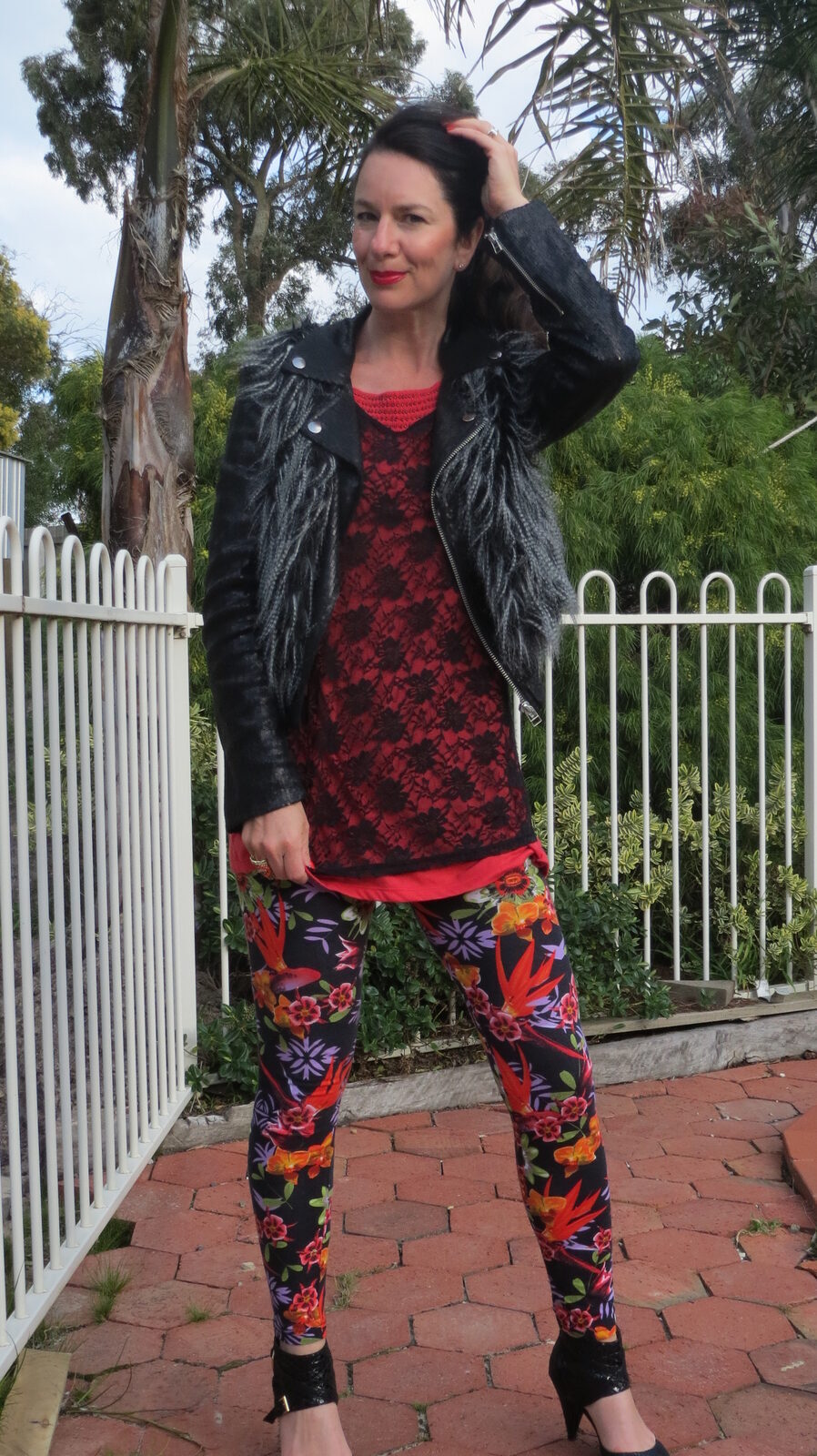
The black sequinned jacket there was $10 and vintage. The black patent heels with the gold hardware were $5 from an op shop. Neither is the sort of thing you set out to find, which is precisely why you have to go often.
What to leave on the rack
Anything that must fit exactly and cannot be altered. A tailored trouser one size too small is not a project, it is a donation you are making back next year.
Shoes that are already shaped to somebody else’s foot. Bags yes, belts yes, shoes rarely. The exception is something barely worn, which you can usually tell from the sole.
Anything stained or smelling. Neither comes out. I have tested this on your behalf more than once.
A bargain in a size you are not. This is the great op shop trap and it catches everybody, because four dollars feels like it cannot be a mistake. It can. A wardrobe full of cheap things that do not fit is still a wardrobe you cannot get dressed from, which is the whole argument in how to shop smarter and stop wasting money on clothes.
Beyond the city limits
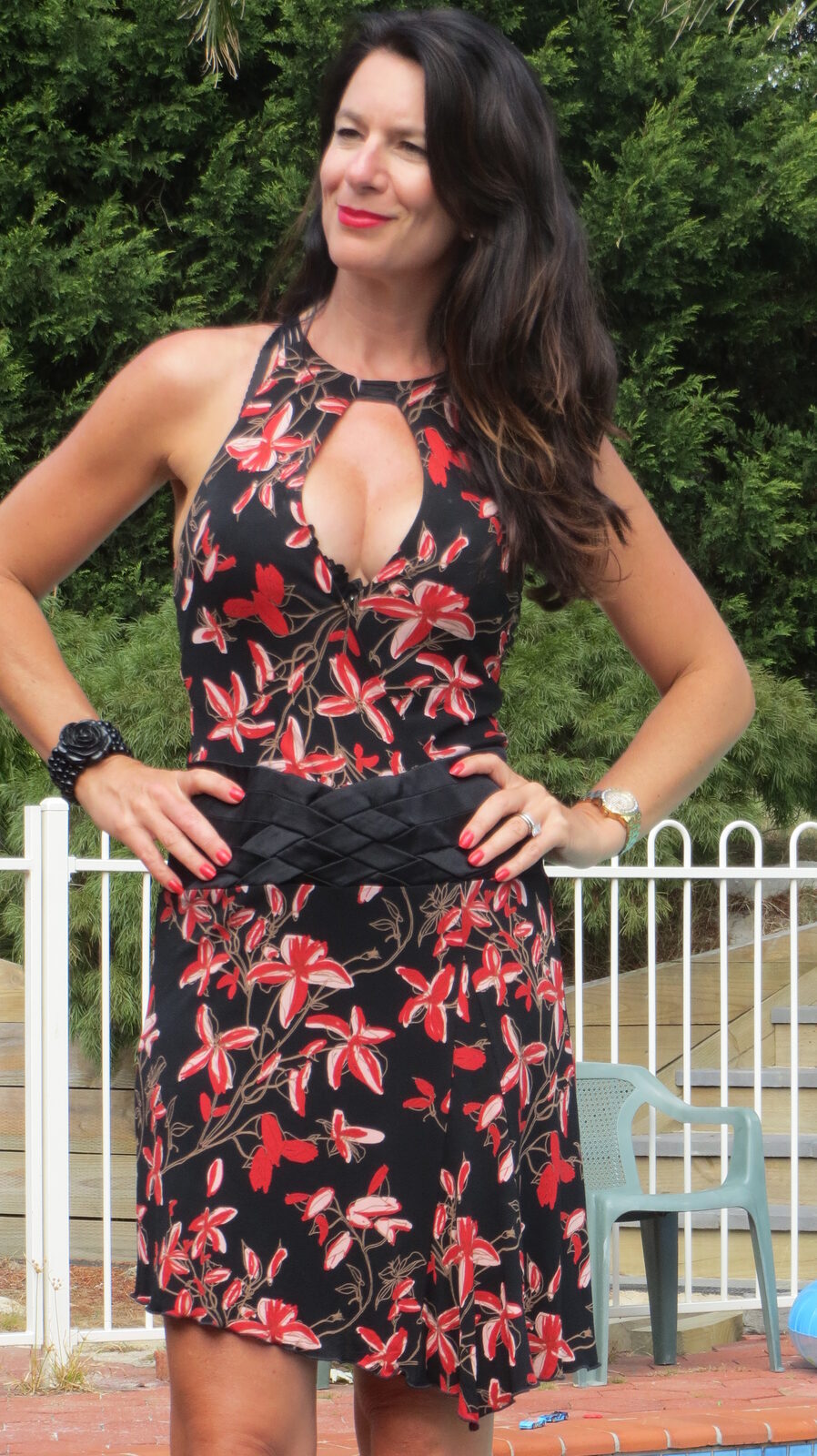
That Bebe dress was $4, and it did not come from Melbourne at all. It came from the op shop at Paynesville, down in Gippsland, on a family holiday.
Country and coastal op shops are worth a detour whenever you are already out that way. Balnarring on the Mornington Peninsula has been good to me over the years. The catchment logic still applies, but there is far less competition working the racks, and holiday towns get the wardrobes of people who own two houses.
Build a run, not a trip
The single change that improved my op shopping most was to stop thinking about individual shops and start thinking about routes.
Pick three op shops within about ten minutes of each other, ideally sitting just outside a wealthy catchment. One will be the good one, though it will not always be the same one, and doing all three takes under an hour because you are only spending twenty minutes in each.
Do the same run repeatedly. This is the part people skip. The volunteers start to recognise you, the stock turnover becomes legible, and you learn that the shop on the corner puts new racks out on a Tuesday while the one down the road does it Thursday. That knowledge is worth more than any list of addresses somebody else has written.
Keep a list on your phone of what you are actually short of. Not “nice things”, but the two or three real gaps. A navy blazer. Flat black boots. A coat that works over dresses. Op shopping without a list is how you end up with eleven interesting tops and nothing to wear them with.
Pair it with something else you already do. Mine sits alongside the school run and the shops I would be near anyway. Op shopping that requires a special trip stops happening by about week three, and the whole method depends on frequency.
Op shops are one layer of a much bigger picture, of course. Where they sit alongside the outlets, the strips and the big centres is the whole of where to shop for clothes in Melbourne, which is worth reading first if you are new to the city.
The short version
- Shop the catchment, not the shop. Bayside, the inner east, the streets near Toorak.
- Then shop one suburb over, where the same donations are priced by someone with a different idea of what things cost.
- Savers is a for-profit business, not a charity op shop. Use it, but know it.
- Vinnies and Salvos for the old-fashioned pricing. Sacred Heart Mission for the fashion end.
- Tuesday or Wednesday morning. Twenty minutes. Go often.
- Touch the rack, do not read it. Then label, seams, underarms.
- Coats, knits, leather, occasion dresses and bags. Not shoes, not stains, not the wrong size.
None of it is complicated. It is a habit, and habits are quicker to catch from somebody than to invent. Op shops are where I take clients first on a Half Day of personal shopping in Melbourne, $399, because the interesting things live there and because rummaging is far more fun with two. Though if the honest problem is a full wardrobe you cannot see into, no amount of rummaging fixes that, and two hours with a personal stylist in Melbourne at $299 will.
Now go and find out which suburb your nearest op shop is really shopping from.
And now you’re Looking Good Girls.
“Rich and poor have this in common: The Lord is the Maker of them all.” Proverbs 22:2.