
I want to start with a confession, because it makes the rest of this post honest.
For a couple of years I ran a little side hustle selling my own clothes on eBay. Brand new pink skinny jeans, size 12, tags still attached. A black sequinned Zara top, never worn. A pair of dark brown Nine West leather booties still sitting in their box. A Max Mara puffer vest that I loved in the shop and never once reached for at home.
Every single one of those listings was a purchase that had gone wrong. And I am a stylist, girls. I do this for a living.
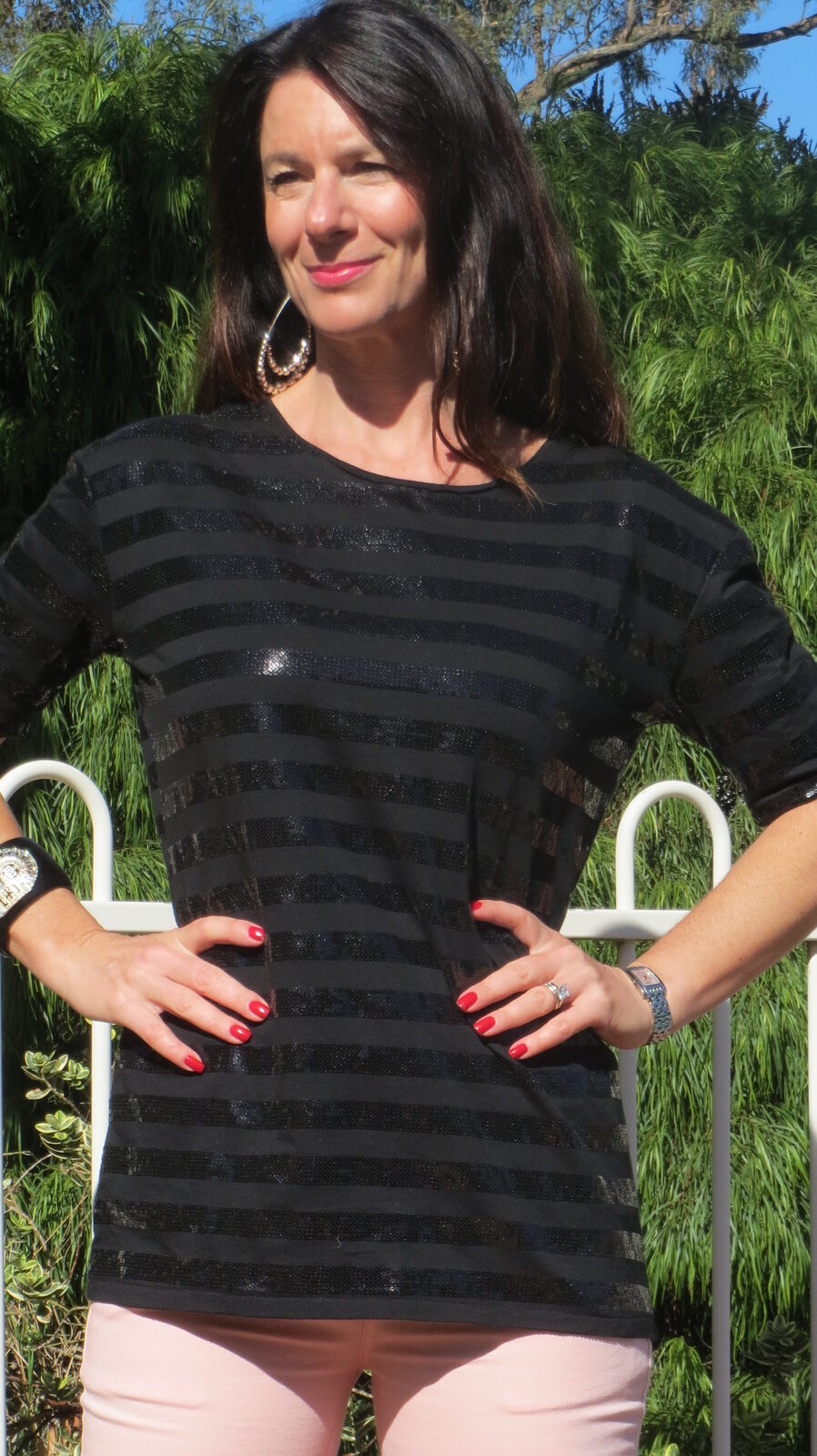
That top is gorgeous, isn’t it? I still think so. It photographed beautifully, it fitted, the price was right. It went straight into the wardrobe and stayed there, because I bought a top and I did not own a single thing to wear it with that felt like me.
That is the whole subject of this post. Wasted clothing money almost never goes on the expensive, agonised-over purchase. It goes on the quick, cheap, pleasant one.
The number that stopped me in my tracks
The Australia Institute’s textiles research found that the average Australian buys 56 new clothing items a year. More than the United States at 53. More than the UK at 33, more than China at 30. We are, per person, the biggest fashion consumers in the world.
The bit that really got me was the second number. The average price paid per item is about $13.
Sit with that for a minute. Fifty-six items. Thirteen dollars each. That is roughly $730 a year, and almost none of it feels like spending at the time, because no individual purchase is big enough to hurt. It is $13 here on a top, $25 there on a dress that is nearly right, $19 on a going-out thing for a night that got cancelled.
Nobody wakes up and decides to waste $700 on clothes. We do it a coffee’s worth at a time.
And it shows up in the same place every time. I have stood in a lot of Melbourne wardrobes now, and the pattern is always identical: a full wardrobe, nothing to wear, and a run of items still carrying tags. If you want the fuller picture of what that costs, I went through it in detail in how many clothes you really need.
Rule one: never shop until you know what you already own
This is the unglamorous one, and it is the one that saves the most money.
You cannot buy well for a wardrobe you cannot picture. If you do not know that you own four black tops, you will buy a fifth, because a black top is always a sensible purchase in the shop and never a sensible purchase at home.
So before a big shop, do the boring homework. Pull everything out, try it on, be honest about what fits your body now rather than the body you had in 2019. My wardrobe decluttering checklist is the exact process I use with clients, and it takes an afternoon.
What comes out of it is not just space. It is a gap list. A short, specific, written list of what is genuinely missing. Not “some nice tops”. Something like: a mid-blue straight-leg jean that works with flats, a warm-toned knit that isn’t grey, one pair of shoes I can walk to the tram in.
You then shop that list. You do not shop feelings.
Rule two: the three-outfit test
This is the single most useful thing I can give you, and it costs nothing.
Before anything reaches the counter, name three complete outfits you could build from clothes you already own, using this item. Say them out loud in your head, garment by garment, right down to the shoes.
Then name one real occasion in the next month where you will actually wear one of those outfits.
If you cannot do both, put it back.
That sequinned Zara top would have failed on the first question. I could not name three things at home it worked with, and I bought it anyway, because in the change room with the right lighting and the right shoes on the shop floor it looked like the answer to everything.
The test works because it moves the decision out of the shop and back into your wardrobe, which is where the garment has to earn its living.
Rule three: cost per wear, done honestly
Everyone knows cost per wear. Almost nobody uses it properly, because we run the sum after deciding to buy, with a wildly optimistic number of wears.
Here is what honest looks like. This Luca & Marc checked skirt is a good example, because I can show you exactly why it earned its money.
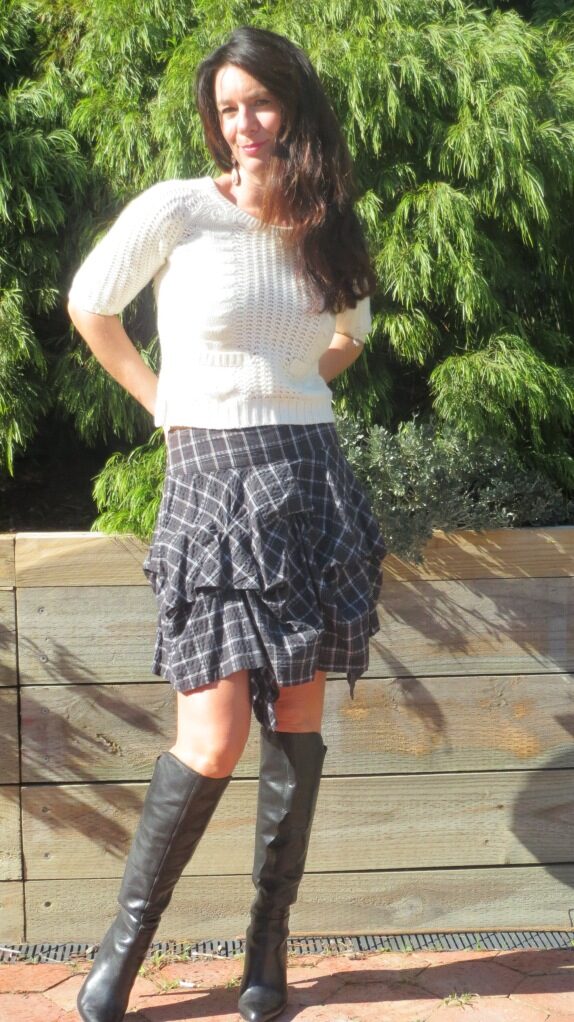
That is the winter version: cream cable knit, knee-high boots, done. And here is the same skirt in January.
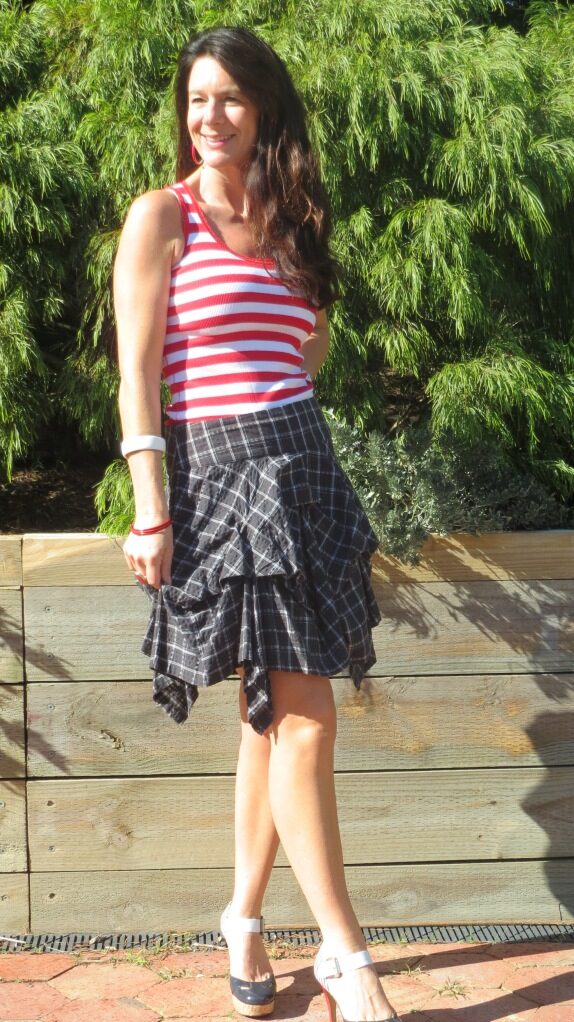
Red-and-white striped tank, white platform sandals, and it is a completely different outfit. One skirt, two seasons, two personalities, and I wore that thing to death before it went on eBay.
That is a garment doing its job. A piece that only works from May to August with one particular jumper is not a bargain at any price, because it cannot accumulate wears.
So when you run the sum, be brutal about the denominator. Ask how many weeks of the year the item is even wearable, then how many of your actual outfits it slots into. A $300 wool coat you reach for four days a week from May through August is about $6 a wear in its first winter alone and gets cheaper every year after. A $39 top worn once is $39 a wear, and it is the $39 top that is the extravagance.
Rule four: the sale trap, and how to walk out of it
I love a sale. Half of this blog is me being unreasonably delighted about a marked-down jacket. So this is not a lecture about avoiding sales. It is about what a sale is doing to your brain.
A discount does two things. It creates urgency, and it makes the saving feel like the purchase. You did not spend $60. You saved $40! Except you did spend $60, and if it stays in the wardrobe you spent $60 on nothing.
My test is one sentence: would I want this at full price?
If the answer is yes (if I would have coveted it, if it fills a gap on the list, if it passes the three-outfit test) then the discount is a lovely bonus and I will take it happily.
If the only appealing thing about it is the red ticket, I am not buying a garment, I am buying the feeling of being clever. That feeling costs about $13 an item, fifty-six times a year.
A few sale specifics worth knowing:
- End-of-season clearance is where the real value sits. Winter coats in August, swimwear in March. You need patience and a bit of storage, but the reductions are genuine rather than the “was $129, now $89” theatre you get mid-season.
- Watch the quality drop on sale-only ranges. Some chains produce a lighter, cheaper line specifically for the sale racks. Check the fabric composition and the seams against a full-price piece from the same shop, and you can usually feel the difference in about three seconds.
- A stack of small discounts is not a strategy. Three discounted things you half-like cost more than one full-price thing you love and wear weekly.
Rule five: buy the fabric, not the price tag
You do not need to be a textiles expert. You need about four checks, and they take a minute in the change room.
Read the composition label. Natural fibres (wool, cotton, linen, silk) generally wear, breathe and age better. That does not make synthetics bad; a good viscose drapes beautifully and elastane in denim is doing useful work. But a coat that is 100% polyester is not a $300 coat no matter what the ticket says.
Look at the seams inside. Straight, dense stitching with a bit of extra fabric in the seam allowance means it can be let out and will survive the wash. Loose, sparse stitching and raw edges tell you the whole story.
Check the lining. Anything structured (a blazer, a coat, a fitted skirt) needs one. An unlined structured piece will bag out at the elbows and seat within a season.
Hold it up to the light. If a white or pale shirt is see-through in the shop, it is see-through at work, and you will never wear it.
Those four checks are most of the difference between a garment that lasts a decade and one that lasts a summer. I go further into where it is worth spending in the best fashion investments under $200.
Rule six: fit beats everything, and tailoring is not a luxury
The most expensive garment in your wardrobe is the one that nearly fits.
A dress that pulls slightly across the bust, jeans that are two inches too long, a jacket with shoulders that sit past your own. You will wear each of them once or twice, feel a bit off, and quietly stop reaching for them. The money is spent and the wear count is one.
So budget for alterations as part of the purchase price, not as an optional extra afterwards. A hem is usually $20 to $40. Taking in a waist or shortening sleeves is a bit more. On a $120 dress that you will wear for years, forty dollars is nothing; on a $25 dress it is often not worth it, which is itself a useful signal about whether to buy the $25 dress.
And know your own shape before you shop, because that is what stops the near-fits landing in the bag in the first place. If you are not sure what you are looking for, start with dressing for your body shape.
Rule seven: know your refund rights before you need them
This one is genuinely money in your pocket, and hardly anyone knows it properly.
In Australia, consumer guarantees mean you are entitled to a repair, replacement or refund when there is a real problem with what you bought. It is faulty, unsafe, not as described, or does not do what you were told it would.
What that does not cover is changing your mind. If you got exactly what you asked for and simply went off it, or found it cheaper down the road, there is no automatic right to your money back.
Two practical consequences:
- A shop’s own change-of-mind policy is a promise it has to keep. If the sign says 30 days with tags and a receipt, that is enforceable, so check the policy before you buy, especially online, and keep the receipt.
- “No refunds on sale items” does not override the law. A shop can decline a change-of-mind return on a sale item, but if that sale item is faulty, your consumer guarantee rights are exactly the same as on a full-price one. Do not let a sign at the counter talk you out of a genuine fault.
The reason this matters for shopping smarter is simple. If you know the change-of-mind window is real and generous, you can take something home and try it against your own wardrobe, in your own mirror, in your own light, which is where the three-outfit test actually gets answered properly.
Rule eight: shop your own wardrobe first
Before every season I do a proper play in my own wardrobe. Not a tidy. A play. Two hours, music on, hubby wisely elsewhere, trying combinations I have never put together.
I find outfits every single time. And each one is an outfit I did not have to buy.
This is also the single best way to stress-test a gap list. Half the things I think I am missing turn out to be things I already own in a slightly different colour, and the other half get sharper and more specific, which makes the actual shop faster and cheaper. It is the same logic behind building a capsule wardrobe: fewer pieces that combine, rather than more pieces that don’t.
Rule nine: pick the right shop for the job
Not every garment should be bought in the same place, and knowing which is which saves a fortune.
Op shops are unbeatable for anything where you want character rather than reliability. A coat, a leather bag, a jacket with a bit of history. It takes time and you will visit five for every good find, but the good find is often extraordinary. My whole bargains archive is fourteen years of exactly this.
Chain stores are for the basics you rotate hard: tees, singlets, everyday knits. Buy them plain, buy them in your colours, replace them without sentiment.
Mid-range Australian labels are where the structured pieces live. The blazers, the good dresses, the coats. This is where end-of-season clearance rewards you most.
Resale and eBay are genuinely brilliant now for designer pieces and for anything you want to try before committing. Just remember that the seller’s photographs are working hard, and check measurements rather than trusting a size label.
One caution, because Australian retail has had a rough couple of years. Jeanswest closed every store in 2025, and the Mosaic group took Millers, Katies, Rockmans, Noni B and Rivers with it, with Ally Fashion following. If you are working from an older list, check the brand is still trading before you plan a shop around it. I keep a current rundown in affordable fashion brands in Australia.
The things worth paying full price for
I will happily wait for a sale on almost anything. There are four exceptions, where waiting has cost me more than buying.
A coat that fits your shoulders. Coats are the hardest thing to find in your exact shape. When you find one, take it.
Boots you can walk in all day. The cheap version hurts, so you don’t wear it, so it was expensive.
A bag in a neutral you will carry daily. Cost per wear on a daily bag is absurd. Mine gets used 300-odd days a year.
Anything for a fixed date. A wedding, an interview, a milestone birthday. The moment there is a deadline, waiting for a discount turns into panic-buying the week before, and panic-buying is the most expensive shopping there is.
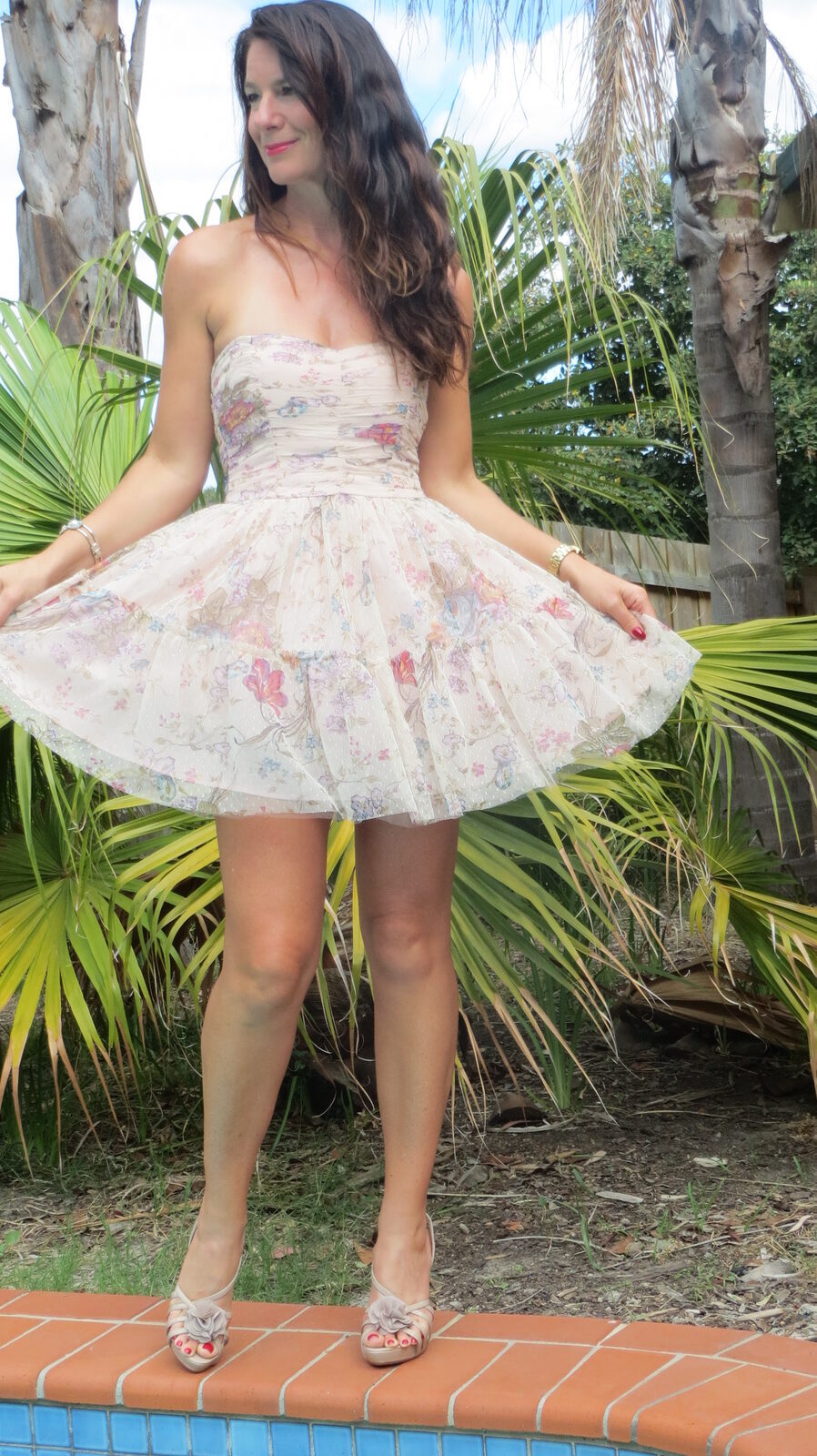
That dress is the counter-example, and I loved it. Zara organza, fully lined, and I felt wonderful in it, but I am 176cm, it was short on me, and there were only so many occasions in my actual life for a strapless floral mini. It was a beautiful purchase and a badly matched one, and it eventually went to a young fashionista who would wear it far more than I ever did.
Which brings me to the last one, and it is the hardest.
Selling your mistakes is allowed
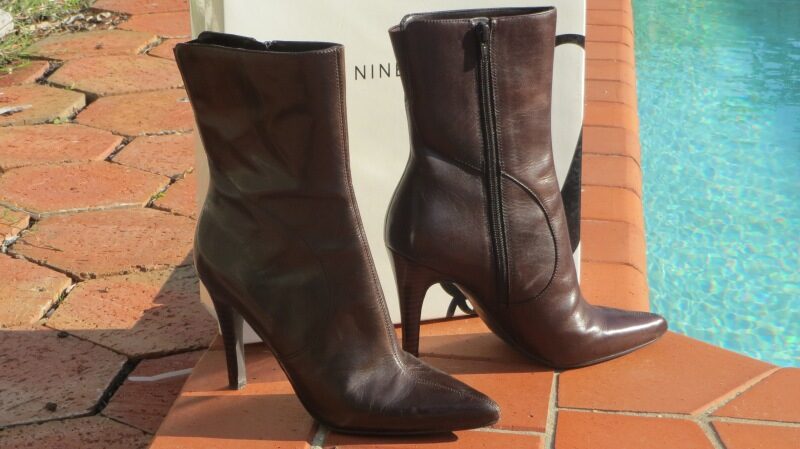
Brand new. In the box. Size 7. Never worn out of the house.
I could have kept those booties in the wardrobe for another five years feeling vaguely guilty every time I saw them, or I could list them, get some money back, and let someone else enjoy them. I listed them, and I would do it again.
Money already spent is spent. Keeping the evidence in your wardrobe does not undo it. All it does is take up the space and the mental energy that should be going to the clothes you actually wear. Sell it, donate it, hand it to a friend who will love it. Then take the lesson: why did that one go wrong? Wrong occasion? Bought on holiday? Bought on sale? Bought sad?
Mine was almost always the same answer. I bought a lovely single thing, instead of an outfit.
What changes when you shop with a stylist
I will be straightforward about this, because it is what I do for a living.
The saving from working with a personal shopper in Melbourne is not that I get you a discount. It is that you stop buying the wrong things. A Half Day is $399 and a Full Day is $649, and a very ordinary client has already spent more than that this year on garments hanging with the tags still on, which is exactly what I was doing to myself before I got disciplined about it.
We shop from a gap list built out of your actual wardrobe, in shops chosen for your shape and budget, and everything gets tried against things you already own. You come home with outfits rather than items.
If the wardrobe end is the bigger problem, and it usually is. A personal styling session starts there instead. A Refresh is $299 for two hours, a Reset is $549 for four, and a Capsule day is $799. All in person, all around Melbourne. And for the fuller argument about the money side of it, I wrote why hiring a personal stylist can save you thousands.
The short version
If you remember nothing else from this, remember these six lines.
- Know what you own before you shop, and shop from a written gap list.
- Three outfits from your existing wardrobe, one real occasion in the next month. Both, or it goes back.
- Run cost per wear before you decide, with an honest number of wears.
- Would you want it at full price? If not, the discount is not a reason.
- Check composition, seams, lining and the light before the mirror convinces you.
- Budget for alterations. Nearly-fits are the most expensive clothes you will ever own.
None of that requires spending less on any single item, and I am not asking you to stop enjoying clothes. You have met me, that would be rich. It just moves the money from fifty-six half-right things to a dozen things you reach for constantly.
I still buy the odd thing I shouldn’t. But the eBay pile is a lot smaller than it used to be, and my wardrobe finally works.
Now go and have a play in yours before you go anywhere near a shop. And if you find something in there you’d forgotten about, that one is free.
And now you’re Looking Good Girls.
“Why spend money on what is not bread, and your labour on what does not satisfy?” Isaiah 55:2.