
Two decisions do almost all the work in a pair of jeans: the rise and the leg shape. Get those right for your proportions and everything else (the wash, the brand, the number on the label) becomes detail. Get them wrong and no size will rescue the pair.
That is genuinely the whole thing, and it is why women who “can never find jeans” usually can, once they stop shopping by size and start shopping by cut.

First. It is not you
If buying jeans makes you want to lie down in a darkened room, you are in enormous company. A survey reported by Sourcing Journal found 46 per cent of women describe jeans as a difficult item to buy, with many trying around six pairs to find one that works.
Six pairs. For one item of clothing. And the reason is structural: denim sizing varies wildly between brands, between styles within a brand, and even between washes of the same style, because different fabrics shrink and stretch differently.
So the changing-room misery is not a verdict on your body. It is a verdict on the industry. Take in a pile, expect most of them to fail, and judge only the fit.
The two decisions
Rise, where the waistband sits
Low rise sits on the hips, cutting across the widest part of you and shortening the leg. It suits very few people and is comfortable for fewer still.
Mid rise sits just below the natural waist. The safe middle ground and a good default.
High rise sits at or just above the natural waist, which, as I keep saying, is the narrowest part of most torsos. It defines a waist, smooths the middle, and lengthens the leg, which is why it flatters such a wide range of bodies.
If you have a longer body and shorter legs, go as high as you comfortably can. If you are long in the leg and short in the body, a mid rise usually balances better.
Leg shape, what happens below the knee
Skinny and slim follow the leg all the way down. Excellent under boots and longer tops.
Straight falls in a clean line from hip to hem. The most universally flattering cut there is, and the one I would send anybody to first.
Bootcut narrows through the thigh and opens slightly from the knee, which balances a fuller hip beautifully.
Wide and flared add real volume below the knee: wonderful for balancing broad shoulders, and a fast way to look taller if the hem nearly reaches the floor over a heel.
Boyfriend and relaxed sit away from the body throughout. Comfortable and current, but they add width wherever they touch, so they want a fitted top to balance them.
Shape by shape
If you are not sure which you are, the three measurements are in the guide to dressing for your body shape and take about two minutes.
Pear or triangle, fuller through the hip
Mid to high rise, with a bootcut or straight leg. Both carry the line straight down from the fullest point rather than tapering in and drawing attention to it. Keep the wash dark and even, and skip heavy back-pocket detail, whiskering or fading across the hip and thigh.
If you love a skinny, wear it with a longer top or a jacket that covers the hip, which is exactly what is happening below.
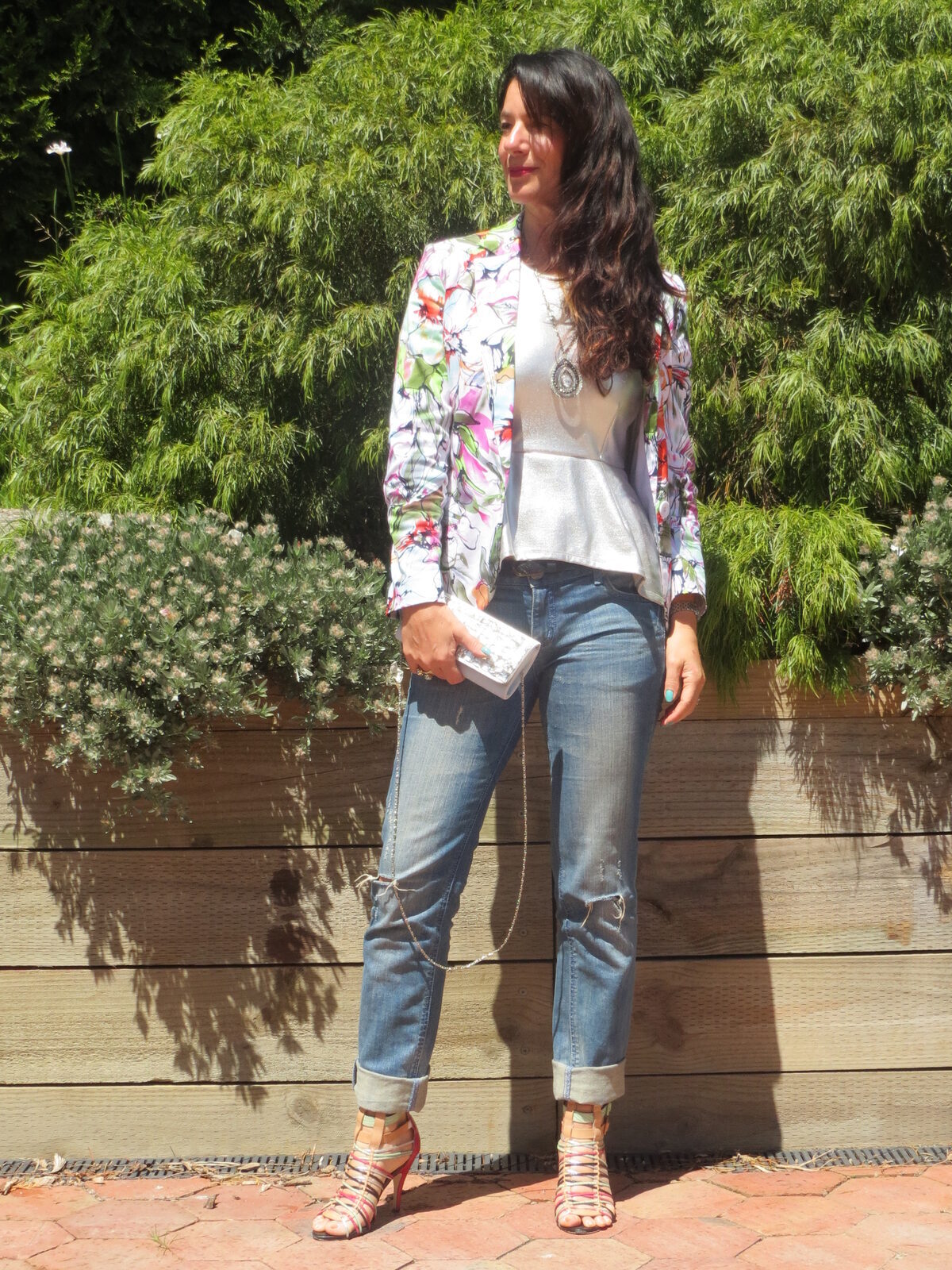
A cuffed hem and a heel like that one is worth knowing about generally: turning the cuff up to the slimmest part of the ankle and letting a little skin show stops a relaxed jean reading as heavy.
Rectangle, straight up and down
The good news: nearly everything works. The better news: a high rise genuinely helps, because it creates the waist definition your frame does not supply on its own.
Straight and wide legs both look excellent. A boyfriend cut worn with a fitted top is a good look here too, since you can afford the volume.
Apple, fuller through the middle
A mid rise is usually both more comfortable and more flattering than a high one, because a tight waistband across the middle is miserable and shows. Look for a wider, flat waistband that does not dig, a straight or slim leg, and a little stretch.
Wear a longer top or an open jacket over the top to carry the vertical line down, and let the leg stay narrow, legs are very often the strong point on this shape.
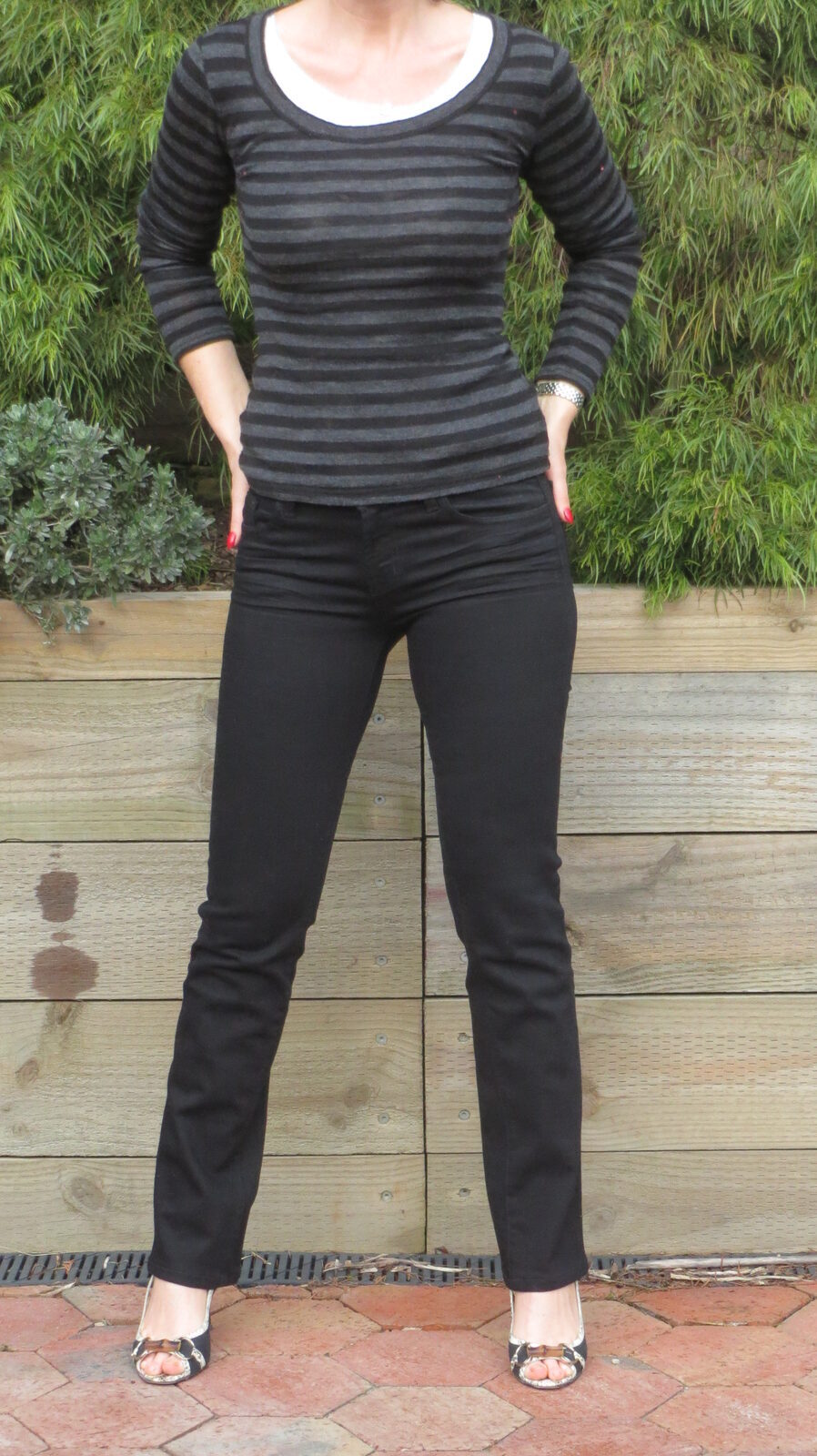
Inverted triangle, broader through the shoulder
Add weight below to balance the top half: wide leg, flare or bootcut, and this is the shape that can carry a lighter wash and more detail below the waist. Mid to high rise, and keep the top half simple.
Hourglass, waist much narrower than hips and shoulders
The difficulty here is almost always the waistband gaping at the back while the hip fits. Go for a high rise with some stretch, cut for a curve, and expect to have the waist taken in, twenty to thirty dollars and it transforms the pair.
Straight, bootcut and slim all work. Avoid stiff, straight-cut waistbands designed for a rectangle.
Fabric: the elastane question
Check the composition label, because it tells you how the jeans will behave by three in the afternoon.
One to three per cent elastane is the sweet spot: comfort and recovery, holding shape through the day. Above about four or five per cent and they start behaving like leggings: heavenly in the changing room, baggy at the knee and seat within hours. Rigid, non-stretch denim holds its shape best of the lot, and moulds to you over time, but it is unforgiving on day one, so the fit has to be right from the start.
That is the same principle as everywhere else on this blog, fabric determines how a garment behaves, and it is worth ten seconds with the label.
Wash and detail
A dark, even indigo or black is the most flattering and the most versatile, because unbroken dark colour reads as one long line and dresses up in a way a pale wash never quite does. It is also the pair to buy first if you are only buying one.
Pale washes, fading, whiskering and distressing all draw the eye to wherever they sit, so put them where you want attention and keep them away from where you don’t.

Back pockets matter more than anyone tells you. Larger pockets set closer together and a touch higher are more flattering; small pockets set wide and low are not. It costs nothing to notice, and it is the difference between two otherwise identical pairs.
Testing a pair properly
In the changing room, in this order:
Sit down. Straight away. If the waistband digs or the back gaps, put them back. That will not improve at a dinner table.
Squat, or at least bend fully. Cheap denim goes transparent across the seat under strain and you want to discover that now.
Check the back waistband with a hand. A gap means they are cut for a straighter figure than yours. Fixable, but factor in the alteration.
Look at where the hem falls over the shoe you will actually wear. Hems are the cheapest alteration there is, so a pair that fits everywhere but the length is a bargain, not a rejection.
Walk. If they ride down, ride up or need adjusting within ten steps, they will do that all day.
Getting the length right for the cut
Hem length is decided by the leg shape, and it is where most otherwise-good jeans fall down.
A skinny or slim wants to finish at the ankle bone or just above, long enough not to look outgrown, short enough to show the narrowest part of the leg. Straight legs look best just brushing the top of the shoe. A bootcut needs length: it should almost touch the floor over the heel you wear with it, or the flare has nowhere to fall and the whole line collapses. Wide legs want the same, hemmed for one specific pair of shoes and worn only with those.
Which means a bootcut hemmed for flats will never look right with heels, and vice versa. Pick the shoe first, then hem.
Common fit problems, and what they are telling you
Nearly every complaint about a pair of jeans is diagnostic. It tells you which cut to try next rather than that jeans are hopeless.
Gaping at the back waist. The jeans are cut for a straighter figure than yours. Look for a curved or contoured waistband, or accept it and have the waistband taken in.
Waist fits, thighs are painted on. You are between the brand’s straight and curvy blocks. Size up and take the waist in: far easier than the reverse, and the reason so many well-dressed women’s jeans have been altered.
Bagging under the seat after an hour. Too much elastane, or denim that has given up. Check the composition next time and stay under about three per cent.
Digging at the waist while sitting. The rise is too high for your torso length. Drop to a mid rise rather than sizing up, which will only make them fall down.
Riding up between the legs when you walk. The rise is too short front-to-back for you. This is a block problem, not a size problem, different brand.
Pooling fabric at the ankle. Just a hem, and the cheapest fix in the shop. Do not reject a pair over length.
Looking after them so they keep fitting
Denim lasts far longer and holds its shape far better if you stop washing it so often. Every wash breaks down the fibres and, in stretch denim, degrades the elastane, which is what turns a beautiful pair baggy after a season.
Wash them cold, inside out, and only when they genuinely need it, airing them between wears does more than you would think. Skip the dryer entirely, because heat is what kills the stretch and shrinks the leg. Hang them to dry instead.
If a pair has gone slightly baggy at the knee, a cold wash and a line dry will usually bring most of the shape back. It is the closest thing to a free new pair of jeans I know.
Buying them without spending a fortune
Denim is one of the better things to buy secondhand, because good jeans outlive their first owner easily and you can see exactly how they have worn. Op shops, the outlets and the resale apps are all full of them, and the everyday labels in the affordable brands worth knowing cover the rest.
The real saving, though, is repetition: when you find a cut that fits, go back and buy it again. Same brand, same style, different wash. It is the least glamorous shopping advice I have and comfortably the most useful, because the hard work is finding the cut, not the pair.
And put thirty dollars aside for the tailor. A waistband taken in or a hem shortened turns a nearly-right pair into your favourite pair, which is the argument I make in the best fashion investments under $200 and will keep making.
Three pairs is plenty
A dark slim or straight pair that dresses up. A relaxed or boyfriend pair for weekends. One more in whatever your life actually calls for. Beyond that you are buying variations you will not wear, and the wider case for that is in looking expensive on a budget.
If the changing-room part is what defeats you (and with jeans it defeats almost everyone) that is exactly what a session is for. A personal stylist will work out your rise and leg from your proportions, and a personal shopper will bring you the pairs worth trying instead of the six that were never going to work. More in the styling posts meanwhile.
Fourteen years of denim later: buy the cut, not the number, and get them altered.
And now you’re Looking Good Girls.
“She selects wool and flax and works with eager hands,” Proverbs 31:13.