
I have done a lot of wardrobe edits now, and I can tell you the single most common discovery.
The client does not have a taste problem. She has good clothes. What she has is a fit problem, and it has been quietly disguising itself as a dozen other problems: nothing suits me, I have nothing to wear, I do not know what my style is, I look frumpy in everything.
Nine times out of ten we pull out the garments she never reaches for, and the reason is the same every time. They nearly fit.
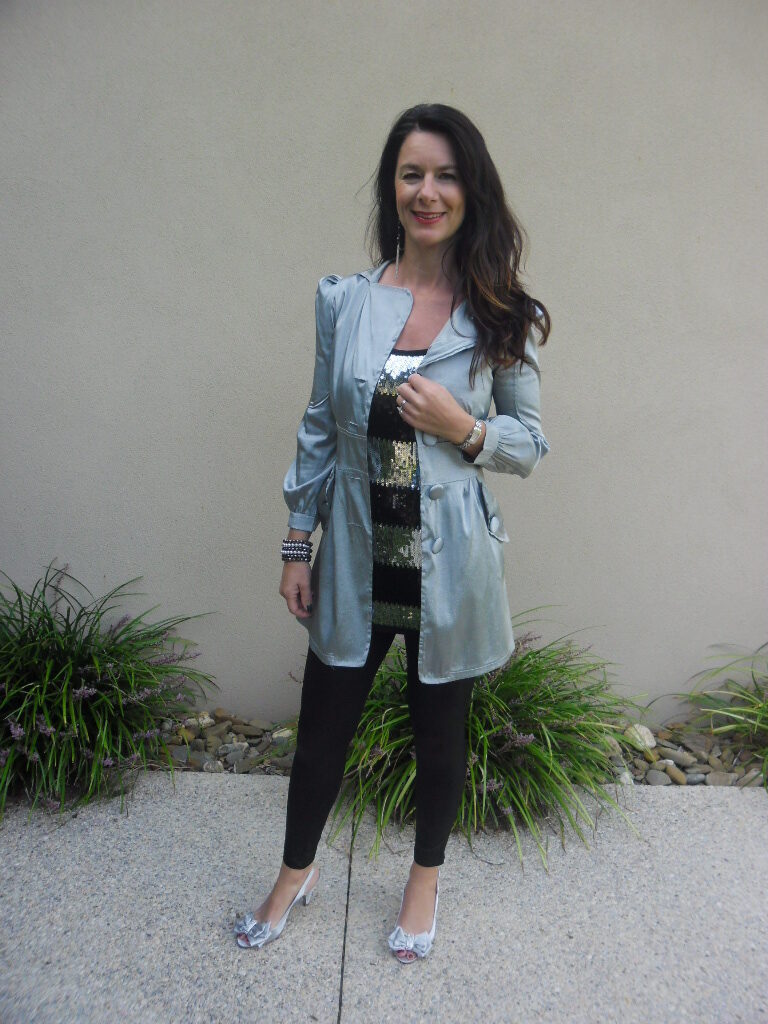
A garment that nearly fits is worse than one that clearly does not, because the clearly-wrong one gets returned. The nearly-right one gets bought, worn twice with a vague sense of being not quite yourself, and then hangs there for four years.
So this post is the technical one. Where things should sit, what to check before you buy, and what a tailor can actually do about it.
First, the thing nobody tells you about sizes
Before any of the checks, this, because it is the reason so many people think the problem is their body.
Australia has no enforced clothing size standard. The Australian Standard size coding scheme for women’s clothing was withdrawn years ago, and since then every brand has set its own measurements from its own fit model. CHOICE has written about the resulting mess more than once.
Which means you can genuinely be a 10, a 14 and a 12 in three shops on the same afternoon, and none of those numbers is telling you anything true about you.
Stop reading the label as information about your body. It is information about that brand’s fit model, and that is all it has ever been.
The five checkpoints
Work down the body in this order. It takes about fifteen seconds once you know it.
One: the shoulder seam. It should sit on the corner of your shoulder, where the flat top turns and becomes your arm. Not past it.
Two: the bust. The garment should close without pulling. If there is a horizontal wrinkle radiating from the button, it is too small, no matter what the tag says.
Three: the waist. The garment’s waist should land where your waist actually is, which is the narrowest part of your torso, usually just above the belly button. A dress with its waist seam two inches below yours will make you look short-waisted and slightly odd, and most people cannot work out why.
Four: the hip and seat. Nothing should strain, and the side seams should hang straight down rather than being pulled forward or back.
Five: the hems. Sleeve, trouser and skirt hems should all end at a length you chose.
Now the mistakes, which are all failures of one of those five.
1. Shoulders that hang past your own
This is the one to check first, because it is the one you cannot fix cheaply.
A jacket or coat whose shoulder seam droops down your upper arm reads as borrowed, instantly, no matter how good the fabric is. Reshaping a shoulder means taking the sleeve out and resetting it, which on a lined jacket costs more than most jackets are worth.
Buy for your shoulders and alter the rest. Everything below the shoulder is negotiable. The shoulders are not.
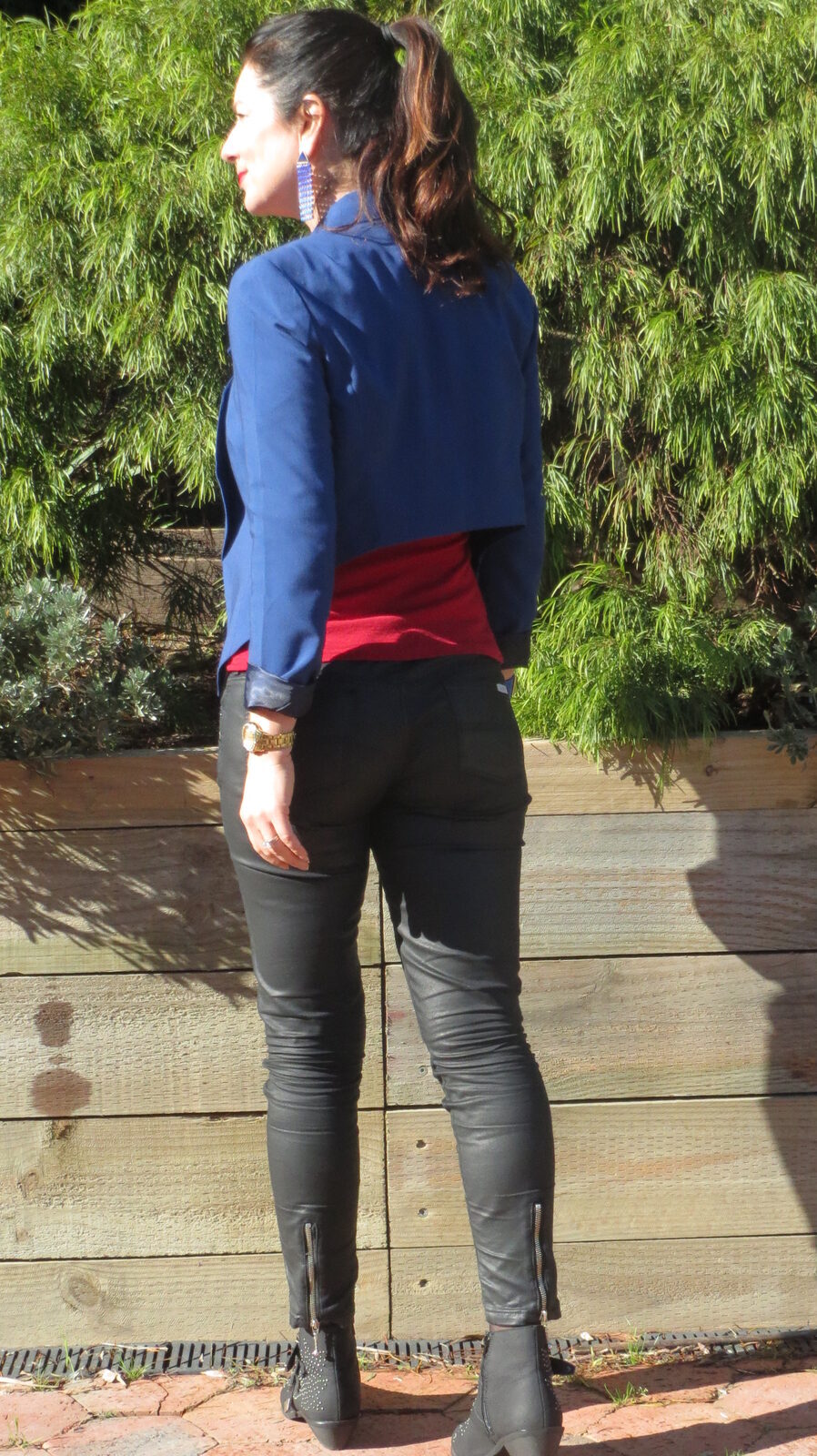
That is what you want to see from behind: the seam sitting where the shoulder ends, the back clean with no pulling across it, and the jacket finishing at a deliberate point rather than a random one.
2. Buying down and hoping
Everybody has done it. The 12 is snug but the 14 looks enormous on the hanger, so you take the 12 and tell yourself it will be fine.
It is not fine. It pulls at the bust, it gapes at the button, and you spend the day aware of it.
Buy the size that fits your widest measurement, then have the rest taken in. A tailor can bring in a waist and side seams for a modest sum and the result looks made for you. Nobody can add fabric that was never there.
This one habit would fix more wardrobes than any other single thing in this post.
3. The gaping button placket
The horizontal pull across a shirt front, with the little diamond gap appearing between buttons when you move.
Two fixes. Either size up and have the shirt taken in through the waist and sides, or, if it is nearly right, ask the tailor to add a small hidden press stud between the two buttons at the fullest point. It costs almost nothing and it solves the problem permanently.
4. Sleeves that end in the wrong place
Sleeve length is one of the fastest tells and one of the cheapest fixes.
A long sleeve on a top or dress should finish at the wrist bone. A jacket sleeve should sit slightly shorter, so that a centimetre or two of shirt cuff shows underneath. A three-quarter sleeve should end at the narrowest part of the forearm, not at the widest.
A sleeve that finishes across the widest part of your forearm makes your arm look wider at exactly that point. Move it up or down two centimetres and the whole arm changes.
5. A waist seam that is not at your waist
Very common in dresses, and genuinely baffling to people until it is pointed out.
If the garment has a defined waist, it needs to be at yours. Empire lines sit under the bust deliberately, drop waists sit on the hip deliberately, and both work. What does not work is a waist seam that has landed somewhere between the two by accident.
Stand side on to a mirror and find your own narrowest point. Then look at where the garment thinks it is.
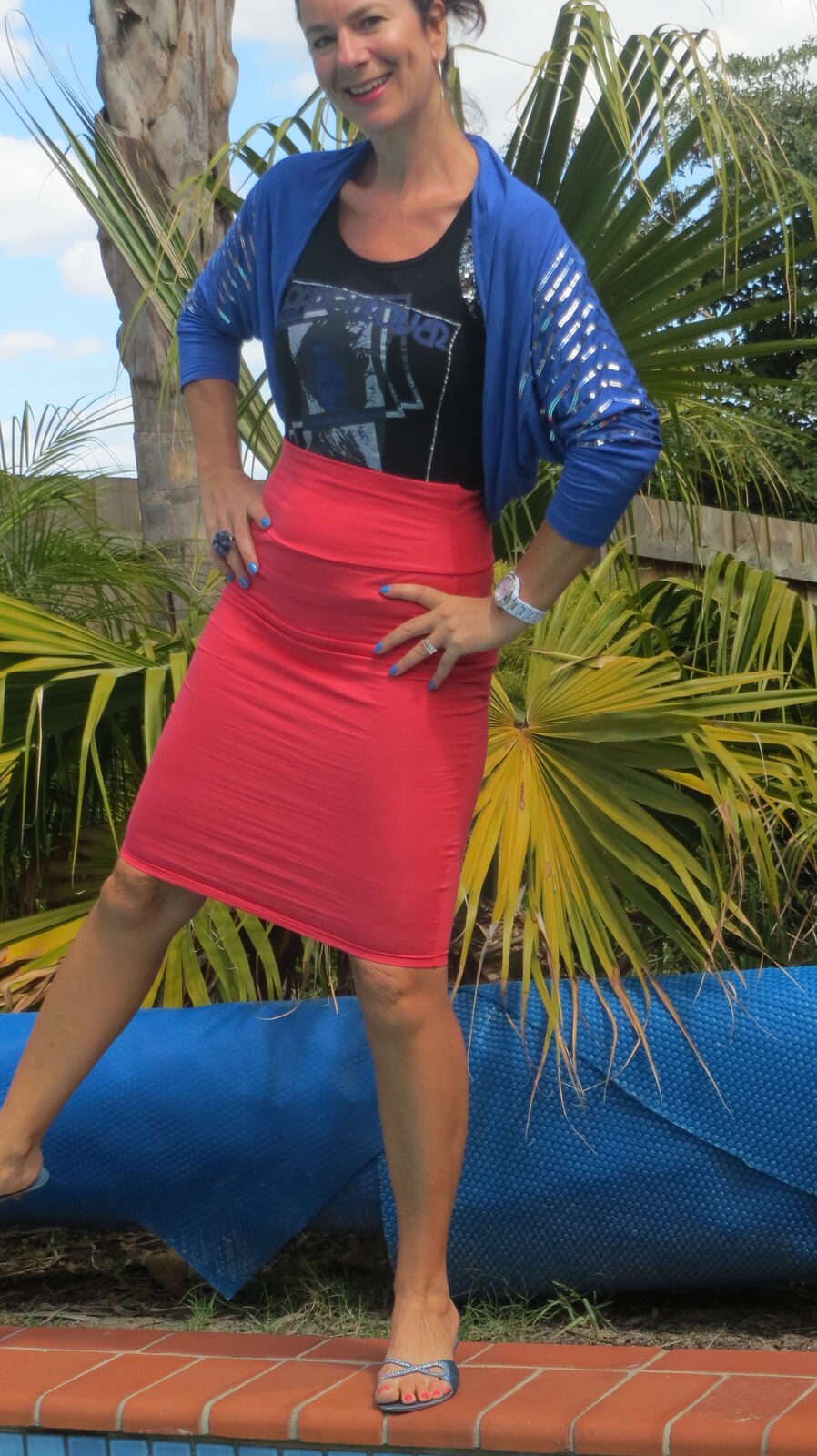
That skirt sits at the actual waist, which is why the proportions read correctly. Drop the same skirt five centimetres and the whole outfit gets shorter and heavier through the middle.
6. The wrong rise for your torso
Rise is the distance from the crotch seam to the waistband, and it is the reason two pairs of jeans in the same size feel completely different.
If a trouser sits below your natural waist but is cut for someone longer in the body, you get pulling at the front and a waistband that will not stay put. Short-waisted and it rides up all day.
There is no correct rise, only the correct rise for you. Once you find it, buy that rise repeatedly, which is most of the advice in the best jeans for every body shape.
7. Trouser hems that split the difference
A hem needs to commit.
Straight or wide leg: just touching the top of the shoe, with the slightest break in the fabric. Cropped or tapered: ending cleanly above the ankle bone with a deliberate gap.
Anything landing in the vague middle looks like the trousers shrank.
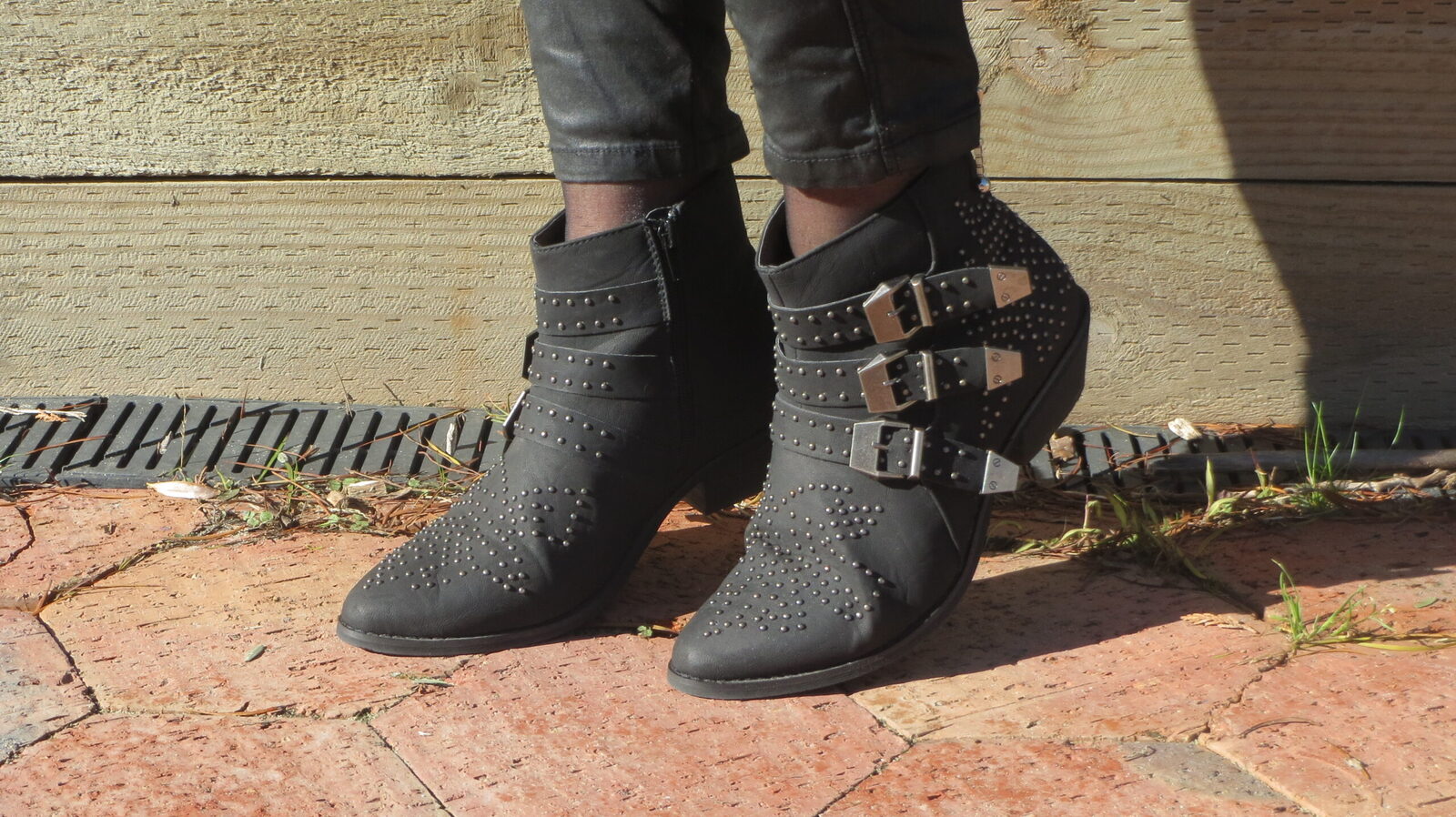
There it is done properly: a clean crop, a visible gap, the boot given room to be seen.
Hem trousers wearing the shoes you will actually wear them with. If you wear both flats and heels with the same trousers, hem for the flats and accept a slightly short look with heels, or own two pairs.
8. Tight mistaken for fitted
These are not the same thing and the difference is visible from across a room.
Fitted follows the shape of the body with the fabric skimming it. Tight presses into the body and creates horizontal lines, at the bust, the upper arm, across the seat.
The test is the horizontal wrinkle. Vertical drape is fine and usually means the garment is hanging properly. Horizontal pulling means the fabric is being asked to stretch across something.
Going up one size and having it taken in where it is genuinely loose gets you fitted. Staying in the smaller size gets you tight. That distinction is doing more work in how to look slimmer in clothes than any colour or pattern.
9. Ignoring the foundations underneath
Roughly half the fit problems I see in a wardrobe edit are not the garment at all.
A bra that has given up will change the fit of every top you own, because it changes where your bust sits, which changes where the waist appears to be. Get measured properly every couple of years, and again after any significant change in weight.
Same with anything worn under a fitted skirt or dress. It is not glamorous advice and it is the cheapest fix on this list.
10. Buying for a body you do not currently have
The kindest and hardest one.
Clothes bought for the body you hope to have do not motivate anybody. They sit in the wardrobe as a daily small reproach, and they take up the space and the attention that should be going to clothes that fit you today.
Dress the body you have this morning. If things change later, that is a lovely problem and you can buy for it then. I went through this properly in the wardrobe decluttering checklist, because it is usually a decluttering decision before it is a shopping one.
What a tailor can and cannot do
Worth knowing before you carry an armful of things in hopefully.
Straightforward and cheap: hems on trousers, skirts and sleeves. Taking in a waist or side seams. Moving a button. Adding a hidden stud. Tapering a trouser leg. Shortening straps.
Possible but costs more: shortening a lined jacket from the hem, reshaping a sleeve, taking in a lined garment, altering a bust dart.
Difficult or not worth it: anything involving the shoulders or the armhole, letting out a garment with no seam allowance, changing the fundamental cut, most alterations to knitwear or heavily pleated pieces.
As a rough guide, expect somewhere around $20 to $40 for a simple hem and more for waist or sleeve work, varying by suburb and garment. On something you will wear for years that is the best value in fashion. On a $25 dress it usually is not worth it, which tells you something useful about whether to buy the $25 dress.
Take the shoes. Every time. A hem done without the right shoes is a hem done twice.
The changing room test
Four things, and they take a minute.
- Sit down. Does the waistband dig in, does the skirt ride up somewhere you would have to manage all day?
- Raise both arms. Does the whole garment lift with you and stay lifted? That is an armhole cut too low.
- Walk a few steps. Watch the side seams in the mirror. They should hang straight and stay still.
- Look at your back. Turn around properly, with the second mirror. Most bad fit lives where you never look.
If it fails any of those, it is not the one, however much you like it on the hanger. That is the same discipline as the three-outfit test in how to shop smarter and stop wasting money on clothes: decide in the shop, not at home.
The short version
- The size on the label means nothing. There is no enforced standard.
- Check shoulders first. They are the one thing you cannot fix.
- Buy for your widest measurement and have the rest taken in.
- Sleeves to the wrist bone, jacket sleeves a little shorter.
- Waist seams belong at your waist.
- Hem trousers in the shoes you will wear them with.
- Vertical drape good, horizontal pull bad.
- Sort the bra before you blame the top.
- Dress the body you have today.
- Budget for alterations as part of the price, not as an extra.
None of this is glamorous, and all of it is why some people look pulled together in inexpensive clothes while others look slightly off in expensive ones. It is not taste and it is not money. It is centimetres.
If you would like someone to go through the wardrobe with you and sort the keep pile from the tailoring pile, that is exactly what a styling session is for. A Refresh is $299 for two hours, a Reset is $549 for four with a full edit and a lookbook, and a Capsule day is $799, all in person around Melbourne. And if the changing room is the part that defeats you, shopping together is $399 for a Half Day and I will be honest with you about the shoulders.
And now you’re Looking Good Girls.
“No one sews a patch of unshrunk cloth on an old garment, for the patch will pull away from the garment, making the tear worse.” Matthew 9:16.