
Fewer than you own. That is the honest answer, and for most women the working number sits somewhere between 30 and 50 everyday pieces: excluding underwear, activewear and genuine occasion wear.
But the number is not really the point, and any guide handing you a fixed figure is guessing about your life. The right number is decided by something far more mundane: how often you do the washing.
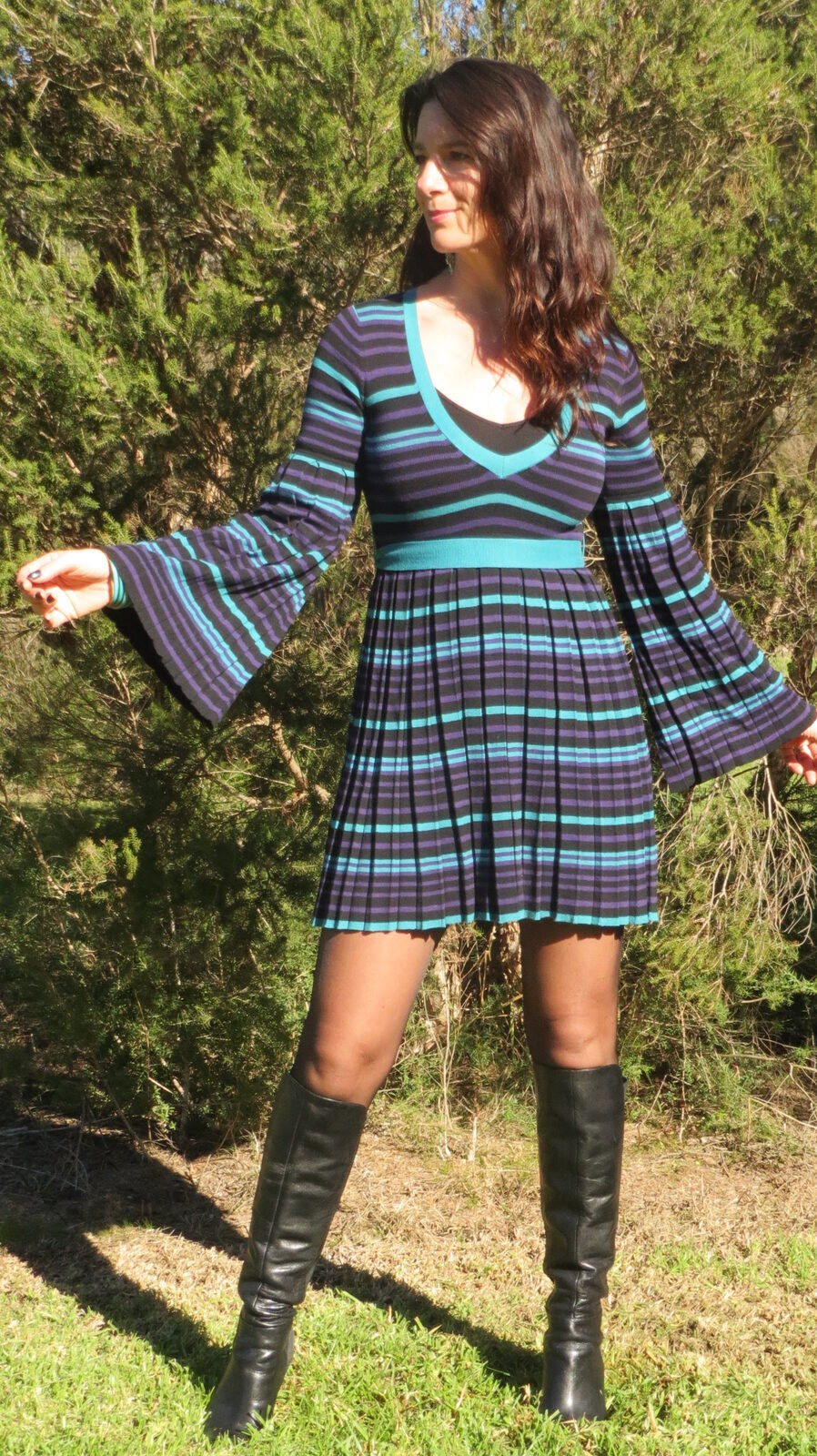
What we actually own
Worth knowing where the starting line is. Australia’s 2024 national clothing benchmark counted 5.27 billion garments sitting in Australian wardrobes, about 193 items for every person in the country, amounting to 1.32 million tonnes of clothing.
One hundred and ninety-three items each. Against a working wardrobe of thirty to fifty, that tells you most of what you need to know about how much of a typical wardrobe is simply dormant: hanging there, costing space, quietly making it harder to find the things you do wear.
I am not going to pretend I have counted mine. But I know how many I reach for, and so do you, roughly, if you are honest.
The number is a laundry question
This is the bit nobody says, and it is the whole answer.
If you wash once a week and wear one top a day, you need at least seven tops plus a couple of spares. If you wash twice a week, you can halve that. If you change after work, or your job means two shirts some days, it goes up again.
That is it. That is the calculation. Everything else (capsule counts, thirty-three-item challenges, minimalist rules) is somebody else’s laundry habits dressed up as a principle.
So before any list, answer three questions: how often do I wash, how many days a week do I dress for work, and do I change during the day? Your numbers fall out of those.
The actual numbers
For a fairly typical life, washing weekly. Adjust up or down from the questions above.
Tops: 8-12. The category that carries most variation, so this is where the count sits highest. A mix of everyday and dressier, in fabrics that suit you.
Bottoms: 4-6. Two pairs of jeans, one or two tailored trousers, one or two skirts. Fewer than people expect, because bottoms get worn several times between washes.
Dresses: 2-4. One does an enormous amount of work if it dresses up and down.
Layers: 3-5. A blazer, a leather or denim jacket, a couple of good knits. This is the category that makes a small wardrobe look large, because a layer changes an outfit more visibly than a top does.
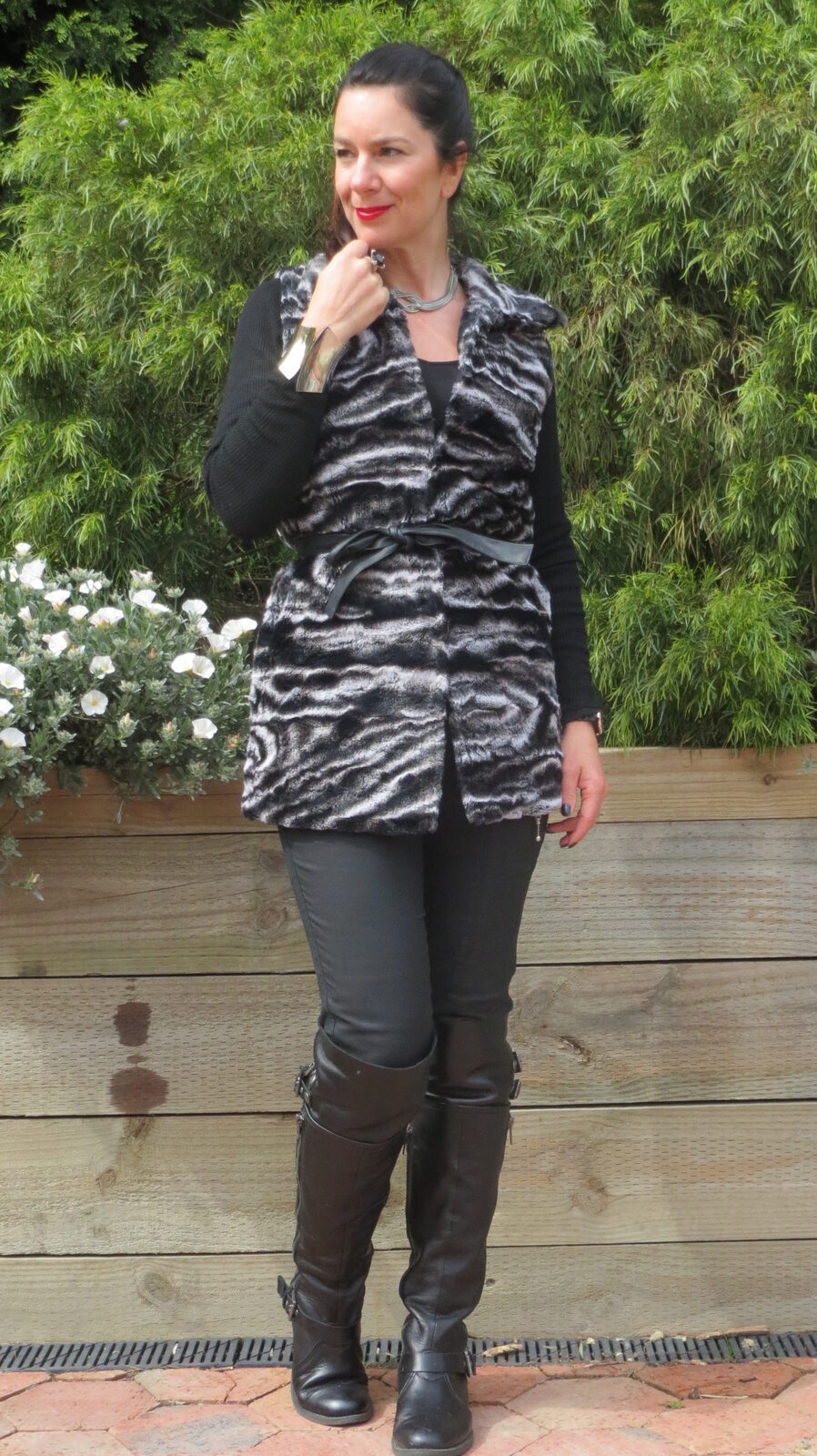
Same black knit, same black jeans, same boots, add the vest and it is a different outfit. That is the whole argument for spending your count on layers rather than on more tops.
Coats: 1-2. A proper winter coat and something lighter.
Shoes: 4-6. A flat or loafer, an ankle boot, one heel, a clean sneaker, plus a sandal if your summers demand it. The full case is in the shoes guide.
Bags: 2-3. An everyday one, a small one for evening, and possibly a large one for work or travel.
Underwear, socks, sleepwear, activewear, separate categories entirely, and driven purely by laundry frequency. Do not fold them into the count; it distorts everything.
Occasion wear: 1-3. Judged on being ready rather than on being worn often. Cost-per-wear does not apply here.
That comes to roughly 25 to 40 everyday pieces plus shoes. And it genuinely dresses a person, the worked week in the capsule wardrobe post shows how far numbers like these go.
Three things that legitimately change the numbers
Your laundry cycle, as above, and it is the biggest lever by far.
Your work. A uniform slashes the count. A strict corporate code roughly doubles it, because you effectively run two wardrobes. Most modern workplaces sit near enough to smart casual that the two overlap heavily, which is exactly why the same jeans and knits cross over, see smart casual.
Your climate. Melbourne needs more layers and fewer extremes than somewhere tropical. Two mild seasons and heavy layering means a lot of the wardrobe runs year-round, which reduces the total rather than increasing it.
What does not legitimately change the numbers: how much storage you have. A big wardrobe is not a reason to fill it, and it is the single most common way a count creeps.
I say that as someone who has watched it happen repeatedly. A client moves somewhere with a walk-in robe, and within two years it is full, not because her life changed, but because the space existed and nothing ever forced a decision. Storage does not solve a clothing problem. It postpones it, and quietly makes it larger.
Four real wardrobes
Because a single number is useless and the variation between lives is enormous. These are the shapes I actually see.
The office worker, washing weekly. Five work days, weekends casual, some evenings out. Around 12 tops, 5 bottoms, 3 dresses, 4 layers, 5 pairs of shoes, roughly 30 pieces. The overlap is what keeps it down: the same dark jeans go to a relaxed office and to Saturday, and a blazer does the lifting on the days that need it.
The shift worker in a uniform. The uniform removes the biggest category entirely. Off-duty needs perhaps 8 tops, 4 bottoms, 2 dresses, 3 layers, about 20 pieces, plus whatever the uniform requires. The catch is laundry: rotating shifts make washing irregular, so err upward on the basics rather than on the interesting pieces.
The mother of small children. More tops, unquestionably, things get worn through and washed constantly, and you will change during the day more often than you plan to. Perhaps 14 tops but fewer dressy pieces, and the shoe count drops because you live in two comfortable pairs. Around 35, weighted heavily towards things that wash well and do not need ironing.
The retired or working-from-home wardrobe. The smallest of the lot, and the one most likely to be full of clothes from a former life. Perhaps 20 to 25 everyday pieces, plus a few good things for going out. The work is usually removal rather than addition, corporate clothes from a job that ended, kept out of habit.
Notice none of those is thirty-three items. And notice the variable that moves most is tops, because tops are what laundry actually governs.
What the extra clothes actually cost
It is worth being clear about why any of this matters, because “own less” on its own is just a preference.
Money, obviously, though the sunk cost is spent and cannot be recovered by feeling bad about it.
Space, which in most Australian homes is genuinely scarce and worth something.
Time, every single morning. Scanning a rail of two hundred and rejecting most of it is work, and you do it before coffee, every day, for years.
Your good clothes. This is the one people miss. A crowded wardrobe crushes things, creases them, and hides them. The pieces you love get worn less because you cannot see them, and wear out faster because they are jammed against everything else.
The next purchase. A full wardrobe makes it almost impossible to know what you are missing, so you buy another black top because you cannot see the four you own. That is how 193 items happens, not through one extravagance, but through a hundred small purchases made without visibility.
The test that beats any number
Turn every hanger backwards today. As you wear something, hang it back the right way round.
Six months later, whatever is still backwards has told you the truth. No arguing with yourself, no “but I might”. That is your surplus, identified by evidence.
It is the least painful audit I know, it costs nothing, and it works precisely because it removes the decision from the moment when you are attached to the garment. What to do with the surplus is in the decluttering checklist, including the part about not dumping unwearable clothes on op shops.
Why more clothes make dressing harder
This is the thing people find counter-intuitive until they have done it.
A wardrobe of two hundred items where nothing combines produces fewer wearable outfits than forty pieces that do. Every morning you scan the whole rail, reject most of it for reasons you do not consciously articulate (wrong shape, needs ironing, does not go with anything, never liked it) and end up in the same five things anyway.
The relief people describe after an edit is not really about owning less. It is that every remaining option is viable, so getting dressed stops being a decision and becomes a choice between good things.
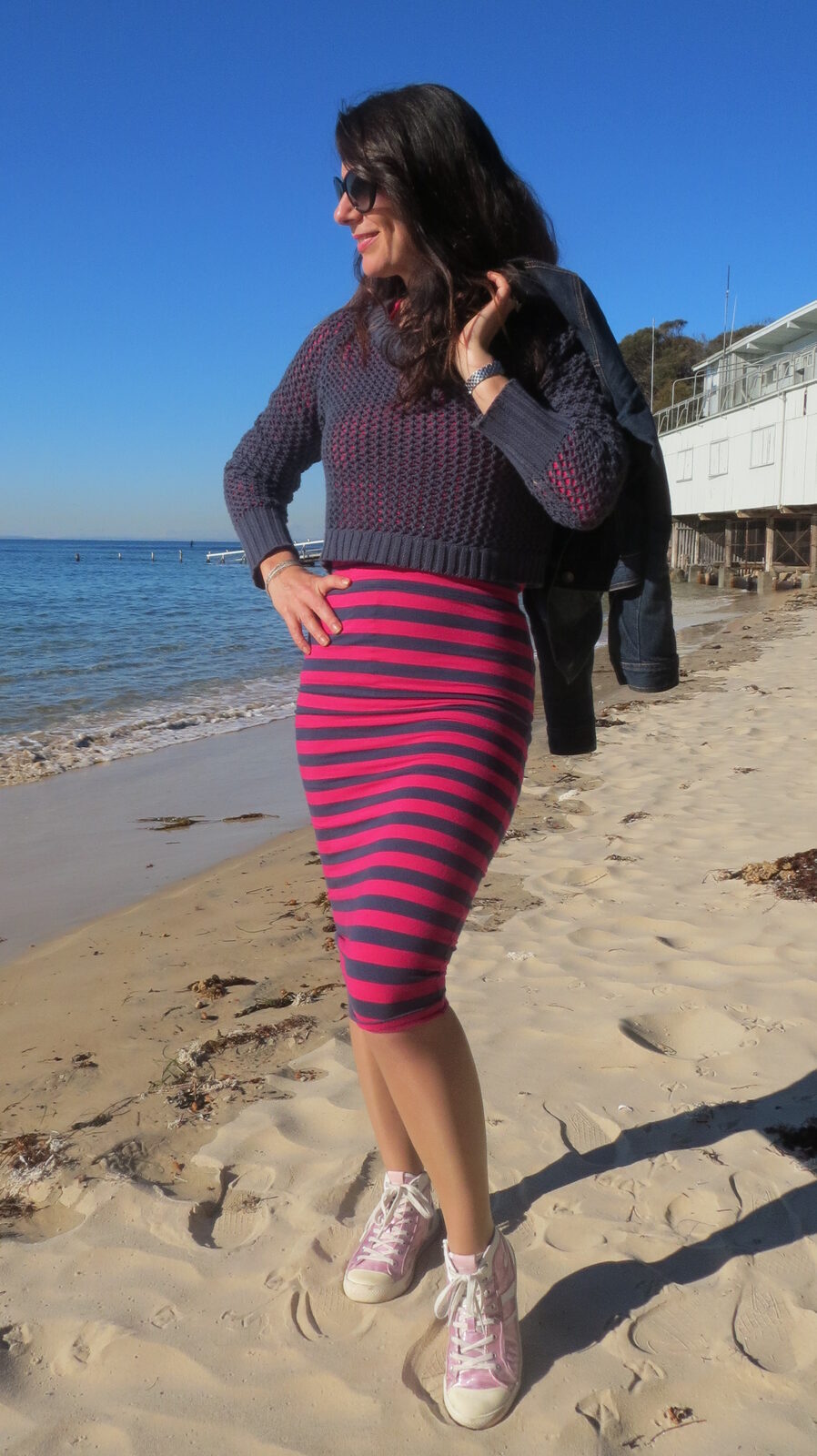
One skirt: knit and sneakers on the beach, or a heel and a blazer for dinner. Pieces that pull two shifts are how a small wardrobe stops feeling small.
Getting to your number without a purge
Nobody has to do this in a weekend, and the gradual version sticks better anyway.
Stop the inflow first. There is no point removing things while five more arrive a month. Buy from a written gap list only, and deal with online returns inside the week, unreturned parcels are the single biggest source of quiet wardrobe growth.
Then let the hangers do the work over six months, as above. No decisions required in the meantime.
Replace rather than add. Once you are near your number, a new top means an old top leaves. That one habit holds a wardrobe steady indefinitely, and it makes you choosier about what comes in, because something has to go for it.
Buy up in quality as you go down in quantity. This is the trade that makes a smaller wardrobe genuinely better rather than merely smaller. Fewer pieces get worn more often, so they need to be better made and to fit properly, which is the case in the best fashion investments under $200, and why the tailor matters more the fewer things you own.
Six months of that and you land on your number without ever having had a dramatic afternoon about it.
Minimal is not a number
I want to be clear about this, because “minimal wardrobe” gets used as though a low count is the goal in itself.
A well-used wardrobe of sixty pieces is more minimal in spirit than thirty where half never move. The target is nothing dormant. Every item earning its space. If your life genuinely needs sixty pieces, own sixty and wear them all.
Nor does minimal mean beige, or plain, or joyless. Mine never has been. It means everything in there works, fits, and gets used. The same standard as looking expensive on a budget, applied to quantity instead of quality.
Where to start
Do not count. Counting turns it into a project and projects get abandoned.
Turn the hangers around instead, and in the meantime notice what you reach for this week. Those two things together will tell you your real number inside a fortnight, and it will be lower than you think and completely specific to you.
If you would rather have someone work it out with you (and it is much faster with a person who has no attachment to any of it) that is what a session is for. A personal stylist will do the edit, work out what your life actually requires, and tell you where the genuine gaps are. A personal shopper fills those and nothing else. More in the styling posts meanwhile.
Fewer, better, all of it worn. Fourteen years of dressing on very little says that is the only number that has ever mattered.
And now you’re Looking Good Girls.
“Whoever has two tunics is to share with him who has none,” Luke 3:11.