
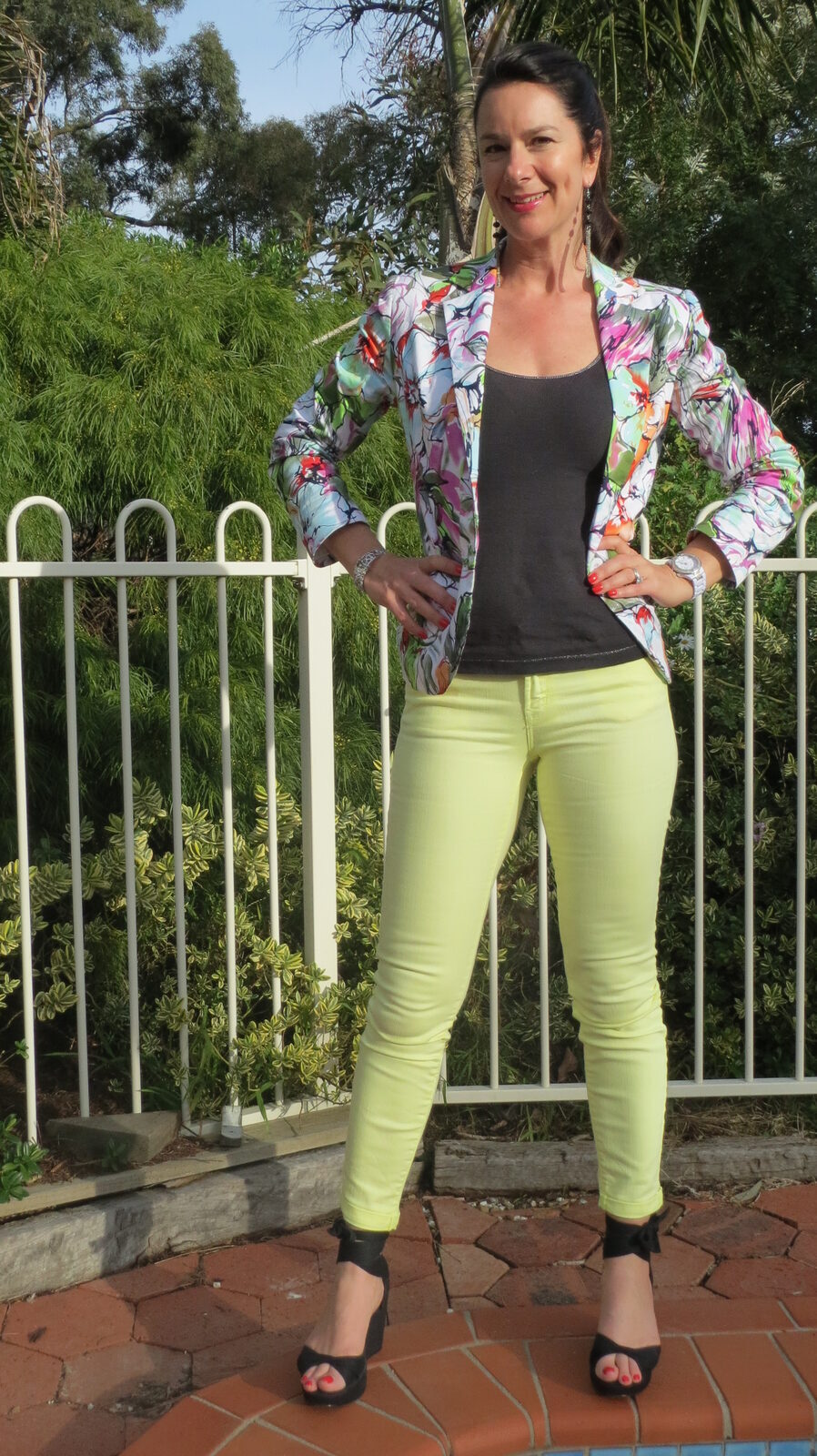
Smart casual is one polished piece worn with one relaxed piece. That is the entire formula. A blazer with jeans. A silk top with tailored trousers. A good knit with a smart skirt and a loafer.
Get that one idea and the vaguest dress code in the world stops being a problem, because the reason “smart casual” causes so much standing in front of a wardrobe is that nobody ever defines it, they just expect you to know.
Why nobody agrees what it means
It is not your imagination: the goalposts genuinely moved, and recently.
Indeed’s Hiring Lab tracked Australian job ads and found relaxed dress standards spreading across the country, with postings increasingly using phrases like “casual dress”, “smart casual” and “dress for your day”, the shift showing up nationally, across regions and across most occupations rather than in a few creative pockets.
“Dress for your day” is the interesting one. It means dress for whatever the day actually holds: relaxed at your desk, a notch smarter for a client. Which sounds liberating and is, in practice, a rule that hands the judgement to you. That is precisely why a formula you trust is worth more now than it was when there was a dress code on the intranet telling you what to do.
The formula, properly
One polished element. One relaxed element. Good shoes.
The polished piece supplies structure: a blazer, tailored trousers, a silk or good cotton top, a well-cut dress, real leather. The relaxed piece keeps it human, dark denim, a soft knit, a flat, a sneaker.
Get the ratio wrong in either direction and you have left the code:
- Everything relaxed → you are simply casual, and it will read as not having bothered.
- Everything polished → you are in business wear, which at a Sunday lunch reads as having misjudged the room just as badly.
The mix is the whole point. That is why a blazer over a tee works and a blazer over a silk shirt with tailored trousers does not. The second one is a business outfit.
The building blocks
A blazer or a structured jacket. The single most useful garment in this entire code. It converts nearly anything beneath it, which is why it does so much work in dressing for work without looking boring too.
Dark, well-fitting denim. In most Australian workplaces now, a dark straight or slim jean passes without comment, provided it is dark, undamaged and fits. Rips, heavy fading and pale washes drop you into casual. Which cut suits you is in the jeans guide.
Tailored trousers. The alternative to denim and slightly dressier. Excellent with a knit and a flat.
Good tops. Silk, fine cotton, a decent knit. Fabric does the work here. The same shape in cheap thin jersey reads casual and in silk reads considered.
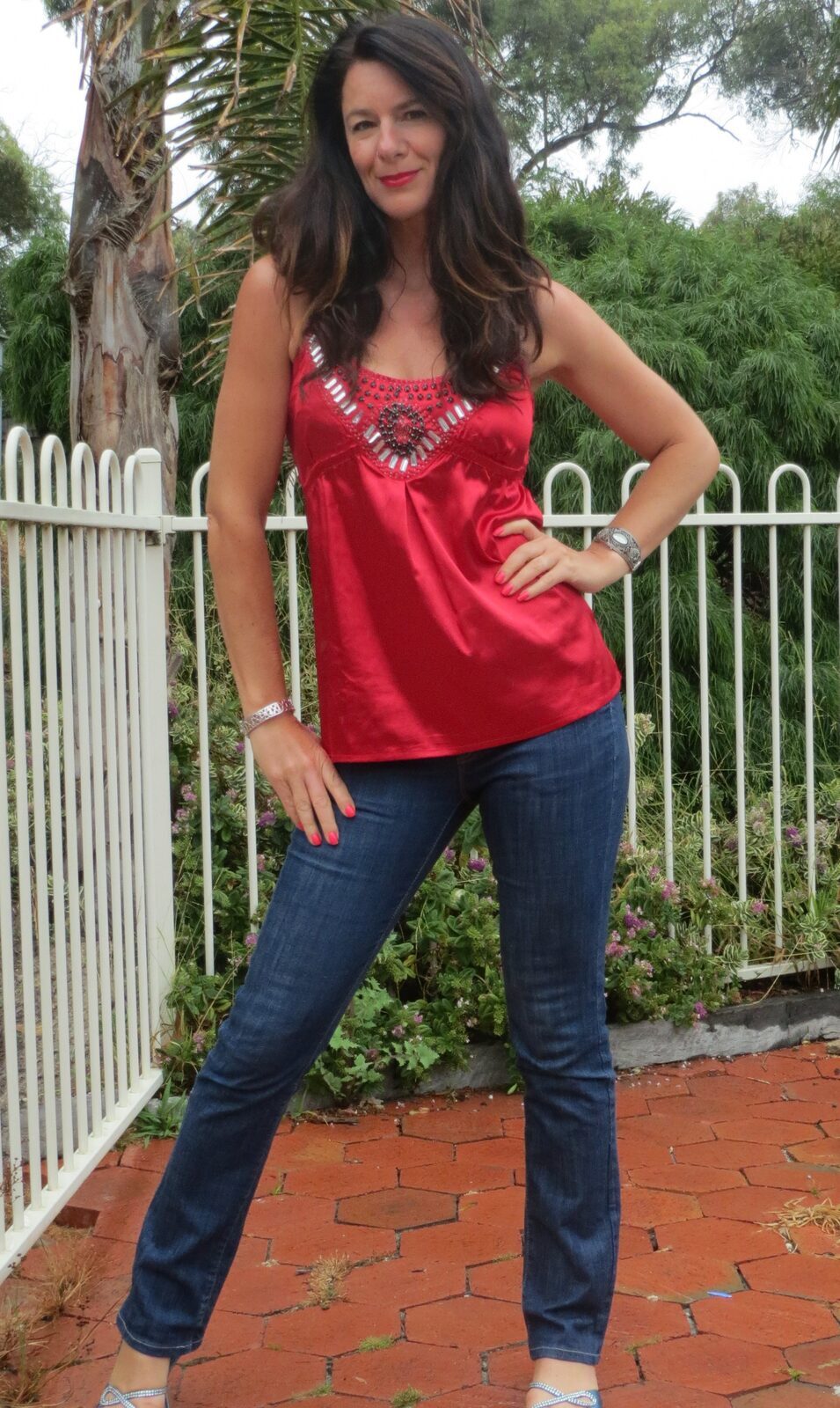
That is the formula at its simplest: one good fabric up top, dark denim below, a heel to finish. Nothing complicated about it.
A simple dress. Often the easiest smart casual answer of all, a plain day dress in a good fabric with a jacket over it.
Shoes that look chosen. A loafer, an ankle boot, a block heel, a smart flat, or a clean white leather sneaker. Which pairs earn their keep is in the shoes guide.
Smart casual by occasion
The code shifts with context, so here is what it means in practice.
At the office, “dress for your day”
At your desk: dark jeans, a good knit or top, a flat or a clean sneaker. Client meeting or presentation: swap in the blazer and a heel or a loafer. Same wardrobe, one layer of difference.
The trick is keeping a blazer at work. Then the decision takes four seconds instead of happening at seven in the morning.
Dinner, or a restaurant
Dressier end. Tailored trousers or a dark jean, a silk top or a good knit, a heel or a smart flat, decent jewellery. This is where fabric matters most, because restaurant lighting is unflattering to cheap synthetics in a way daylight is not.
A weekend lunch or a winery
The relaxed end. A day dress with a denim jacket, or good jeans with a knit and a flat. Add a wrap, Melbourne will turn on you between the entrée and the car.
An invitation that says “smart casual”
Aim slightly dressier than you think, because hosts who write “smart casual” almost always mean “please make an effort but don’t wear a gown”. A dress with a jacket, or tailored trousers with a good top, will never be wrong.
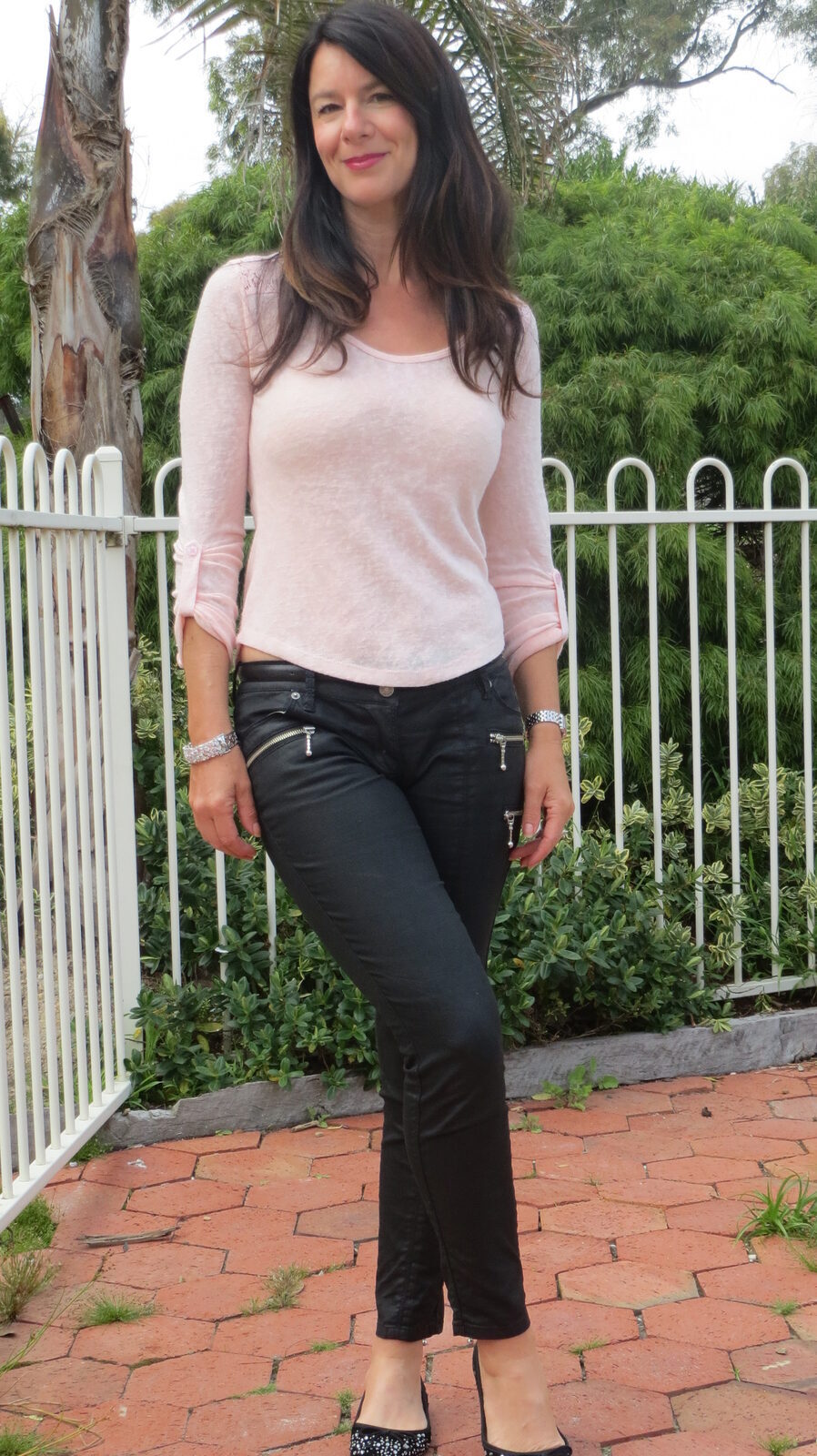
Leather trousers with a soft knit and a flat is one of my favourite versions of this: polished fabric, relaxed shape, comfortable shoe. Smart casual does not have to mean a heel.
The fabric test, which decides more than the shape
Two women can wear the identical outfit (a crew-neck top, dark jeans, a flat) and one reads smart casual while the other reads weekend. The difference is almost always the cloth.
Silk, fine merino, good cotton, linen blends, real leather and a wool-mix blazer all read as considered, because they hold their shape, hang properly and catch the light softly. Thin jersey, shiny polyester, cheap acrylic knits and anything gone bobbly read as casual no matter how smart the cut, because they cling, crease and sit limply.
So when an outfit feels nearly right but somehow too relaxed, swap one item for the same shape in a better fabric before you change the shape at all. A silk shell instead of a jersey tee, under exactly the same blazer and jeans, moves the whole thing up a grade.
This is also why smart casual can be done cheaply. Good fabric turns up constantly in op shops, silk shirts and merino knits especially, because the people who bought them first paid properly and wore them rarely.
One outfit, dressed up and down
The most useful trick in this whole code is realising you are not building separate wardrobes. You are moving one outfit along a dial.
Start with dark jeans and a fine knit. That is the base, and on its own it is casual.
- Add a clean white sneaker and a crossbody bag → weekend, coffee, school run.
- Swap the sneaker for a loafer or ankle boot → smart casual, comfortably. Desk-appropriate anywhere with a relaxed code.
- Add the blazer → smart casual proper. Client meeting, lunch out, drinks.
- Swap the jeans for tailored trousers and add a heel → business casual. Presentation, formal client, an occasion.
Four moves, one starting outfit, and the whole range covered. Which is why the ten pieces below go so much further than they look. The variety comes from the combinations, not the count.
Worth internalising, because it also means you can decide in the car. If you arrive somewhere and realise you have misjudged it, taking the blazer off or putting it on shifts you a whole grade in either direction.
Melbourne, by season
Because the code changes with the weather here more than it does almost anywhere.
Summer wants natural fibres (linen blends, cotton, silk) and a flat sandal that is not a thong. A linen shirt over a dress, or a good day dress with a smart flat, is the whole answer. Keep a light jacket in the bag anyway.
Winter is the easiest season for smart casual, because the layers do the work for you. A good coat over a knit and dark jeans reads polished with almost no effort, and boots are naturally smarter than most summer shoes.
Autumn and spring are the awkward ones, and the answer is the removable layer that genuinely belongs to the outfit. A blazer or a proper jacket, not something grabbed at the door. That way you are correctly dressed at both ends of a fifteen-degree swing.
The accessories that do the lifting
Smart casual is decided at the edges more than the middle, and three things carry it.
The bag. A structured bag in decent leather lifts jeans and a knit immediately. A slouchy canvas tote pulls the same outfit straight back to casual, however good the clothes. More in the handbag guide.
One piece of jewellery, chosen deliberately. Good earrings with a high neckline, or a fine chain with an open one. Not a pile.
A belt that matches the outfit rather than fighting it. Close to the colour of what you are wearing, so it defines the waist without cutting you in half.
None of it needs to be expensive. It needs to look like you decided.
Where it goes wrong
Too casual. Activewear, hoodies, track pants, thongs. Ripped or faded denim. Anything creased, bobbled or visibly tired, condition drops an outfit a whole grade on its own, whatever it cost.
Too formal. A full matching suit, a cocktail dress, anything sequinned before evening. Over-dressing is read as misjudgement just as clearly as under-dressing, and it makes everyone else uncomfortable, which is worse.
The scuffed sneaker. A clean white leather sneaker is genuinely smart casual now. A grubby one is not, and nothing undoes an outfit faster. Two minutes with a cloth.
Ignoring the venue. A winery lunch, a city restaurant and a client meeting are three different rooms. The outfit that suits all three does not exist, and pretending otherwise is how people end up wrong-footed.
The one case where I would go dressier
If the invitation says smart casual and it is a job interview, ignore the relaxed half of the formula and go a clear notch up, tailored trousers or a good dress, a blazer, a proper shoe.
Workplaces increasingly tell candidates to come as they would to work, and it is well meant. But the person across the desk is forming an impression in the first few seconds, and slightly overdressed reads as took this seriously. Slightly underdressed reads as the opposite, however unfair that is. You can always take the jacket off once you are in the room. You cannot put one on that you did not bring.
A Melbourne note
Because this is where I dress people: the layer is not optional here. A wrap, a blazer or a jacket that genuinely belongs to the outfit (not the cardigan you grabbed on the way out) is the difference between smart casual and smart casual plus something that does not match.
Melbourne also runs a touch dressier than most of the country in the evening. Judge the city, not the national average.
Ten pieces cover it
A blazer. A good knit. Two or three decent tops in real fabric. Dark jeans that fit. Tailored trousers. A simple dress. A smart flat or loafer. A clean white sneaker. A bag that is not your beach tote.
That is it, and mixed properly it produces weeks of outfits without repeating in any way anyone notices. Buy the blazer and the shoes properly, have everything altered so it actually fits, and the rest comes from the op shops and the sales for very little. The whole argument is in looking expensive on a budget.
If the guessing is the hard part
It usually is, because smart casual is the one code that never tells you where the line sits, and the line moves depending on your workplace, your city and the room.
That is exactly what a session sorts out. A personal stylist will build the formula around your actual life and the rooms you actually walk into, and a personal shopper will help you find the ten pieces without six shops of guessing. There is more in the styling posts meanwhile.
One polished thing, one relaxed thing, good shoes. Fourteen years on, I have not found a situation that formula does not handle.
And now you’re Looking Good Girls.
“There is a time for everything, and a season for every activity under the heavens,” Ecclesiastes 3:1.