
I have been writing about spring trends on this blog since 2012. So let me start by telling you something that no fashion magazine will.
The list barely changes.
Here is what I wrote in late August 2012, after a walk through the shops: “The spring trends have arrived and it’s wall to wall colour, neon, florals and pastels.”
And here is the 2026 version, from the same walk through more or less the same shops: colour, florals, pastels, lighter tailoring, natural fibres, and a lot of gold jewellery.
Fourteen years apart. Practically the same sentence.
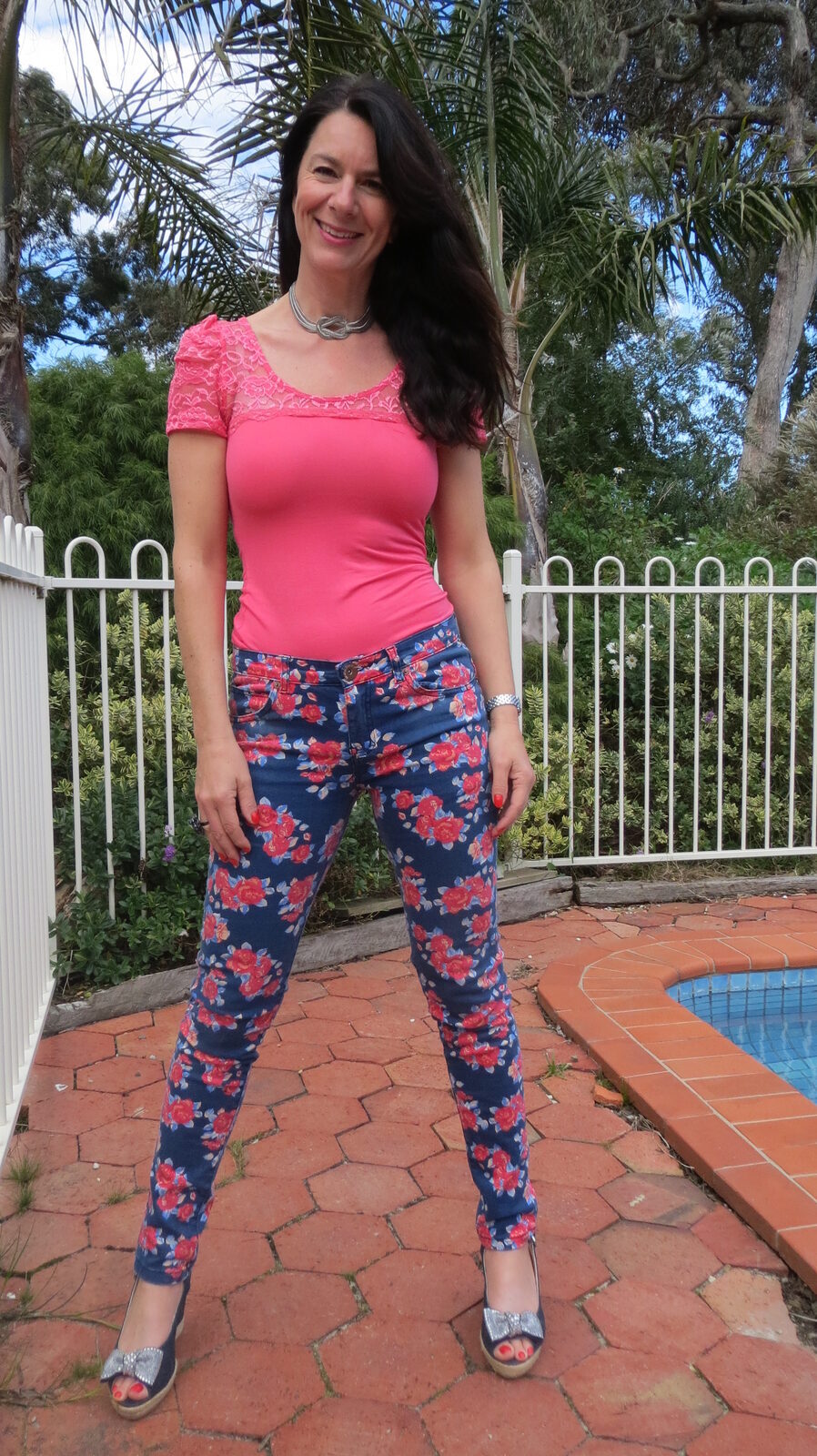
Those are the Cotton On floral jeans I bought that spring, with a watermelon lace top from Dotti that cost me $15 back in 2012. I would wear that outfit tomorrow.
That is not me being clever. It is the actual point of this post. Spring trends are the most stable trends in fashion, because spring always means the same thing: the coat comes off, colour comes back, and everyone wants to feel lighter. So the pieces you buy well now will still look right in three years, and you can safely ignore about ninety per cent of what you are told is new.
What spring actually is in Melbourne
Before any trend talk, the practical bit, because it decides everything else.
Spring here runs September to November, and the Bureau of Meteorology’s Melbourne figures put the average day somewhere around 10 degrees in the morning and 21 in the afternoon. October is the wettest of the three months.
Read that again, because it is the whole brief. An eleven degree swing between breakfast and afternoon tea, and rain.
So an outfit built for a single temperature will fail you on most spring days. What works is a base you are comfortable in at 21 degrees, plus something over the top that you can take off at eleven o’clock and carry.
That is not a trend. That is just Melbourne, and it is why I am always slightly amused by spring editorials shot in one thin dress.
The trends worth your money
Florals. Yes, still, and they come back every spring without exception, so they are about as safe as a trend gets. The thing that dates a floral is not the flowers, it is the scale and the base colour. A small print on a dark ground will still look fine in 2031. An enormous splashy print in this exact season’s shade will look like this exact season forever.
Lighter tailoring. A blazer or jacket in cotton, linen blend or a light wool is the single most useful spring purchase there is, because it does the layering job the weather demands while still looking deliberate. This is the piece to spend on.
Wide-leg and relaxed trousers. Genuinely flattering on more bodies than skinny jeans, cool in warm weather, and they have now been around long enough that they are not going anywhere. Just watch the hem length against your shoe, which is what separates the ones that work from the ones that do not.
Natural fibres. Cotton, linen, silk, fine merino. Not a trend so much as a permanent upgrade, and they matter more in spring than in any other season because you are dealing with warmth, cool and rain in the same afternoon. Synthetics behave badly at both ends of that.
A knit dress. More on this one below, because it is my favourite spring piece and almost nobody thinks of it as one.
Chunky gold. Hoops, a cuff, one good chain. Cheap, high impact, and it does not care what size you are or what the weather is doing.
The trends to leave on the rack
I am not going to pretend I never buy something silly, because you have read this blog. But these are the ones that reliably disappoint.
The season’s single “it” colour. Every spring has one. Buying a whole outfit in it is the fastest way to date a photograph. Buy it in something small if you love it.
Anything sheer without a plan. Sheer is perennially spring, and perennially awkward at a school event or an office. If you buy it, buy the thing that goes under it at the same time, or it will hang there.
Cut-outs. They photograph beautifully and they are miserable to actually wear, because you cannot wear normal underwear with most of them and you spend the day adjusting.
Novelty prints of a specific year. Not the same as florals. You will know the difference when you see it.
Stilettos for anything on grass. Which brings me to shoes.
Shoes: the wedge is the spring answer
Melbourne’s spring calendar happens on lawn. Race days, garden parties, school fetes, weddings in somebody’s backyard, that first barbecue where everyone stands outside pretending it is warmer than it is.
A stiletto sinks. A wedge or a block heel spreads your weight and stays on the surface, and it reads as more relaxed, which suits a daytime spring event better anyway.
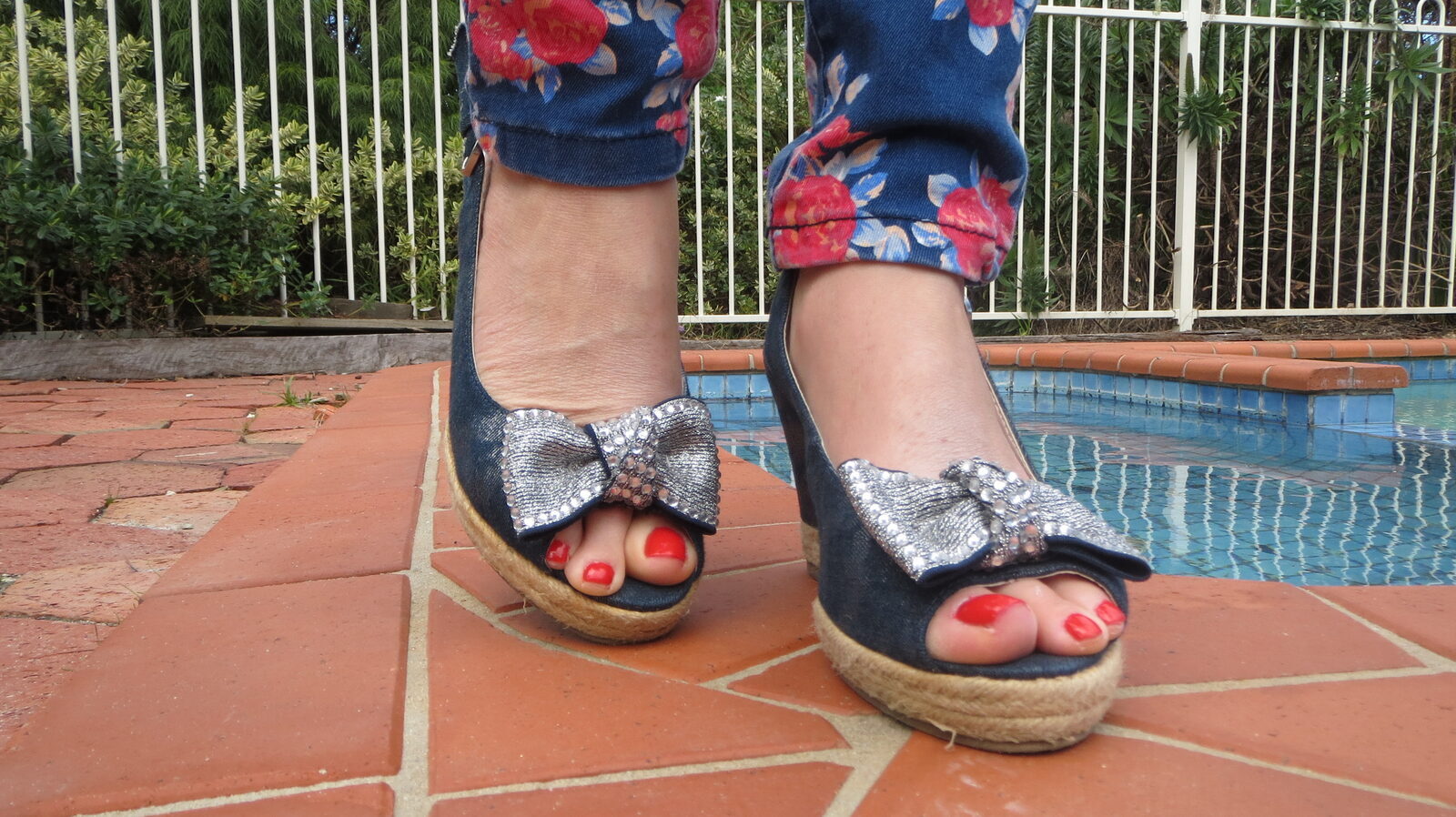
Those denim espadrille wedges are from the same 2012 outfit. Espadrille sole, a bit of sparkle, and I could stand on grass in them all afternoon. The full case for which shoes actually earn their space is in the essential shoes guide.
Pastels or brights? It depends on you, not on the season
Every spring the shops fill with both, and both get sold to everyone, which is why so many people end up with a pastel they never wear.
The short answer is that pastels suit soft, low-contrast colouring and clear brights suit high-contrast colouring, and neither is more spring than the other. If you have dark hair and fair skin, a chalky mint will tend to wash you out while a true coral or a clear blue will light you up. If your colouring is softer and more blended, the reverse happens: the bright takes over and the pastel lets you be the subject.
The coral top in the photo at the top of this page is a clear, warm-leaning bright, and it works on me because my colouring is high contrast. A dusty version of the same colour would have done nothing.
If you have never worked out which camp you are in, it takes about twenty minutes at a window with your phone, and I set out the method in the best colours for your skin tone. Doing that once will save you more money every spring than any trend list ever will.
What to wear to the spring events
Spring in Melbourne is event season, and the questions I get are always the same three.
A race day or garden party. A dress or a jumpsuit, a jacket or blazer you can genuinely take off, and a wedge or block heel. Check whether it is on grass, because it usually is. If there is a dress code on the invitation, follow it and put your personality into the colour rather than the shape.
A spring wedding. Same rules, plus a wrap or jacket for the moment the sun goes down, because an outdoor spring wedding gets cold at about six o’clock every time. The full dress-code breakdown is in what to wear to a wedding.
A school or community thing. This is where people either overdress or give up entirely. A print or colour on the bottom half, a plain top, a jacket, and shoes you can stand in for two hours on a sports field. You want to look like you made an effort, not like you came from somewhere else.
The common thread is that all three are outdoors, all three are on uneven ground, and all three will change temperature while you are there. Which is the same brief as every other spring day, just with better photographs.
The most underrated spring piece in your wardrobe
Here is the one I want to convince you about, because it is sitting in most wardrobes already, filed under winter.
A long-sleeved knit dress.
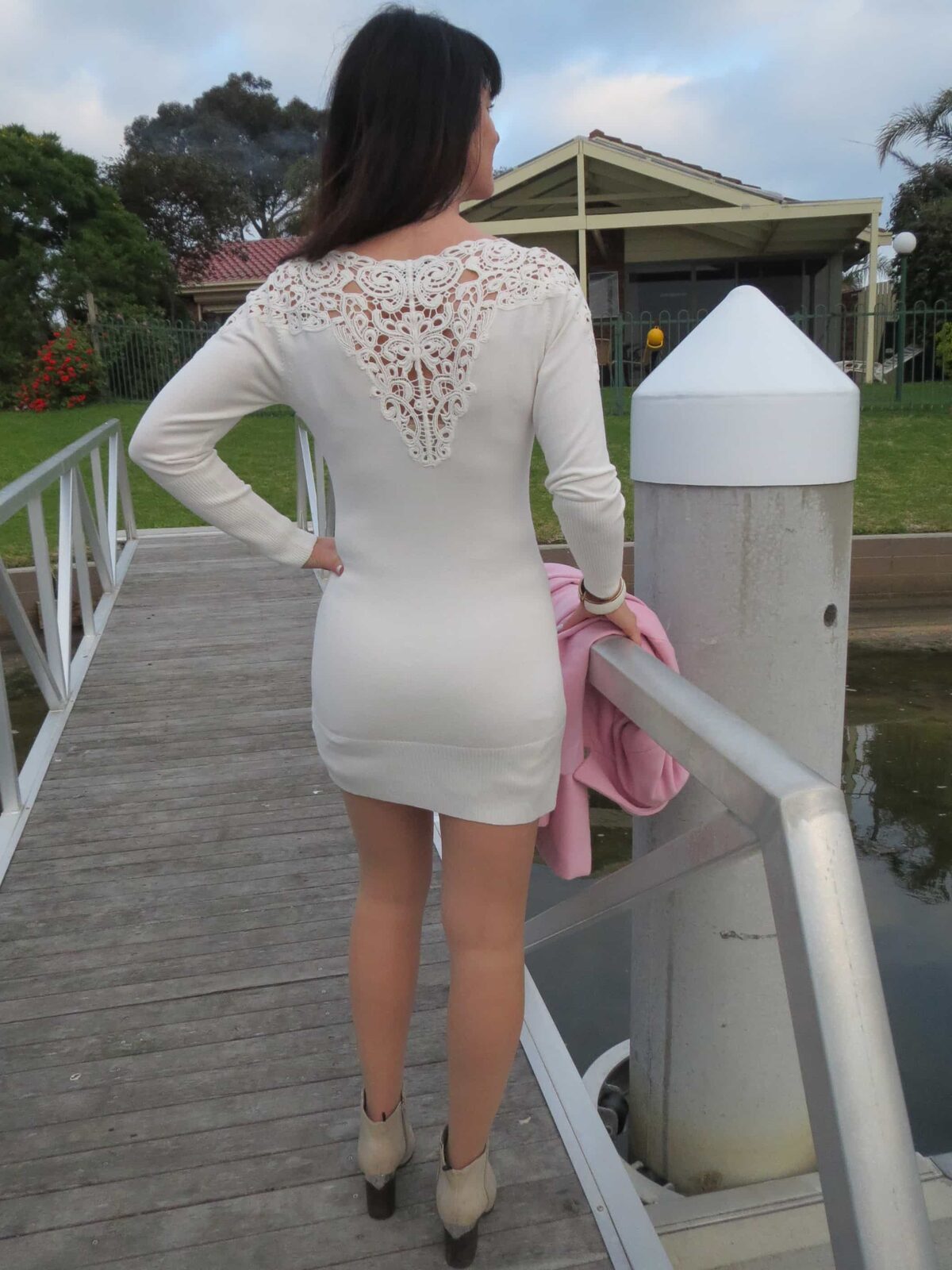
In winter that dress is worn with tights, boots and a coat. In spring you take the tights off, swap to a lighter boot or a flat, and put something light over the top instead of the coat.
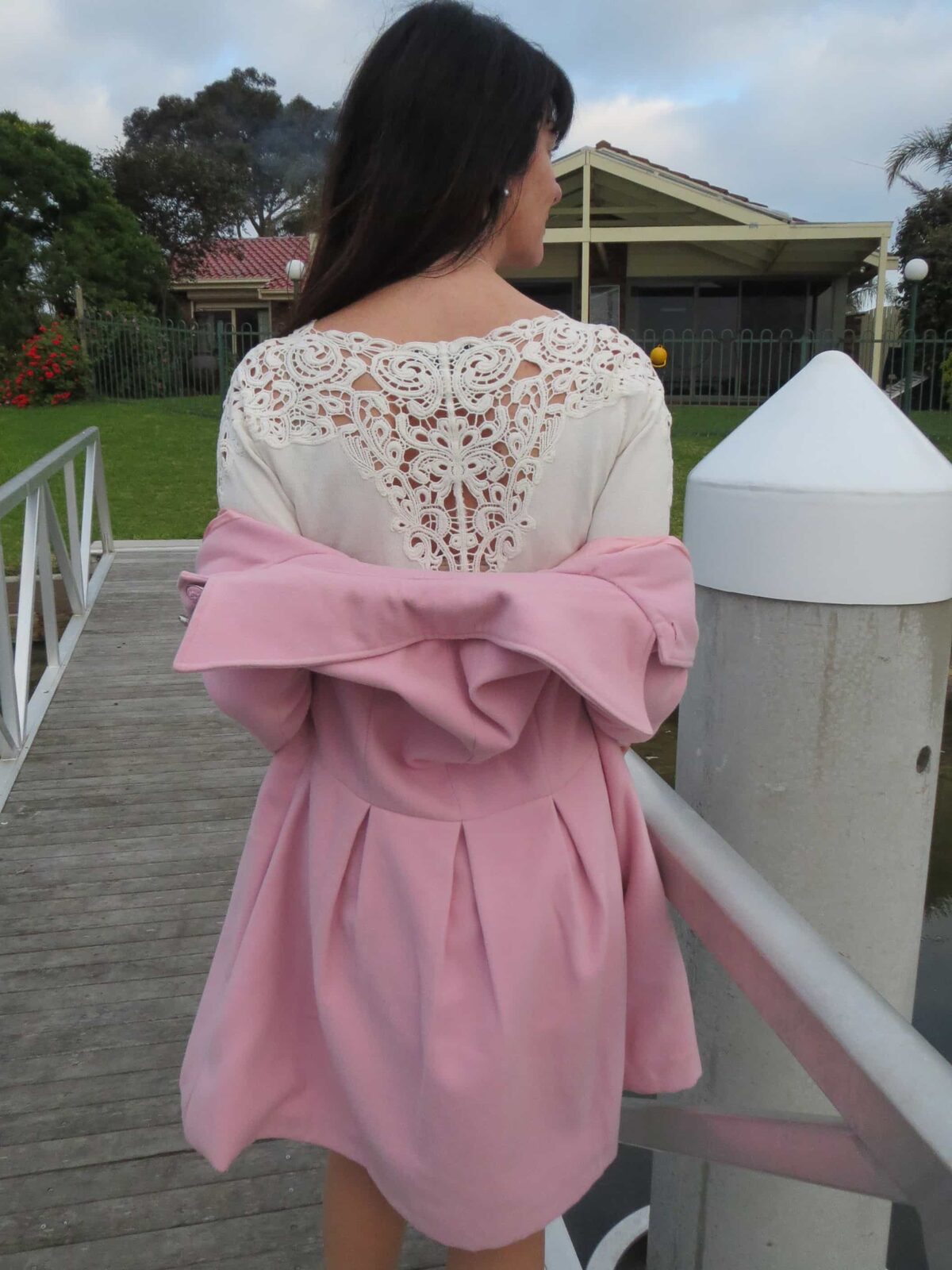
That is the exact spring moment, and it is why I have kept this photo for twelve years. The coat is coming off. Underneath it, an outfit that was perfectly warm in August is perfectly comfortable in October.
A knit dress handles an eleven degree swing better than almost anything else you own, because the sleeves and the fabric do the work that a jacket would otherwise have to do. It is the definition of trans-seasonal, and it is why that category is worth spending real money on, as I argued in the best fashion investments under $200.
One honest note from the original post, because I made the mistake myself: watch the hem of anything worn underneath. In one of those 2014 photos my slip was hanging below the dress, and I said so at the time rather than quietly cropping it out.
Building a spring outfit that actually works
The formula, and it holds for almost any spring day here.
One: a base you are happy in at 21 degrees. A dress, or a top and trouser. Bare arms or short sleeves.
Two: one layer you can take off. A light blazer, a denim or leather jacket, a cardigan, a knit tied over the shoulders. It must be something you do not mind carrying at two in the afternoon.
Three: shoes for wet grass and a walk. Wedge, block heel, flat or a clean sneaker.
Four: one point of colour or print. Not four. One.
Five: something for rain. October is the wettest month. A jacket that copes, or a bag that holds a small umbrella.
That is it. Every spring outfit I have ever photographed is some version of those five, and once you have it, choosing gets fast. If mornings are your bottleneck, that is really a wardrobe-setup problem, and I went through the fix in how to organise your wardrobe.
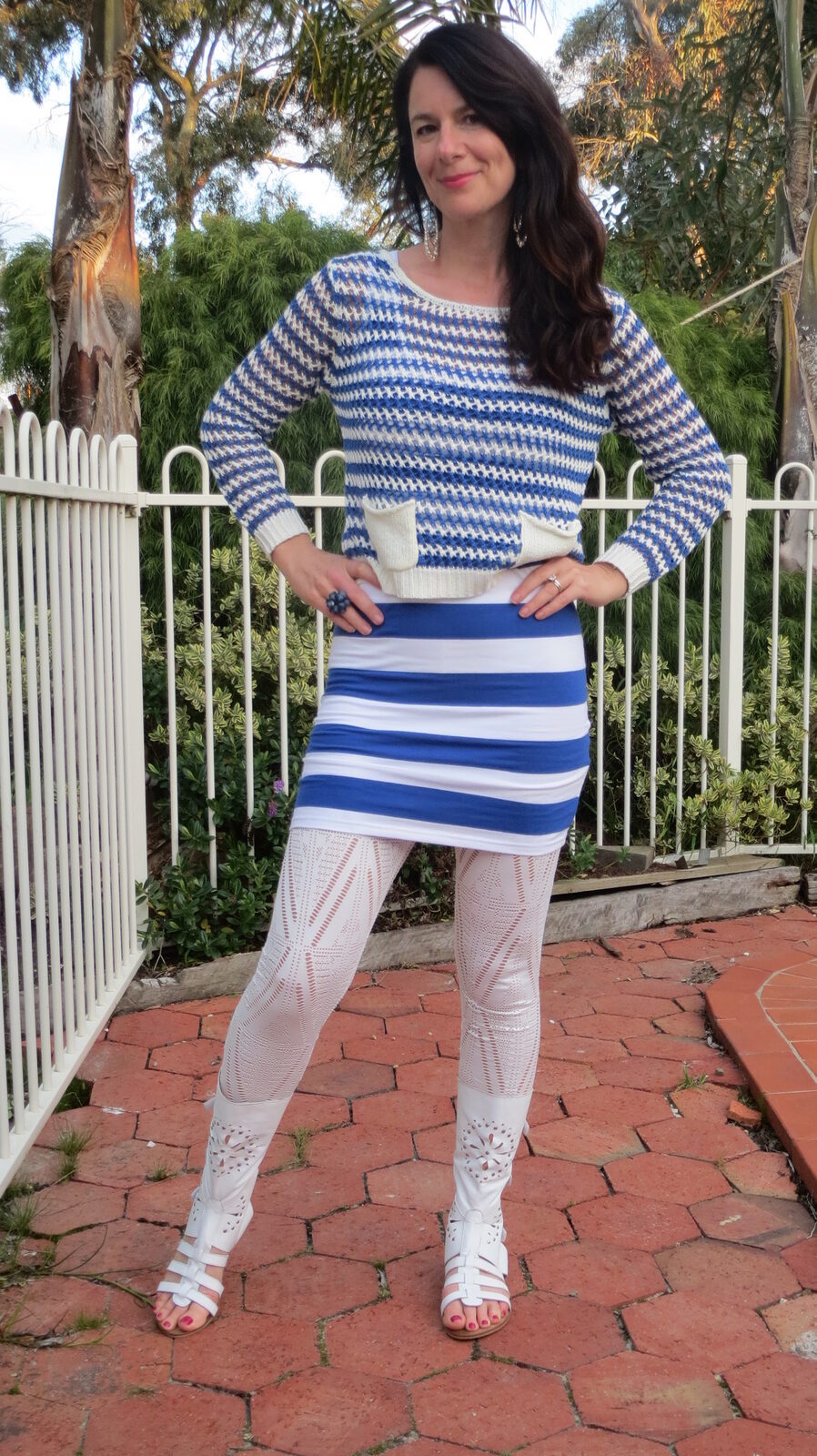
That is the formula in 2012 form. Singlet dress as the base, a light knit over the top for the morning, leggings for the cool bit, and it came together for about fifty dollars all up from Valleygirl, with $20 Italian sandals from a Brighton boutique owner who knew what I liked. Colour, one layer, sensible shoes.
Do the swap before you buy anything
Every spring I get the same call, and it is always some version of “I have nothing to wear now the weather has changed”.
Almost always, they do. It is just in a box, or at the back, or behind the coats.
So before you spend a cent, do the seasonal changeover properly. Bring the spring things forward, put the heavy winter things away clean, and look at what you actually own laid out in daylight. It takes an afternoon and it turns up more outfits than a shopping trip would.
Then, and only then, write a short list of genuine gaps, and shop that list rather than shopping the mood. My whole method for that is in how to shop smarter and stop wasting money on clothes, and if the wardrobe needs thinning first, start with the decluttering checklist.
The short version
- Spring trends barely change. Buy well and ignore the urgency.
- Dress for an eleven degree swing, not for the afternoon.
- Florals are safe. Watch the scale and the base colour.
- Spend on light tailoring and natural fibres. They do the real work.
- Wedges and block heels for anything on grass.
- A knit dress is a spring piece. Take the tights off.
- One point of colour per outfit, chosen on purpose.
- Do the seasonal swap before you shop. You own more spring clothes than you think.
If you would like a hand with the changeover, spring is genuinely the best time of year for a wardrobe edit, because everything is coming out of storage anyway. A Refresh is $299 for two hours, a Reset is $549 for four with a lookbook, and a Capsule day is $799, all in person around Melbourne. And if the edit turns up two or three real gaps, shopping together fills them properly at $399 for a Half Day.
Now go and find your floral something. It has come back around, exactly as it always does.
And now you’re Looking Good Girls.
“See! The winter is past; the rains are over and gone. Flowers appear on the earth; the season of singing has come.” Song of Solomon 2:11-12.